
Breakfast & Brunch
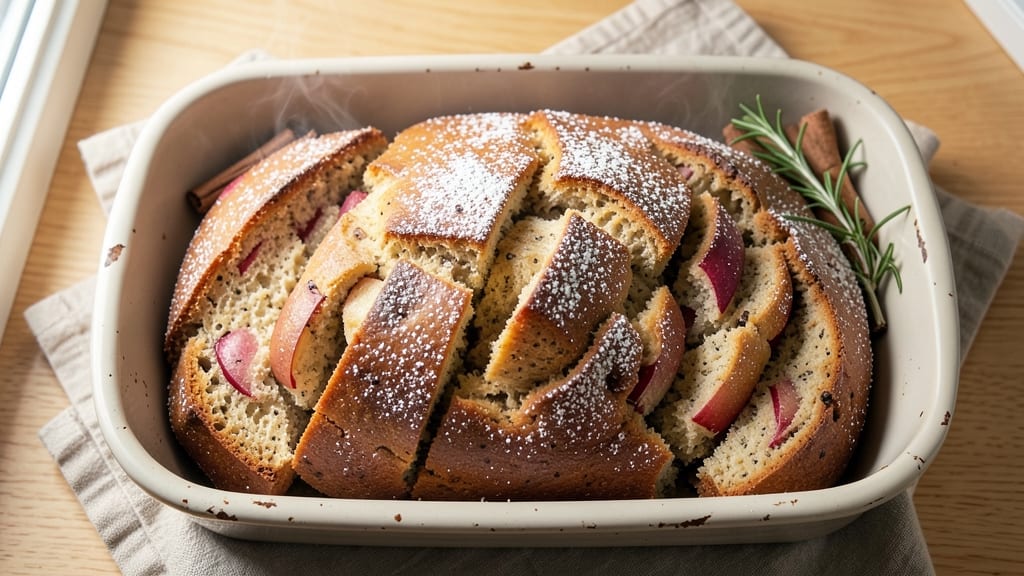
This egg-free apple bread delivers all the cozy warmth of classic apple bread—moist crumb, tender texture, and warm spice—without a single egg in sight. The secret lies in flaxseed meal, which mimics egg's binding power while keeping the crumb light and airy.
I developed this recipe after years of testing, ensuring every bite stays tender and flavorful, even when baked to golden perfection.
What makes this recipe work is the perfect balance of applesauce for moisture and flaxseed for structure, creating a bread that's both vegetarian-friendly and foolproof. The spices—cinnamon, nutmeg, and allspice—infuse every slice with that familiar apple bread aroma, while a touch of brown sugar caramelizes beautifully during baking.
No special equipment is needed, just a standard loaf pan and about 50 minutes of active time.
The result is a loaf with a soft, slightly dense crumb that's rich with apple flavor and studded with tender fruit chunks. The crust turns a beautiful golden brown, sealing in that warm, spiced aroma that fills your kitchen.
This bread freezes beautifully too, making it perfect for holiday gifting or meal prep. Let's get baking!
Whether you're avoiding eggs for dietary reasons or simply want to try a new technique, this recipe proves you don't need binders to create a moist, flavorful loaf.
The flaxseed method works equally well for other fruit breads—try it with blueberries or pears next time. Here's everything you need to make it happen!
Ingredients for apple bread recipe no eggs
Eight servings of cozy apple bread, egg-free and packed with spiced apple flavor.
| Ingredient | Amount | Notes |
|---|---|---|
| All-Purpose Flour 🌾 | 3 ½ cups | Spooned and leveled measurement |
| Unsweetened Applesauce 🍎 | 1 cup | Unsweetened for balanced sweetness |
| Granulated Sugar 🍚 | 1 cup | Light brown sugar for depth |
| Packed Brown Sugar 🍚 | ½ cup | Caramelizes beautifully during baking |
| Ground Flaxseed Meal 🌾 | 2 ½ tbsp | For egg-free binding power |
| Warm Water 💧 | ¼ cup | Activates flaxseed for binding |
| Active Dry Yeast 🍞 | 2 ¼ tsp | Ensure yeast is fresh |
| Warm Whole Milk 🥛 | ¾ cup | 110°F for optimal yeast activation |
| Medium Granny Smith Apples 🍎 | 2 whole | Peeled, cored, finely diced |
| Ground Cinnamon 🌿 | 2 tsp | Freshly ground preferred |
| Ground Nutmeg 🌿 | ½ tsp | Freshly grated for warmth |
| Ground Allspice 🌶️ | ½ tsp | For complex spice profile |
| Salt 🧂 | ½ tsp | Diamond Crystal preferred |
| Vegetable Oil 🫒 | ¼ cup | For tender crumb |
The apples are non-negotiable—Granny Smith for tartness, but Honeycrisp or Fuji work too. Peel and core them first, then dice into even 1/4-inch pieces. If you're short on time, pre-diced apples from the produce section (like at Whole Foods) save steps. The flaxseed meal is your secret weapon here—Bob's Red Mill is my go-to brand, but any high-quality ground flaxseed works. Store it in the freezer to preserve freshness, and measure it carefully since it's the binding agent replacing eggs.
No Granny Smith apples? Mix tart and sweet varieties—think McIntosh plus Gala—to mimic the flavor profile. Running low on cinnamon? Cassia cinnamon at half the amount works in a pinch, though it's slightly stronger. The yeast must be active dry—quick-rise won't give you the same rise time. For a deeper spice profile, toast the whole spices (cinnamon sticks, whole nutmeg) in a dry pan for 30 seconds before grinding. The milk should be warm to the touch but not hot—yeast dies in temperatures above 120°F. If your applesauce is sweetened, reduce the brown sugar to 0.25 cups to balance the flavor.
This bread keeps beautifully for 3-4 days at room temperature wrapped in a clean kitchen towel, or up to 1 week in an airtight container. For longer storage, freeze the baked loaf in slices—wrap each slice individually in plastic wrap, then place in a freezer bag. Thaw overnight on the counter or warm for 10 seconds in the microwave. The flavor actually improves after baking, so if you have leftovers, toast them the next day for maximum coziness. Portion the dough in advance if baking multiple loaves—divide into 8-ounce portions for consistent baking.
Why You'll Love This Recipe
- No Mixing Madness: I swear by this recipe—just toss the dry ingredients in one bowl, the wet in another, and fold. The flaxseed meal does all the binding work, so no eggs, no fuss, no stress. My hands stay clean, and my patience doesn’t get tested.
- Sweet Without Guilt: That combo of brown sugar and unsweetened applesauce? It’s like a hug in bread form. The applesauce keeps it moist (no dry, sad crumbs here), while the sugars caramelize just enough to give every slice a subtle, warm sweetness. Honestly, it’s the kind of treat that feels indulgent but won’t derail your week.
- Breakfast or Snack Hero: This bread is my go-to for toast in the morning, but it’s also the star of my lunchbox. Slice it thick, toast it, and slather with peanut butter—suddenly, you’ve got a satisfying snack that holds up all day. (Yes, even on a Tuesday night when you’re too tired to think.)
- Pantry Staple Magic: Between us, this recipe uses things you already have. Flour, sugar, applesauce—no specialty ingredients, no last-minute grocery runs. And since it keeps well for days (if it lasts that long), I bake a loaf on Sundays and grab slices for days. Budget-friendly? Absolutely. Reliable? Even more so.
Step-by-step instructions for apple bread without eggs
A moist, tender loaf with warm spice notes requires precise technique—especially without eggs.
Activate the Yeast and Prepare the Flaxseed Mixture
In a small bowl, combine the 2.5 tablespoons ground flaxseed meal with the 0.25 cup warm water (about 110°F). Stir thoroughly and let sit for 5 minutes until it thickens into a gel-like consistency—this will replace the binding power of eggs. Meanwhile, in a separate bowl, whisk together the 2.25 teaspoons active dry yeast with the 0.75 cup warm whole milk (again, around 110°F) and 1 tablespoon granulated sugar. Let this mixture stand for 5-10 minutes until it becomes frothy—this confirms the yeast is alive and ready to work.
Real talk: If the yeast mixture doesn't bubble, your bread will be dense. Toss it and start fresh with fresh yeast. The flaxseed mixture should thicken noticeably; if it doesn't, add another 0.5 tablespoon flaxseed meal and let it sit another 2 minutes. This step ensures your bread will hold together without eggs.
Mix the Wet and Dry Ingredients Separately
In a large mixing bowl, combine the 3.5 cups all-purpose flour, 1 cup unsweetened applesauce, 1 cup granulated sugar, 0.5 cup packed brown sugar, 2 teaspoons ground cinnamon, 0.5 teaspoon ground nutmeg, 0.5 teaspoon ground allspice, and 0.5 teaspoon salt. Use a whisk or your fingers to break up any flour clumps—this ensures even distribution of the spices and sugar. In another bowl, mix the yeast-milk mixture, flaxseed gel, and 0.25 cup vegetable oil until smooth.
The reason we mix wet and dry separately is to prevent overdevelopment of gluten, which would make the bread tough. The applesauce and oil create moisture while the flaxseed gel provides structure. Here's the thing—don't overmix once you combine them, or you'll end up with a dense loaf instead of a tender one.
Combine and Knead the Dough
Gradually add the wet ingredients to the dry, mixing with a wooden spoon or dough whisk until just combined. The dough will be sticky but should come together—this is normal given the high moisture content from applesauce and milk. Turn the dough onto a lightly floured surface and knead gently for 3-4 minutes until smooth and elastic. If it's too sticky to handle, wet your hands slightly to prevent sticking.
This dough behaves differently than traditional bread dough because of the applesauce and flaxseed. You're not looking for a firm, elastic dough like you would with yeast bread containing eggs—it should be soft and slightly tacky. Shape it into a loose ball, place it back in the bowl, cover with a damp towel, and let it rise in a warm place for 1-1.5 hours or until nearly doubled in size.
Fold in Apples and Shape the Loaf
While the dough rises, peel, core, and finely dice the 2 whole medium Granny Smith apples. Once the dough has risen, gently deflate it and fold in the diced apples using a spatula. Shape the dough into a 9x5-inch loaf pan, pressing down lightly to fill the pan evenly. Cover again and let it rise for another 30-45 minutes until it domes slightly above the pan.
Don't press too hard when shaping—you want the apples distributed evenly but not crushed. The second rise is crucial for that tender crumb. If the dough doesn't rise much during this final stage, your oven might not be warm enough. Preheat your oven to 350°F while the dough rises to ensure it's ready when you're.
Bake to Golden Perfection
Bake the apple bread in the preheated 350°F oven for 50-60 minutes, until the top is golden brown and a toothpick inserted near the center comes out clean. Tent the loaf with aluminum foil after 30 minutes if the top browns too quickly—this prevents over-browning while the center finishes cooking. The internal temperature should reach 190-195°F for a moist crumb.
This bread benefits from resting. Let it cool in the pan for 10 minutes, then transfer to a wire rack. The bread will firm up slightly as it cools, but it should remain moist and tender. Slice while still warm for the best texture—each bite should deliver juicy apple pieces, warm spice notes, and a tender crumb that holds together beautifully without eggs.
Pro Tips For Making Apple Bread Recipe No Eggs
- MEASURE FLAXSEED PRECISELY: I learned this the hard way—using too much ground flaxseed meal makes the bread dense and gummy. Weigh it out (about 1.5 tablespoons equals 1 tablespoon by volume) or use a kitchen scale for accuracy. That little extra weight adds up fast, and your bread will thank you for it.
- STIR APPLESAUCE UNTIL WARM: Cold applesauce makes the dough sluggish and can lead to a dry crumb. Microwave it for 20–30 seconds first, then stir it into the wet ingredients while still warm. The dough will come together smoother, and the bread will rise better—no guessing if it’s the right texture.
- DON’T OVERMIX THE DOUGH: I used to beat this like I was making pancakes, but that’s how you end up with tough, chewy bread. Mix just until the flour is barely incorporated—lumps are fine. Overworking the gluten with no eggs means a dense loaf, and nobody wants that.
- BAKE UNTIL THE CENTER HITS 205°F: The internal temp is the only way to guarantee doneness, especially with no eggs to help set the structure. Use an instant-read thermometer and wait for that exact number—if you pull it out too soon, it’ll collapse as it cools. (Yes, even if the top looks golden.)
Troubleshooting this dish
Dense Crumb Fix
If your egg-free apple bread turns out too dense, the issue is usually overmixing or insufficient yeast activation. I’ve found that gently kneading for only 3-4 minutes (not until smooth like traditional dough) prevents gluten overdevelopment.
Also, ensure your yeast is fresh—old yeast won’t activate properly, leading to a flat, dense loaf. For extra insurance, proof your yeast in warm milk with sugar first to confirm it’s alive before mixing. 🌡️
Cracked Top Solutions
A cracked top often means the dough rose too quickly or your oven wasn’t warm enough. To prevent this, let the dough rise in a warm spot—I place my bowl on top of the turned-off oven with a light on inside.
If cracks still form, brush the top with a thin layer of milk before baking to create a moisture barrier. Another trick? Use a 9x5-inch loaf pan with a slightly greased top to encourage even expansion.
Apples Too Dry
If your apples lose moisture during baking, try tossing them in 1 teaspoon lemon juice before folding into the dough. This keeps them juicy longer. For extra tenderness, dice the apples into ¼-inch pieces—smaller pieces cook faster and stay moist.
If your bread still feels dry, increase the applesauce by 2 tablespoons in future batches, but don’t exceed 1.25 cups or the crumb may become gummy.
Sticky Dough Nightmare
Sticky dough is normal with this recipe, but if it’s unbearable, wet your hands slightly when kneading to prevent sticking. For shaping, use a lightly floured spatula to gently press the dough into the pan without overhandling.
If the dough sticks to the pan during baking, grease it well with vegetable oil before adding the dough. A 9x5-inch pan is ideal—avoid glass pans, which can cause uneven baking.
Yeast Not Rising
If your dough doesn’t rise at all, your yeast is likely dead or the environment was too cold. Always check yeast freshness—it should be dated within the last 4 months.
For a quick test, sprinkle a pinch of yeast into warm water with sugar; if it bubbles within 5 minutes, it’s active. To revive sluggish yeast, place the bowl in a warm oven (70°F) for 10-15 minutes while mixing.
Never use water hotter than 110°F—yeast dies above that temperature. 🔥
Overbrown Crust
An overbrowned crust usually means the oven was too hot or the bread baked too long. Tent the loaf with aluminum foil after 30 minutes to slow browning while the center finishes cooking. For a softer crust, brush the top with melted butter after baking.
If your oven runs hot, reduce the temperature to 325°F for the last 15 minutes of baking. Always check for doneness with a toothpick—it should come out clean at 190-195°F.
Nutrition facts
Frequently asked questions
Why does this recipe use applesauce instead of apples?
Applesauce adds moisture and tenderness to the crumb while keeping the bread soft. Using just diced apples would make the bread denser and potentially dry. The recipe balances both for that perfect moist texture—think of the applesauce as the bread's secret keeper of juiciness!
Can I substitute flaxseed with another egg replacer?
Yes! For 2.5 tablespoons flaxseed meal, you can use 2.5 tablespoons aquafaba (chickpea brine) or 2 tablespoons mashed banana + 1 tablespoon water. Each adds moisture and binding, but flaxseed gives the best structure for this recipe. If using banana, expect a slightly sweeter flavor.
How do I know when the bread is fully baked?
Look for a golden brown crust and check the internal temperature with a thermometer—it should read 190-195°F. A toothpick inserted near the center should come out clean or with just a few moist crumbs. Overbaking dries out the bread, so pull it out when it's just slightly underdone if needed.
Can I make this bread without a loaf pan?
Shape the dough into a free-form round or oval loaf on a baking sheet lined with parchment paper. Brush the top with milk before baking for a softer crust. Expect slightly faster baking (40-45 minutes) and a rustic texture. For even baking, rotate the pan halfway through.
Why does my dough feel too sticky to handle?
This is normal with high-moisture egg-free dough! Wet your hands slightly when shaping to prevent sticking. The dough should be soft and slightly tacky—not firm like traditional bread dough. If it's unbearable, lightly flour your work surface and tools, but avoid over-flouring or the bread may dry out.