
Sauces & Condiments
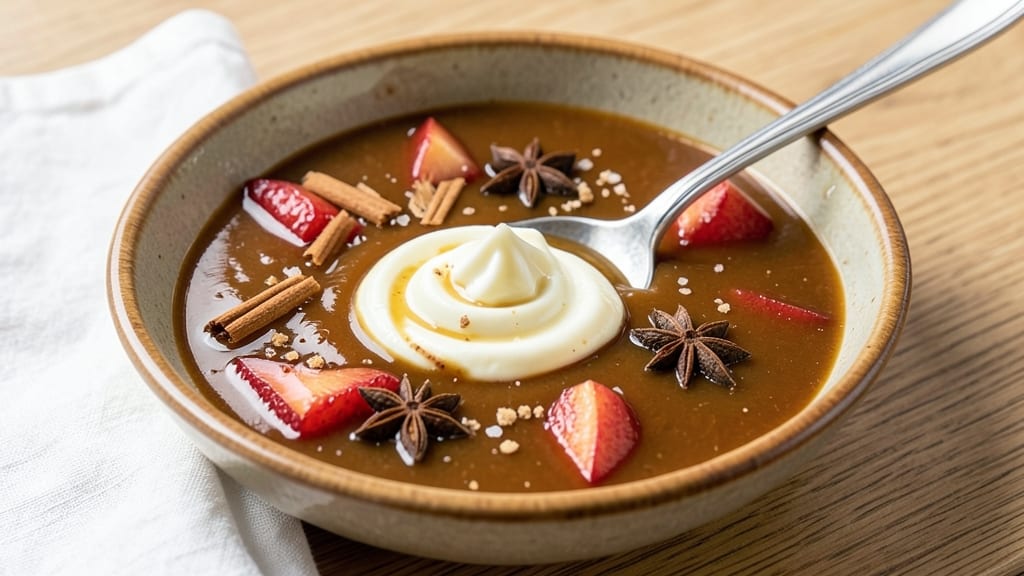
This apple cider reduction sauce transforms simple ingredients into a rich, aromatic glaze that elevates roasts, mashed potatoes, and even desserts. The process is straightforward—simmering apple cider with sugar and spices until thickened—but the result is restaurant-quality depth. I developed this recipe during autumn cooking season when I wanted a sauce that could bridge savory and sweet dishes seamlessly.
The beauty of this reduction lies in its versatility. Use it as a glaze for pork tenderloin or chicken, a drizzle over mashed potatoes, or even a finishing touch for apple desserts.
The spices—cinnamon, cloves, and nutmeg—infuse warmth without overpowering, while the caramelized sugar adds a subtle sweetness that balances savory dishes beautifully. It’s the kind of sauce that makes everyday meals feel special.
What makes this recipe stand out is its simplicity—just five ingredients and 30 minutes of active time. The sauce thickens as it simmers, creating a glossy, syrupy consistency that clings perfectly to food.
The best part? It keeps well in the fridge for up to two weeks or freezes for months, so you can make a big batch and use it all season long.
Whether you're hosting a holiday dinner or just craving a cozy weeknight meal, this sauce delivers professional results with minimal effort. Let’s get started—your taste buds will thank you.
Ingredients for apple cider reduction sauce
Five ingredients, autumnal warmth—this sauce turns simple pantry staples into restaurant-quality glaze magic.
| Ingredient | Amount | Notes |
|---|---|---|
| Apple Cider 🍎 | 4 cups | Unfiltered for deeper flavor |
| Granulated Sugar 🍚 | 1 ½ cups | Light brown preferred for caramel notes |
| Ground Cinnamon 🌿 | 1 tbsp | Freshly ground for aromatic punch |
| Ground Cloves 🌶️ | ½ tsp | Whole cloves can be lightly crushed |
| Ground Nutmeg 🌶️ | ¼ tsp | Freshly grated preferred |
| Unsalted Butter 🧈 | 4 tbsp | Cold, cubed for easy incorporation |
The apple cider is the heart of this sauce, so don't skimp on quality. Muller's or Woodchuck brand from the cider section at Whole Foods or Trader Joe's have the best depth—avoid the sweetened varieties. If you can't find unfiltered, regular cider works, but you'll lose some of that rustic complexity. The spices? Penzeys Spices is my go-to for cinnamon and cloves—they stay potent longer than grocery store brands. For nutmeg, freshly grated from a whole nutmeg makes a world of difference, but pre-ground is fine in a pinch (just use it within a month of opening).
No brown sugar? White sugar plus 1 tsp molasses gets you close. Short on cloves? Allspice at half the amount works, but the flavor profile shifts slightly. The butter is non-negotiable—it's what gives the sauce that silky finish. European-style unsalted butter like Plugrá or Kerrygold adds richness, but any good-quality butter will do. If you're making this ahead, the sauce thickens as it cools, so you can always thin it with a splash of warm water when reheating. For a sweeter version, add an extra tablespoon of sugar; for more warmth, bump the spices up by 25%.
This sauce is a pantry hero—stores beautifully for 2 weeks in the fridge in an airtight container. For longer storage, freeze in ice cube trays for perfect single-use portions. Reheat gently in a saucepan over low heat, adding a splash of water if it thickens too much. The flavor actually improves after the first day as the spices meld together. I like to make a big batch in fall and keep it in the freezer for holiday meals—nothing beats drizzling this over mashed potatoes or roasted chicken straight from the freezer.
Why You'll Love This Recipe
- Here’s the best part: it keeps for weeks in the fridge, and the flavor only gets richer. I’ll make a big batch, freeze half, and still have it on hand for last-minute guests. Plus, it’s so cheap to make—just a few dollars’ worth of ingredients stretch into gallons of sauce. Budget-friendly perfection.
- Pantry Magic: I swear by this sauce because it uses exactly what I already have—no last-minute grocery runs. Just cider, sugar, and a dash of spices from my cabinet, simmered until thick and glossy. That’s it. No fuss, no stress.
- Spice Bomb Glaze: The moment those cloves and nutmeg hit the pot, my kitchen smells like autumn wrapped in a hug. Sweet, warm, with that deep cinnamon backbone—it’s the kind of flavor that makes you want to drizzle it on everything, from roasted pork to vanilla ice cream.
- Game for Any Occasion: This sauce is my secret weapon for weeknight dinners and holiday feasts. Drizzle it over grilled chicken for a cozy Tuesday night, or pour it generously over Thanksgiving turkey for that restaurant-worthy finish. Same recipe, endless possibilities.
Step-by-step instructions for apple cider reduction sauce
This spiced reduction transforms simple ingredients into a velvety sauce perfect for drizzling over roasts or mashed potatoes.
Combine Apple Cider and Sugar in a Saucepan
Pour the 4 cups apple cider and 1.5 cups granulated sugar into a medium saucepan. I like to use a heavy-bottomed pan for even heat distribution—this prevents scorching as the sugar dissolves. Stir over medium-high heat until the sugar completely dissolves and the mixture begins to bubble gently. You'll see the sugar crystals disappear and the liquid become clear.
Here's the thing—don't walk away during this step. The mixture needs constant stirring for the first 3-4 minutes to prevent sugar from sticking to the bottom. Once it reaches a gentle boil, reduce heat to medium to maintain a steady simmer. The goal is to reduce the liquid by about half, so plan for 20-25 minutes of simmering time.
Add Spices and Simmer Until Thickened
Once the mixture is simmering steadily, add the 1 tablespoon ground cinnamon, ½ teaspoon ground cloves, and ¼ teaspoon ground nutmeg. Stir gently to combine—you don't want to disturb the simmering too much. The spices will infuse the liquid with warm, aromatic flavors that deepen as the sauce reduces.
Simmer uncovered for 20-25 minutes, stirring occasionally, until the sauce thickens noticeably. You'll know it's ready when it coats the back of a spoon smoothly and the volume reduces to about 2 cups. The sauce should have a syrupy consistency but still be pourable. If it starts to darken too quickly, reduce the heat slightly to prevent burning.
Incorporate Cold Butter for Richness
Remove the saucepan from heat and let it cool slightly for 2-3 minutes. This prevents the butter from melting too quickly and causing the sauce to seize. Cut the 4 tablespoon unsalted butter into small cubes—this ensures even distribution and easier incorporation.
Add the butter cubes one at a time, whisking vigorously after each addition. The butter should melt smoothly into the sauce, creating a glossy, velvety texture. If the sauce thickens too much, whisk in 1-2 tablespoons of hot apple cider to loosen it to your desired consistency. Taste and adjust seasoning with a pinch more cinnamon or sugar if needed.
Strain and Serve Warm
Line a fine-mesh strainer with cheesecloth or a coffee filter and pour the sauce through it. This step removes any sediment and gives you a silky-smooth sauce. Discard the solids in the strainer—they've done their job infusing flavor.
Return the strained sauce to the saucepan and warm gently over low heat for 2-3 minutes to restore its temperature. The sauce should be warm but not boiling—just hot enough to drizzle effortlessly over roasted meats, mashed potatoes, or even pancakes. For best results, use it immediately, but it will keep in the refrigerator for up to 5 days in an airtight container.
Pro Tips For Making Apple Cider Reduction Sauce
- STIR CONSTANTLY AT FIRST: The first 5 minutes are when sugars burn faster than you’d expect—skipping the stir here means a bitter, caramelized mess. Use a wooden spoon and keep it moving; if you’re distracted, set a timer for 1-minute intervals.
- USE BROWN SUGAR FOR DEPTH: Swap half the granulated sugar for brown sugar if you’re feeling fancy—it adds a molasses-like richness that cuts through the sharpness of cider. I learned this the hard way when I stuck to white sugar and ended up with a sauce that tasted like dessert dressing.
- WHISK IN SPICES LAST: Stir the cinnamon, cloves, and nutmeg into the simmering sauce, not the raw cider. This lets the spices bloom fully and infuse the liquid, rather than just sitting as a dry powder at the bottom. (Yes, even if you’re impatient like me.)
- SIMMER UNTIL SYRUP-LIKE: Don’t stop at "thickened"—keep reducing until the sauce coats the back of a spoon with a slow, deliberate drip. This isn’t just about consistency; it’s about flavor concentration. I used to pull it at 2 cups, but now I push it to 1½ cups for a sauce that actually sings.
Pro cooking tips for perfect results
Heat Control Secrets
Start with medium-high heat to dissolve sugar quickly, then immediately reduce to medium once boiling. This prevents scorching while maintaining an even simmer. I use a heavy-bottomed saucepan—like All-Clad or Le Creuset—to distribute heat evenly.
If your pan isn’t heavy, watch closely for hot spots that could burn the sauce. 🌡️
Spice Timing Matters
Add spices after the mixture reaches a steady simmer, not at the start. This ensures they infuse properly without burning. Whole spices like cloves can be lightly crushed between sheets of parchment paper for extra flavor.
For a deeper aroma, toast the spices in a dry pan for 30 seconds before adding to the sauce.
Butter Integration Hack
Always add cold cubed butter to warm sauce—never melted butter. The cold cubes emulsify better, creating a silky texture. If your sauce thickens too much, whisk in 1 tablespoon hot apple cider to adjust consistency. For extra richness, finish with 1 teaspoon whipped butter for a glossy sheen.
Straining for Perfection
Use cheesecloth or a coffee filter for the smoothest sauce—it catches even the finest particles. If you don’t have cheesecloth, a fine-mesh strainer works, but you may need to press the solids gently. For a quicker (though slightly less refined) option, just skim off any visible particles with a spoon.
Storage and Reheating
Store in an airtight container in the fridge for up to 2 weeks—the flavors deepen over time! To reheat, warm gently over low heat with 1 tablespoon water to prevent burning. If frozen, thaw overnight in the fridge and reheat slowly. Never microwave—it ruins the sauce’s silky texture.
Flavor Boosters
Want more depth? Add 1 teaspoon apple cider vinegar at the end for brightness or ½ teaspoon vanilla extract for sweetness. For a smoky twist, simmer 1 chipotle pepper in adobo with the spices. Always taste as you go—this sauce is forgiving, so adjust to your preference!
Nutrition facts
Frequently asked questions
Can I make this sauce with store-bought apple cider vinegar instead of fresh cider?
The flavor will be noticeably different—apple cider vinegar lacks the natural sweetness and depth of fresh cider. For a similar effect, use a 1:1 ratio of apple cider vinegar plus ½ cup extra sugar to compensate, but it won't have the same complexity. Fresh cider is ideal for that authentic autumnal taste.
How do I adjust the sweetness if I prefer less sugar?
Start by reducing the sugar by ¼ cup and taste as you simmer. For every ¼ cup reduction, add 1 teaspoon apple cider vinegar to balance flavors. The spices (especially cinnamon) will enhance perceived sweetness, so you may need less than you think! Always taste before finishing with butter.
What's the best way to use this sauce on savory dishes without it tasting too sweet?
Pair it with tangy or salty elements to balance sweetness. Drizzle over grilled pork chops with a sprinkle of coarse salt or serve alongside caramelized onions. For roasted vegetables, add a pinch of black pepper or fresh thyme to cut through the sweetness. The sauce's depth shines when contrasted with acidity!
Can I make this sauce in a slow cooker instead of stovetop?
Yes! Combine all ingredients in your slow cooker and cook on LOW for 4-5 hours, stirring occasionally. The texture will be slightly looser, so reduce the cider to 3 cups and sugar to 1 cup to prevent over-reduction. For best results, finish by whisking in butter on the stovetop after removing from the slow cooker.
Why did my sauce turn out too thin? How can I fix it?
This usually happens from insufficient simmering time or using too much cider. To thicken, simmer uncovered for an additional 10-15 minutes or whisk in 1 tablespoon cornstarch mixed with 2 tablespoons cold water until it reaches your desired consistency. For future batches, ensure you reduce by at least half the original volume.