
Sauces & Condiments
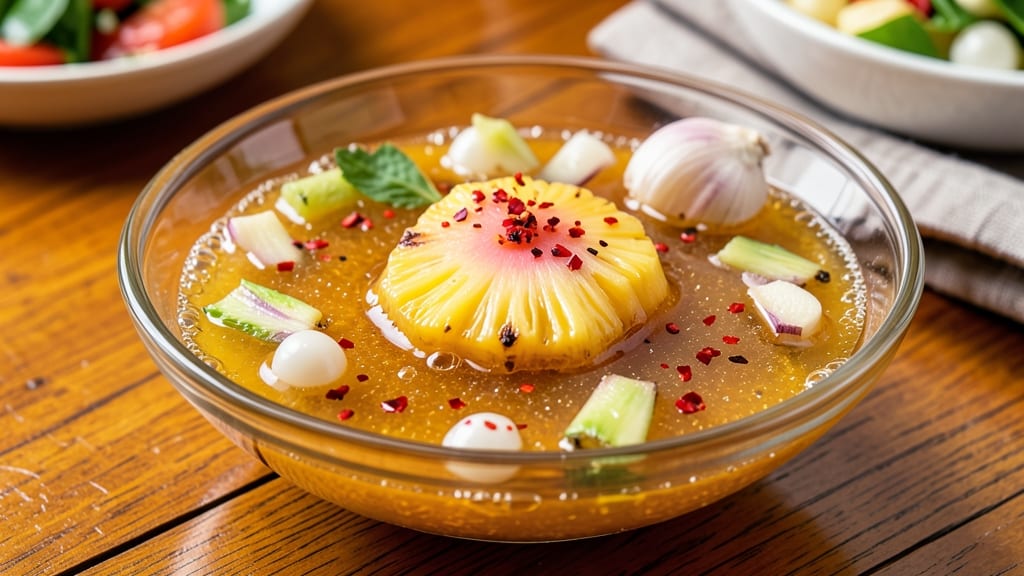
This Chinese pineapple sauce recipe transforms simple ingredients into a versatile, sweet-tangy glaze that elevates stir-fries, grilled meats, and spring rolls. The balance of pineapple's natural sweetness with vinegar's sharpness creates a sauce that's equally at home as a dipping sauce or a glaze for roasted dishes.
What makes this recipe stand out is how it captures the bold flavors of Chinese cuisine while remaining simple enough for weeknight cooking.
The process is straightforward: you'll simmer pineapple juice, vinegar, sugar, and aromatic spices like ginger and garlic until the mixture thickens into a glossy, syrupy consistency. This reduction not only intensifies the flavors but also creates a sauce that clings beautifully to food, ensuring every bite is flavorful.
The addition of a touch of chili or soy sauce adds depth, making it a sauce that's both familiar and exciting.
What you'll end up with is a bright, aromatic sauce that's perfect for dipping spring rolls, glazing grilled chicken, or drizzling over noodles. Its sweet-tangy profile cuts through rich, savory dishes while adding a refreshing contrast.
The best part? It keeps well in the refrigerator for up to a week, so you can make a batch and use it throughout the week.
Whether you're serving up a casual weeknight dinner or preparing for a gathering, this Chinese pineapple sauce will bring a burst of flavor to your table. Let's get started on making this adaptable, flavor-packed sauce that's sure to become a staple in your kitchen.
Ingredients for chinese pineapple sauce
Nine simple ingredients create this vibrant Chinese pineapple sauce perfect for glazing or dipping.
| Ingredient | Amount | Notes |
|---|---|---|
| Fresh Pineapple Juice 🍍 | 1 ½ cups | Freshly squeezed for bright flavor |
| Rice Vinegar 💧 | ½ cup | White or seasoned variety |
| Granulated Sugar 🍚 | ½ cup | Light brown sugar for depth |
| Fresh Ginger 🧄 | 1 tbsp | Finely grated, aromatic |
| Garlic Cloves 🧄 | 3 cloves | Minced, for aromatic base |
| Red Chili Flakes 🌶️ | 1 tsp | Adjust for heat preference |
| Light Soy Sauce 🍶 | 1 tbsp | For umami depth |
| Sesame Oil 🫒 | 1 tsp | Toasted, for nutty finish |
| Cornstarch 🌾 | 1 tsp | For thickening consistency |
| Water 💧 | 2 tbsp | For cornstarch slurry |
Pineapple juice is the heart of this sauce—freshly squeezed delivers the brightest flavor, but canned juice works in a pinch (look for brands without added sugar). Trader Joe's has excellent pineapple juice options, and Dole is a reliable store brand. The ginger and garlic should be freshly grated and minced—pre-minced garlic lacks punch, and dried ginger doesn't have the same zing. For the vinegar, rice vinegar is essential; apple cider vinegar will change the flavor profile entirely. If you're using light brown sugar instead of granulated, reduce the amount slightly since it's more moist.
No fresh ginger? Dried ginger at half the amount works, but it's less aromatic. Running out of sesame oil? Toasted peanut oil gives a similar nutty note. The cornstarch slurry is key for that glossy finish—make sure to whisk it smooth before adding to the sauce. For extra tang, add an extra tablespoon of vinegar. If you prefer less sweetness, reduce the sugar by 1-2 tablespoons. The soy sauce can be swapped for coconut aminos for a gluten-free version, though the flavor will differ slightly. For heat lovers, add chili oil or sriracha instead of chili flakes.
This sauce thickens as it cools, so don't worry if it looks too thin right after making. Store in an airtight container in the fridge for up to 1 week. The flavors actually improve after 24 hours, so make it a day ahead if possible. For freezing, portion into ice cube trays—perfect for single-use applications. If the sauce separates, just give it a good stir before using. It reheats beautifully, so it's great for last-minute glazing needs.
Why You'll Love This Recipe
- No Chopping Needed: I swear by this—just muddle a few garlic cloves and slice ginger into thin coins. That’s it. No peeling, no dicing, no mess. The pineapple juice does all the work for you.
- Tangy-Sweet Magic: Between us, the balance of rice vinegar and sugar is chef’s kiss. That fresh pineapple juice cuts through the richness like a cool breeze, while the ginger adds a little kick. It’s the kind of flavor that makes you pour it on everything.
- Leftovers That Last: This sauce keeps for weeks in the fridge, and honestly? It only gets better. The flavors meld and deepen, so you’re left with a jar of liquid gold for stir-fries, grilled meats, or even drizzled over ice cream (yes, really).
- Budget Pantry Hero: You’re already using basics—sugar, vinegar, garlic—so this won’t break the bank. A single pineapple lasts for multiple batches, and the ginger and garlic are cheap staples. It’s the kind of recipe that turns grocery store ingredients into something special.
Step-by-step instructions for Chinese pineapple sauce
This vibrant, balanced sauce comes together in minutes with simple techniques you'll want to master.
Prepare the Base Ingredients
In a medium saucepan, combine the 1.5 cups fresh pineapple juice, 0.5 cup rice vinegar, and 0.5 cup granulated sugar. Stir over medium heat until the sugar dissolves completely, which should take about 3-4 minutes. You'll notice the mixture will start to bubble gently—this is when the flavors begin to meld together.
While the base heats, finely grate the 1 tablespoon fresh ginger using a microplane or grater. Mince the 3 cloves garlic using a sharp knife or garlic press. The fresh ginger and garlic will add aromatic depth that balances the sweet-tart profile of the sauce. Keep these ingredients nearby as you'll need them in the next step.
Build Flavor with Aromatics and Spices
Add the freshly grated ginger and minced garlic to the saucepan, stirring constantly for 1-2 minutes until fragrant. The garlic should turn golden around the edges, but not brown—this indicates it's ready. Next, reduce the heat to low and stir in the 1 tablespoon light soy sauce and 1 teaspoon red chili flakes. Let the mixture simmer gently for 5 minutes, allowing the flavors to integrate.
Here's where the sauce starts to develop its signature complexity. The soy sauce adds umami richness, while the chili flakes bring subtle heat that cuts through the sweetness. If you prefer a smoother texture, you can strain the mixture through a fine-mesh sieve at this stage to remove any ginger or garlic bits.
Thicken the Sauce to Perfect Consistency
In a small bowl, whisk together the 1 teaspoon cornstarch and 2 tablespoons water until completely dissolved. This creates a smooth slurry that will thicken your sauce beautifully. Return the saucepan to medium heat and slowly pour in the cornstarch mixture while stirring continuously with a wooden spoon.
Simmer for 2-3 minutes until the sauce thickens to a glossy, syrupy consistency that coats the back of a spoon. The sauce should be thick enough to lightly coat the back of a spoon but still flow smoothly—this is ideal for both dipping and glaze applications. If it thickens too quickly, add 1 tablespoon water to adjust the consistency.
Finish with Sesame Oil and Taste Adjustments
Remove the saucepan from heat and stir in the 1 teaspoon sesame oil. This final ingredient adds a nutty aroma and rich flavor that elevates the sauce from good to exceptional. The oil should be incorporated completely, creating a slight sheen on the surface.
Taste and adjust the seasoning if needed. You might want to add a touch more sugar if it's too tart, or a bit more soy sauce for deeper umami. The sauce should balance sweet, tangy, and slightly spicy notes. Let it cool to room temperature before using—this allows the flavors to fully meld together.
Pro Tips For Making Chinese Pineapple Sauce
- Simmer Slow and Low: This sauce isn’t a race—after combining everything, drop the heat to a bare simmer (just tiny bubbles) and let it cook uncovered for 10-12 minutes. I learned this the hard way: boiling it hard turns the pineapple juice cloudy and dulls the ginger’s bright kick. Think "gentle whisper" of heat, not a shout.
- Juice, Don’t Blend: Strain that pineapple juice twice—first through a fine-mesh sieve, then a cheesecloth if you’re feeling fancy. That second pass removes the last of the pulp, which can make the sauce gloppy. (Yes, it’s tedious, but your sauce will actually look like it belongs in a restaurant.)
- Toast the Ginger First: Before grating, dry-toast the ginger slices in a hot pan for 30 seconds until fragrant. The Maillard reaction deepens its flavor without burning it—trust me, your sauce will taste more complex. Skip this, and you’re just adding raw, sharp ginger notes that fight the sweetness.
- Balance the Vinegar Last: Taste the sauce before adding all the rice vinegar—it’s easy to overdo it. Start with half the amount, let it sit for 5 minutes, then adjust. The vinegar should brighten, not dominate. (I’ve ruined batches by dumping it all in upfront—don’t be that person.)
Storing and reheating this recipe
Fridge Storage Tips
Store your Chinese pineapple sauce in an airtight glass container with a tight-sealing lid. The glass preserves the sauce's vibrant color and prevents any plastic odors from seeping in. I like using Pyrex measuring cups with lids—they're perfect for this purpose and stack neatly in my fridge.
The sauce will keep for up to 1 week in the refrigerator, with flavors actually deepening over time. 💧
Always let the sauce cool completely before storing to prevent condensation buildup, which can dilute the flavors. If you notice any separation after refrigeration, simply stir vigorously before using. The sauce's natural ingredients will naturally separate slightly, but this doesn't affect quality or flavor.
Freezing for Long-Term Use
For longer storage, portion the sauce into 1-ounce ice cube trays—this makes it perfect for single-use applications like glazing or dipping. Once frozen, transfer the cubes to a ziplock freezer bag with all air removed to prevent freezer burn.
These portions will keep for up to 3 months while maintaining excellent quality. 🧊
When you're ready to use frozen sauce, thaw it in the refrigerator overnight. For quick use, place the frozen portion in a microwave-safe bowl and heat on 50% power for 30-45 seconds, stirring between intervals.
The sauce may thicken slightly after freezing, so you might need to add 1-2 teaspoons of water to restore its original consistency.
Reheating Methods
For stovetop reheating, transfer the sauce to a small saucepan and warm over low heat for 3-5 minutes, stirring constantly. This gentle method preserves the sauce's delicate balance of flavors.
If the sauce appears too thick after reheating, add 1 tablespoon of water and stir until smooth. I find this method works best for maintaining the sauce's glossy texture. 🔥
For microwave reheating, transfer the sauce to a microwave-safe bowl and heat on medium power for 20-30 seconds. Stir well after heating, as microwaves can create hot spots.
If the sauce separates, give it a good stir—it should come back together smoothly. The microwave method is fastest for quick dipping sauce applications.
Sauce Consistency Fixes
If your sauce thickens too much after refrigeration, simply add 1-2 teaspoons of water and stir until smooth. The sauce should have a syrupy but pourable consistency—ideal for both glazing and dipping.
For extra gloss, add ½ teaspoon of sesame oil when reheating. This technique works particularly well if you've stored the sauce for several days. ✨
If the sauce becomes too thin after freezing, simmer it in a small saucepan for 2-3 minutes until it reaches your desired consistency. The cornstarch in the sauce will reactivate during heating, naturally thickening it.
For a quicker fix, mix ½ teaspoon of cornstarch with 1 teaspoon of water, stir into the sauce, and simmer for 1 minute until thickened.
Nutrition facts
Frequently asked questions
Can I substitute canned pineapple juice for fresh?
Yes, but choose a 100% pineapple juice with no added sugar or preservatives. Brands like Dole or Del Monte work well. For best flavor, use fresh juice—it has more vibrant acidity and natural sweetness that canned versions often lack. If using canned, reduce the sugar by 1-2 tablespoons since canned juices sometimes contain added sweeteners.
How spicy should this sauce be?
The 1 teaspoon red chili flakes provides a mild heat that enhances the sauce's complexity. For milder flavor, reduce to ½ teaspoon or omit entirely. For extra kick, add ½ teaspoon chili oil or 1 teaspoon sriracha at the end. Remember, the sauce's sweetness balances the heat beautifully.
What are the best dishes to use this sauce with?
This versatile sauce works perfectly with spring rolls, grilled chicken, pork skewers, and stir-fried vegetables. It's also excellent as a dipping sauce for egg rolls or rice noodles. The sweet-tangy profile makes it ideal for glazing roasted meats or drizzling over coconut rice for a tropical twist.
Why did my sauce turn cloudy after refrigerating?
Cloudiness happens when natural oils separate from the liquid—it's completely normal and doesn't affect flavor or safety. Simply stir vigorously before using, or gently reheat on low heat for 1-2 minutes to restore clarity. For extra shine, add ½ teaspoon sesame oil when reheating. The sauce will look glossy again in no time!