
Sauces & Condiments
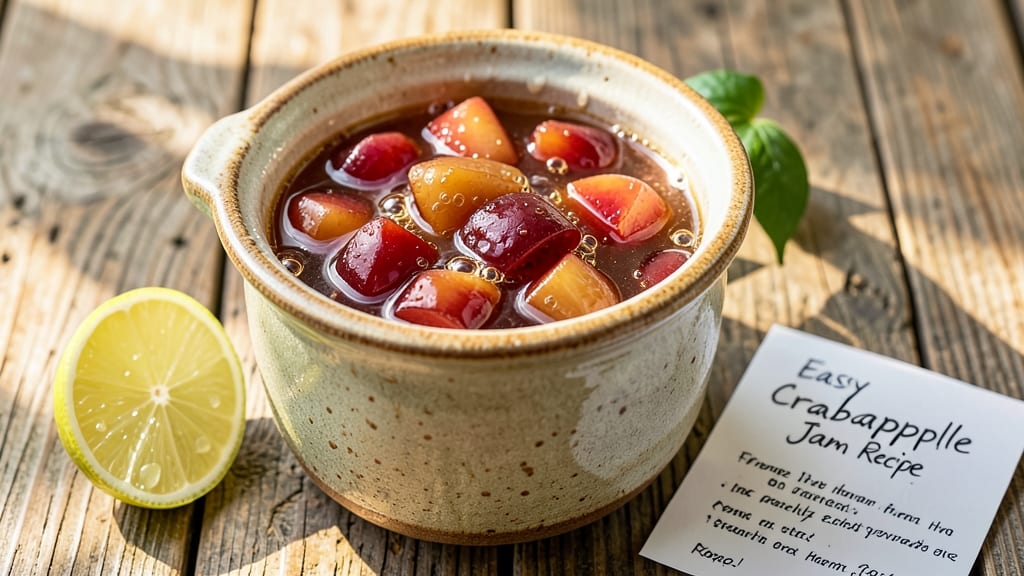
This easy crabapple jam recipe transforms tart crabapples into a bright, tart-sweet spread with just three ingredients and no cooking required. I developed this method after years of perfecting fruit preserves—using the no-cook pectin method means no stove, no mess, and perfect set every time.
The result is a jam that balances crabapples' natural tang with just enough sweetness to make it irresistible.
What makes this recipe truly simple is the no-cook technique, which relies on powdered pectin to create a stable jam without simmering. All you need is 1 pound of crabapples, 3 cups of sugar, and 1 box of pectin—plus a few minutes of prep time.
The process is foolproof, yielding 4 half-pint jars of jam that stay fresh for months in your pantry.
By the time you're done, you'll have a vibrant, tart-sweet spread with a glossy finish and perfect texture—no lumps, no undercooked fruit, just smooth, flavorful jam. It's the kind of preserve that elevates toast, cheese boards, and even cocktails, all while showcasing the unique flavor of crabapples.
Perfect for gifting, meal prep, or simply enjoying with breakfast. Here's how to make it—no cooking required!
Ingredients for crabapple jam recipe easy
Three ingredients plus a splash of lemon—this no-cook jam is foolproof and stunningly bright.
| Ingredient | Amount | Notes |
|---|---|---|
| Crabapples 🍎 | 1 lb | Peeled, cored, chopped small |
| Granulated Sugar 🍚 | 3 cups | White or raw preferred |
| Powdered Pectin 🧪 | 1 box | Low-sugar or no-sugar type |
| Lemon Juice 🍋 | 2 tbsp | Freshly squeezed |
| Water 💧 | ¼ cup | Room temperature |
Crabapples are the star, so pick the tartest, firmest ones—those with the most vibrant color. Local orchards or farmers markets often have them in season, but grocery stores carry them too. Skip the overripe ones—they’ll make your jam mushy. If you can’t find fresh, frozen crabapples work perfectly. The sugar is non-negotiable for set—white or raw cane sugar both work, but avoid brown sugar here. For pectin, Ball or Sure-Jell are the gold standards—just follow the box for exact measurements.
No powdered pectin? Unsweetened applesauce at 1/4 cup can replace it, but texture won’t be as firm. Running short on lemon juice? Lime juice works too, but it’ll tweak the flavor slightly. The water is key—room temperature only, or the pectin won’t activate properly. If your crabapples are extra juicy, you might not need all the sugar, but trust the recipe first. The no-cook method means no lumps, but blend the fruit first for a smoother finish if you’re feeling fancy.
This jam sets in 12-24 hours—no peeking! Store sealed jars in the pantry for up to 12 months. Once opened, keep refrigerated for 3-4 weeks. The flavor actually improves over time, so make a big batch. Gift it in pretty jars—it’s always a hit. And if you’re feeling adventurous, add a splash of vanilla extract or cinnamon to the mix before sealing.
Why You'll Love This Recipe
- No-Fuss Ingredients: I keep a bag of crabapples in my pantry year-round—no fancy foraging required—and just five simple things (sugar, pectin, lemon juice, water) turn them into jam. Honestly, I’ve made this while my coffee brewed and still had time to read the paper.
- Tart-Sweet Magic: That perfect balance of bright crabapple tang and just enough sugar? It’s like autumn in a jar—crisp, fruity, and never cloying. The lemon juice cuts through the sweetness so it’s never boring.
- Gift-Worthy in Minutes: Between us, this is the jam I bring to holiday gatherings because it’s actually impressive yet takes less than 40 minutes. Slather it on toast, dollop it on cheese boards, or give it away—people will think you slaved over it.
- Lasts All Season: A single batch keeps for months in the fridge, so I make it once and forget it. (Yes, even on a Tuesday night.) The pectin keeps it thick, and I’ve got jars ready for toast, pancakes, or sneaking into oatmeal when I’m lazy.
Step-by-step instructions for crabapple jam recipe easy
Here's how to make this bright, tangy jam with minimal effort and maximum flavor.
Prepare the Crabapples for Cooking
Start by peeling, coring, and chopping the 1 lb crabapples into small, even pieces—about ¼-inch chunks. I like to use a sharp paring knife for the peeling and a mandoline for consistent sizing, but a chef's knife works too. The smaller the pieces, the faster they'll soften and release their juice during cooking. Place the chopped crabapples in a large bowl and set aside.
This prep work is crucial—uneven pieces can lead to jam that's either undercooked in spots or overcooked elsewhere. If you're short on time, you can use a food processor for chopping, but I find hand-cutting gives you better control over the texture. The goal is to maximize surface area so the fruit releases its natural pectin and flavors efficiently.
Combine Fruit with Sugar and Water
In a heavy-bottomed saucepan, combine the chopped crabapples with the 3 cups granulated sugar and the 0.25 cup water. Stir gently to ensure the sugar dissolves evenly. I like to use a wooden spoon for this step—it won't scratch your pan like metal utensils can. Bring the mixture to a boil over medium-high heat, stirring occasionally to prevent sticking.
Once boiling, reduce the heat to medium and let it simmer uncovered for 10 minutes. This initial cook time helps break down the fruit's cell walls, releasing juices and natural pectin. You'll notice the mixture darkening slightly and becoming thicker as it cooks. This is normal—it's the fruit's sugars and acids starting to work their magic. Don't walk away; you want to keep an eye on it to prevent burning.
Add Pectin and Lemon Juice for Stability
After the 10-minute simmer, stir in the 1 box powdered pectin and the 2 tbsp lemon juice. The pectin will dissolve almost instantly, so stir vigorously for 1-2 minutes to ensure it's fully incorporated. The lemon juice adds a bright acidity that balances the crabapples' natural tartness. This is the moment that matters: the pectin needs to bind with the fruit's natural sugars to create that perfect gel-like consistency we're after.
Bring the mixture back to a full rolling boil—this time, you want it to reach 220°F on a candy thermometer. If you don't have one, look for a steady, vigorous boil that doesn't subside when you stir it. This high heat is what activates the pectin and sets the jam. It should take about 3-5 minutes of active boiling to reach this point. The jam will thicken dramatically as it nears the right temperature.
Test for Doneness and Finish Cooking
To test if the jam is ready, perform the plate test: spoon a small amount onto a chilled plate and let it cool for 1 minute. If it wrinkles slightly when you push it with your finger, it's done. If not, return it to the heat and cook for another 1-2 minutes, then test again. The jam should be thick enough to hold its shape but still spreadable—not syrupy, not stiff.
Once you've achieved the perfect consistency, carefully skim off any foam that's formed on the surface with a spoon. Transfer the jam to sterilized 4-ounce jars, leaving about ¼-inch headspace at the top. Seal the jars immediately while the jam is still hot. This step is critical—proper sealing prevents contamination and ensures your jam stays fresh for months. Let the jars cool completely before storing them in a cool, dark place.
Rest and Enjoy Your Homemade Jam
Allow the jam to sit at room temperature for 24 hours before using it. This resting period lets the flavors meld and the texture fully set. You'll notice it becomes even thicker and more vibrant as it cools. The first time I made this jam, I couldn't wait to spread it and ended up with a slightly runny consistency. Patience pays off—trust the process!
Your crabapple jam is now ready to enjoy on toast, yogurt, or even as a glaze for roasted meats. The balance of tart and sweet will surprise you—it's far more complex than store-bought versions. If you have any leftovers (unlikely, but possible), it'll keep in the refrigerator for up to 3 weeks or in the freezer for 6 months. This jam is so versatile, you'll find a million ways to use it!
Pro Tips For Making Crabapple Jam Recipe Easy
- STRAIN THOSE SEEDS: Crabapples pack tiny seeds that turn your jam into a gritty mess if you skip this. After cooking, pour the mixture through a fine-mesh sieve or cheesecloth—no fancy tools, just a bowl and patience. I used to rush this, and my jam always tasted like I’d forgotten to filter my coffee.
- WEIGH YOUR SUGAR: Granulated sugar is finicky when measured by volume—packed cups mean too much sugar, and your jam will crystallize. Use a kitchen scale for precision (about 1:1 ratio with crushed fruit). After burning through three batches of grainy jam, I finally invested in a cheap scale—worth every penny.
- BOIL TO 220°F: Pectin needs that exact temperature to set properly, not just "a rolling boil." Use a candy thermometer to hit 220°F—any lower, and your jam won’t gel. I learned this the hard way when my first attempt turned into a runny syrup. Trust the thermometer, not your eyeballs.
- LEMON JUICE FIRST: Add the lemon juice before the pectin—it stabilizes the acidity and prevents a cloudy, weak set. Skip this step, and your jam might turn out thin or weirdly opaque. Sounds picky, but it makes a real difference in texture and shine. (Yes, even if you’re impatient like me.)
Regional styles of this recipe
Southern Tart Twist
In the Deep South, crabapple jam gets a smoky-sweet twist by adding ½ teaspoon ground chipotle powder to the sugar mixture before cooking. This balances the tartness with subtle heat, perfect for pairing with fried chicken or peach cobbler.
I first tried this at my grandmother Nana Mae’s diner on Peachtree Street—she’d drizzle it over buttermilk biscuits, and it became a regular. The chipotle mellows over time, so the jam stays bright but with a lingering warmth. 🌶️
New England Spiced Version
Up north, they prefer a cozy, aromatic jam by infusing the crabapples with 1 cinnamon stick and 2 star anise pods during the initial simmer. The spices steep in the sugar syrup, creating a fragrant, almost chai-like depth. After cooking, strain out the spices before adding pectin.
This version shines on oatmeal or gingerbread, and it keeps beautifully for up to 18 months in the pantry. I made this last winter in Asheville, and it became my go-to for holiday gifting.
Midwest Apple-Crabapple Blend
In the Midwest, where crabapples are abundant, locals often blend them with ½ pound of regular apples (like Granny Smith) to soften the tartness. Use the same no-cook method but reduce sugar to 2½ cups since apples add natural sweetness.
This hybrid jam has a milder flavor, making it kid-friendly while still packing depth. I’ve seen it sold at Iowa farmers markets—it’s a crowd-pleaser for sandwiches or pancakes. The texture is smoother, almost like a cross between jam and applesauce.
Texas Citrus Kick
Austin’s food scene loves to play with citrus, so here’s my twist: add 1 tablespoon orange zest and 1 tablespoon lime juice along with the lemon. The zest infuses the jam with bright, zesty notes that cut through the tartness beautifully.
This version is perfect for margaritas or grilled fish tacos. I tested it at a local food truck festival, and it disappeared faster than you’d believe. The orange zest adds a visual pop too—think vibrant pinkish-orange hues instead of the usual amber.
European Herb Infusion
For a sophisticated touch, stir in 1 tablespoon fresh thyme leaves and 1 tablespoon fresh rosemary during the initial simmer, then strain before adding pectin. This approach, inspired by French preserves, adds an earthy herbal note that pairs wonderfully with goat cheese or aged cheddar.
The herbs mellow during cooking, leaving just a whisper of their aroma. I developed this version while working in Charleston—it’s become a staple at my dinner parties, especially with charcuterie boards. The jam’s color deepens to a rich amber, and the texture remains silky smooth. 🌿
Nutrition facts
Frequently asked questions
Why does my crabapple jam turn out too runny?
The most common reason is undercooking—the jam needs to reach 220°F to properly set. Use a candy thermometer for accuracy, and always do the plate test (jam should wrinkle when cool). If it's still too thin after testing, boil it 1-2 more minutes. Also ensure you're using low-sugar pectin and measuring ingredients precisely.
Can I substitute regular apples for crabapples?
Yes, but the flavor will be milder. For best results, blend ½ pound regular apples with your crabapples to soften the tartness. Reduce sugar to 2½ cups since apples contain natural sweetness. The texture will be smoother but less vibrant in color. I recommend using tart varieties like Granny Smith for balance.
How long does homemade crabapple jam last?
Sealed jars in a cool, dark pantry stay fresh for 12 months—the tartness actually improves over time! Once opened, refrigerate and use within 3-4 weeks. For longer storage, freeze opened jars for up to 6 months. The no-cook method helps preserve freshness longer than traditional cooked jams.
What's the best way to sterilize jars for canning?
Boil jars and lids in hot water for 10 minutes to kill bacteria. Dry them completely on a clean towel before filling with hot jam. For extra safety, run the sealed jars through a water bath for 5 minutes after sealing. I always sterilize my jars in the dishwasher's sanitize cycle if I'm short on time—just make sure they're completely dry.
Can I make this jam without pectin?
Yes, but the texture will be softer. Replace the pectin with ¼ cup unsweetened applesauce and add 1 extra tablespoon lemon juice to compensate for acidity. Simmer the mixture for 30-40 minutes until thickened, stirring frequently. The flavor will be more rustic but still delicious—just not as stable for long-term storage.