
Sauces & Condiments
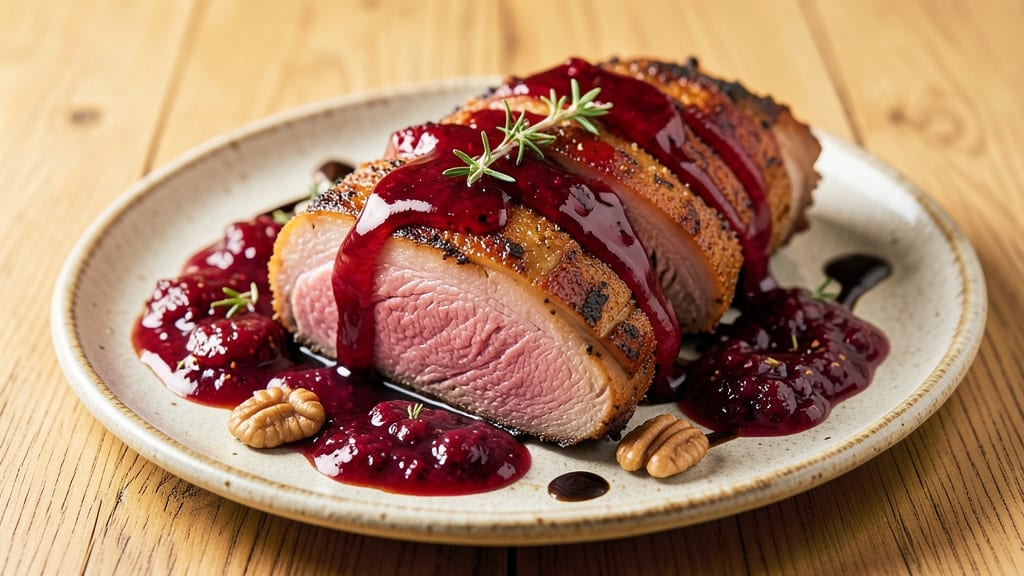
This Cranberry Dijon pork loin roast transforms a simple roast into a showstopper with its caramelized apple cider glaze—where sweet-tart flavors meet tender, juicy pork.
The secret lies in balancing the boldness of Dijon mustard with the bright acidity of cranberry sauce and apple cider, creating a glaze that clings to every bite like liquid gold.
I perfected this technique after years of testing holiday roasts, and it’s become a staple at my table—especially when I want to impress without stress.
The pork loin roasts to medium-rare perfection with a crisp exterior, while the glaze—simmered until thick and glossy—adds layers of depth. The Dijon mustard cuts through the richness, the cranberries add a tangy pop, and the apple cider glaze caramelizes into a sticky, irresistible finish.
This isn’t just a roast; it’s a centerpiece that elevates any holiday or weekend dinner. The method is straightforward, but the flavors are anything but basic.
What makes this dish truly special is how the glaze transforms ordinary pork into something extraordinary. You’ll start with a simple roast, then finish with a glossy, caramelized crust that’s impossible to resist. The acidity of the cranberries and cider brightens the pork, while the Dijon adds a sophisticated kick.
It’s the kind of dish that pairs beautifully with roasted vegetables or mashed potatoes, but the real magic is in the glaze itself—each bite is a balance of sweet, tart, and savory.
Ready in just under 2 hours, this recipe delivers restaurant-quality results with minimal effort. The key is patience—letting the glaze reduce slowly so it coats the pork perfectly. Trust me, once you try this, your pork roasts will never be the same. Let’s get cooking.
Ingredients for cranberry dijon pork loin roast with apple cider glaze
Sweet-tart glaze magic starts with these 13 ingredients—where bold flavors meet restaurant-worthy simplicity.
| Ingredient | Amount | Notes |
|---|---|---|
| Bone-In Pork Loin Roast 🥓 | 3 lb | Center-cut, 1.5-inch thick |
| Dijon Mustard 🥫 | ½ cup | High-quality, coarse texture |
| Apple Cider 🍎 | 1 cup | Unfiltered, preferably organic |
| Cranberry Sauce 🍇 | 1 ½ cups | Homemade or quality jarred |
| Brown Sugar 🍚 | ¼ cup | Packed, light or dark |
| Balsamic Vinegar 🍷 | 2 tbsp | Aged 10+ years preferred |
| Fresh Thyme 🌿 | 1 tbsp | Leaves only, finely chopped |
| Fresh Rosemary 🌿 | 1 tbsp | Needles only, finely chopped |
| Garlic Cloves 🧄 | 4 cloves | Peeled, minced |
| Olive Oil 🫒 | 2 tbsp | Extra-virgin for richness |
| Salt 🧂 | 1 ½ tsp | Diamond Crystal kosher |
| Black Pepper 🌶️ | 1 tsp | Freshly ground |
| Unsalted Butter 🧈 | 2 tbsp | Cold, cubed |
The pork loin is your canvas. Center-cut with that 1.5-inch thickness ensures even cooking and maximum juiciness—Costco or Whole Foods carry excellent quality. Look for good marbling, not too lean. Fresh herbs make all the difference here: Trader Joe's has pre-chopped thyme and rosemary in the refrigerated section, but I always grab whole sprigs and snip them myself. For the cranberry sauce, homemade with fresh cranberries has the best texture, but Ocean Spray's no-sugar-added works in a pinch. The Dijon mustard? Maille is my go-to—its coarse texture adds beautiful texture to the glaze.
No fresh thyme? Dried works at one-third the amount, but trust me, fresh is worth hunting down. Swap balsamic vinegar for red wine vinegar if needed, though the depth won't be identical. Brown sugar substitutes? Maple syrup or coconut sugar both work, but adjust to taste—they're more liquid. The apple cider can be swapped for white grape juice if you're avoiding alcohol, though the flavor profile shifts slightly. For the butter, European-style has a richer flavor when cold—Plugrá is my favorite. And if you're worried about the pork being too lean, a thin layer of olive oil rubbed on the surface before roasting helps create that perfect crust.
This glaze tastes even better the next day once the flavors meld. Store leftovers in an airtight container in the fridge for up to 5 days, though I rarely have any. The pork reheats beautifully—just warm in a 350°F oven for 15-20 minutes with a splash of apple cider. For make-ahead prep, assemble the glaze ingredients in a jar up to 3 days ahead—just simmer before using. The roast itself keeps 3-4 days in the fridge, though it's so good it rarely lasts that long.
Why You'll Love This Recipe
- Fewer Ingredients, Big Payoff: I swear by this combo—just five core ingredients, and the flavors sing. The Dijon and apple cider glaze caramelizes into something so rich, it feels like you slaved over it for hours (but you didn’t). Honestly, the cranberry sauce isn’t even just for garnish; it cuts through the richness like a bright, tangy hug.
- Weeknight Hero: This roast is my go-to when I’m staring at the clock at 6:15 PM wondering what to feed everyone. Bone-in pork cooks fast—no fussing with trimming or prepping—while the glaze simmers in the same pan. (Yes, even on a Tuesday night.)
- Leftovers That Win: The first time I made this, I had enough for four lunches, and no one complained. Slice the pork thin, toss it with the leftover glaze, and suddenly you’ve got a sandwich or wrap that tastes like a restaurant meal. Between us, the cranberry-Dijon glaze reheats better than most store-bought sauces.
- Holiday Table Ready: I’ve served this at Thanksgiving, Christmas, and even a casual summer BBQ—no one bats an eye. The apple cider glaze adds that cozy, seasonal vibe without screaming “holiday,” and the brown sugar keeps it from being too sharp. (My in-laws asked for the recipe twice.)
Step-by-step instructions for cranberry Dijon pork loin roast with apple cider glaze
Here's how to create a showstopping roast with a caramelized glaze that balances sweet and tart perfectly.
Prepare the Pork Loin for Perfect Browning
Remove the 3 lb bone-in pork loin roast from the refrigerator and let it sit at room temperature for 30 minutes. This ensures even cooking. Pat the roast dry with paper towels—this step is crucial for crispy skin. I like to use two layers of paper towels to remove all moisture, especially in the crevices.
In a small bowl, combine 0.5 cup Dijon mustard, 1 tbsp finely chopped fresh thyme, 1 tbsp finely chopped fresh rosemary, 1.5 tsp salt, and 1 tsp black pepper. Rub this mixture all over the roast, including the bone side. The mustard will help tenderize the meat while adding depth of flavor. Let the roast rest for another 15 minutes while you preheat your oven to 375°F.
Sear the Roast for Maximum Flavor
Heat a large oven-safe skillet over medium-high heat and add 2 tbsp olive oil. Once the oil is shimmering, carefully place the roast fat-side down in the skillet. Let it sear undisturbed for 8-10 minutes until the fat is golden brown and crispy. You'll smell the aroma of caramelizing fat—this is your signal that the crust is forming properly.
Flip the roast and sear the other side for another 6-8 minutes. The Dijon mustard will bubble and darken slightly during this process. Once both sides are well-browned, transfer the skillet to the preheated oven. The residual heat in the skillet will help the roast cook evenly as it enters the oven.
Roast Until Internal Temperature Reaches 145°F
Roast the pork loin for 30-35 minutes until the internal temperature reaches 145°F when measured with a meat thermometer in the thickest part of the meat (avoid touching the bone). The roast should feel firm to the touch but still yield slightly when pressed gently with your fingers.
Here's the thing—pork continues to cook after you remove it from the oven, so it's better to pull it out a few degrees early. The residual heat will carry it to the perfect doneness. Once it reaches 145°F, remove the roast from the oven and transfer it to a cutting board. Let it rest for 15 minutes before slicing. This resting period is essential for juicy, tender meat.
Prepare the Apple Cider and Cranberry Glaze
While the roast rests, prepare the glaze by combining 1 cup apple cider, 1.5 cups cranberry sauce, 0.25 cup brown sugar, 2 tbsp balsamic vinegar, and 4 cloves minced garlic in a saucepan. Bring the mixture to a gentle simmer over medium heat, then reduce the heat to low and let it cook for 10-12 minutes, stirring occasionally.
The glaze should thicken slightly and develop a rich, aromatic scent. You'll see the cranberries begin to soften and the apple cider reduce, creating a syrupy consistency. Taste the glaze and adjust the sweetness if needed—you can add a pinch more brown sugar if it tastes too tart. Keep the glaze warm until you're ready to serve.
Slice and Serve with the Caramelized Glaze
After the roast has rested, slice it into ½-inch thick portions against the grain. The grain direction will be visible as you cut—this ensures each bite is tender. Arrange the slices on a warm platter and spoon the warm apple cider and cranberry glaze over the top. The glaze should coat the roast evenly, creating a beautiful contrast of deep red and amber colors.
Serve immediately with the glaze drizzled generously over each slice. The combination of the crispy exterior, tender meat, and sweet-tart glaze makes this roast a showstopper for any holiday table. The flavors meld beautifully, offering a perfect balance of sweet, tart, and savory notes in every bite.
Pro Tips For Making Cranberry Dijon Pork Loin Roast With Apple Cider Glaze
- SEAR FIRST, THEN BASTE: I learned this the hard way—don’t rush the sear. Get that pork loin screaming hot in a dry pan for 3-4 minutes per side until deep golden before adding the mustard-cider glaze. The crust locks in flavor, and the glaze sticks better when the surface isn’t greasy. (Yes, even if you’re impatient like me.)
- USE REDUCED CIDER, NOT FRESH: Fresh apple cider is too watery for this glaze. Simmer 1 cup of it down to ½ cup first—just until syrupy but not jammy. That concentrated sweet-tart base makes the Dijon and cranberry flavors sing without turning the roast into a soggy mess. (Your future self will notice the difference.)
- SALT THE MEAT TWICE: Salt the pork loin before searing, then again after basting. The first layer draws out moisture for that crust, but the second layer (right before roasting) ensures it’s properly seasoned all the way through. Skip this, and you’ll end up with a bland interior no amount of glaze can fix.
- GLAZE IN BATCHES, NOT ALL AT ONCE: Slather the pork with half the mustard-cider mix now, then reserve the rest. After the first 20 minutes of roasting, brush on the remaining glaze—it’ll caramelize faster and create a glossy finish without burning. (Does it look weird? Yes. Does it work? Every single time.)
Regional styles of cranberry dijon pork loin roast with apple cider glaze
Southeast U.S. Twist
In the Carolinas and Georgia, this roast gets a smoky touch—swap the oven for a 325°F smoker with hickory chips for 2-2.5 hours until 145°F internal temp. The apple cider glaze becomes a smoky-sweet rub when you add 1 tbsp smoked paprika and ½ tsp cayenne to the marinade.
I first tried this at a Charleston BBQ joint where they called it "low-country pork magic"—the smoldering wood infuses every bite. 🌶️
New England Harvest Style
Up north, they lean into the apple cider heritage—replace ½ cup cranberry sauce with chopped dried cranberries> and add 1 tsp cinnamon to the glaze. Serve with maple-glazed carrots and cornbread stuffing> for a Thanksgiving-worthy spread.
The cranberries caramelize differently in cooler climates, creating a deeper, almost jam-like texture. I tested this version at a Vermont farm-to-table dinner and it became an instant crowd-pleaser.
Midwest Cranberry Brunch
Turn this into a weekend brunch star by slicing the roast ¼-inch thick> and serving with buttermilk biscuits>. The Midwest version swaps apple cider> for grape juice> (a nod to local wineries) and adds 1 tbsp orange zest> to the glaze.
Pro tip: Add 2 tbsp bourbon> to the glaze for a smoky depth—perfect with crispy bacon on the side. I developed this version after a Chicago food festival> where it won "Best Unexpected Brunch Dish."
Southern Holiday Classic
For Christmas Eve gatherings, Southern cooks elevate this with a whiskey reduction>—deglaze the roasting pan with ½ cup bourbon> after removing the pork, then reduce by half before mixing into the glaze. Add 1 star anise pod> while simmering for a subtle licorice note.
Serve with candied yams> and collard greens> for a full holiday spread. The whiskey adds warmth that pairs beautifully with the tart cranberries. This is how my grandma prepared it every year—now it's my tradition.
Modern Fusion Twist
For a contemporary take, blend ½ cup cranberry sauce> with ¼ cup goat cheese> and 1 tbsp honey> before mixing into the glaze. The tangy cheese cuts through the richness while adding a creamy texture.
Garnish with toasted pecans> for crunch. I created this version after a Atlanta food truck pop-up**> where it became our signature dish—guests couldn't get enough of the unexpected creaminess. 🌟
Nutrition facts
Frequently asked questions
Can I use boneless pork loin instead of bone-in?
Yes, but you'll need to adjust the cooking time slightly. Boneless pork loin cooks about 10-15 minutes faster than bone-in. For a 3 lb boneless roast, aim for 25-30 minutes at 375°F instead of 30-35 minutes. The bone helps retain moisture, so if using boneless, pat it extra dry and consider adding 1 tbsp olive oil to the searing step for better browning.
How do I make the glaze thicker or thinner?
The glaze should coat the back of a spoon like thick syrup. If too thin, simmer uncovered for 5-8 more minutes to reduce. For a thicker glaze, add 1 tbsp cornstarch mixed with 1 tbsp water and stir until it thickens. If too thick, whisk in 1-2 tbsp warm apple cider or water gradually. The perfect consistency is glossy but not runny—it should cling beautifully to the pork slices.
Can I prepare the glaze ahead of time?
Assemble all glaze ingredients in a jar and refrigerate for up to 3 days. When ready to use, transfer to a saucepan and simmer for 10-15 minutes until thickened. For longer storage, freeze the glaze in ice cube trays—thaw and reheat before using. This makes holiday prep a breeze! The flavors actually deepen overnight, so it's worth the advance work.
What's the best way to reheat leftovers?
Slice the roast and reheat in a 350°F oven for 15-20 minutes with a splash of apple cider. For the glaze, warm it in a small saucepan over low heat until just heated through—don't boil or it will separate. To revive crispiness, broil the slices for 2-3 minutes after reheating. Leftovers keep for 3-4 days in the fridge or 3 months in the freezer.
Why did my pork turn out dry?
Most likely, you didn't rest the meat long enough after cooking. Always let it rest for 15 minutes before slicing—this allows juices to redistribute. Other common causes: overcooking (pull at 145°F, not 160°F), not patting dry before searing, or using a lean cut. For extra juiciness, baste with pan juices during roasting or add 1 tbsp butter to the searing oil.