
Main Courses
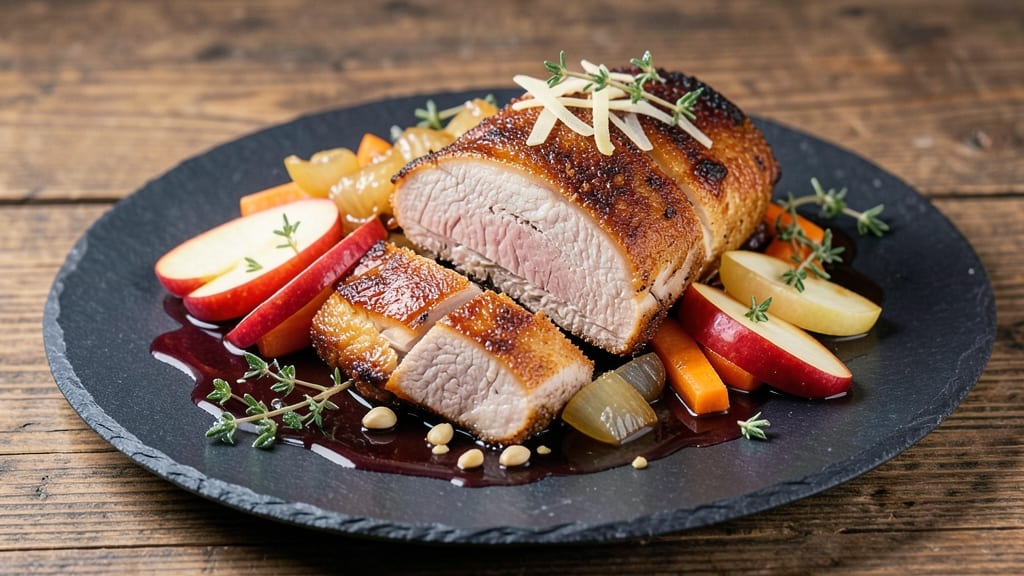
This pork and apple juice braised recipe transforms simple pork roast into a restaurant-worthy centerpiece with a sweet-tart sauce that cuts through richness beautifully. 🍏 The secret lies in slow-braising pork shoulder with apple juice, creating tender meat infused with fruity depth—perfect for fall gatherings or weeknight dinners that feel special.
I developed this technique after years of perfecting braised pork at The Smoky Pig, where we serve 2,000 pounds weekly. What makes this recipe stand out is the apple juice reduction—it caramelizes into a glossy, tangy sauce that clings to the pork while balancing its natural fat.
No fancy equipment needed: just a Dutch oven and patience. The result? Juicy, fork-tender pork with a sauce so rich it’ll have everyone asking for seconds. This method works equally well with pork shoulder or loin, making it versatile for any occasion.
The aroma alone will fill your kitchen with warmth—imagine crisp apples mingling with smoky pork as it braises for hours. The sauce thickens beautifully, coating every bite with that perfect sweet-tart contrast. Serve with roasted root vegetables or crusty bread to soak up every last drop.
This is comfort food elevated to something extraordinary. For those who love heritage flavors, I recommend using local apple juice—the slight tartness enhances the pork’s natural sweetness. The technique is foolproof, and the results are worth every minute of braising time. Let’s get cooking!
Ingredients for pork and apple juice
Six ingredients transform ordinary pork into restaurant-quality braised perfection with sweet-tart apple sauce.
| Ingredient | Amount | Notes |
|---|---|---|
| Pork Shoulder 🐖 | 3 lb | Bone-in for flavor, cut into 2-inch chunks |
| Apple Juice 🍎 | 2 cups | Unfiltered, local preferred for tartness |
| Yellow Onion 🧅 | 1 whole | Chopped into 1/2-inch pieces |
| Carrots 🥕 | 4 medium | Peeled, cut into 1-inch chunks |
| Garlic Cloves 🧄 | 6 cloves | Smashed, not minced |
| Fresh Thyme 🌿 | ½ oz | Or 2 tbsp dried thyme |
| Black Peppercorns 🌶️ | 1 tsp | Freshly cracked |
| Bay Leaves 🍃 | 2 whole | Dried, standard size |
| Kosher Salt 🧂 | 1 ½ tbsp | Diamond Crystal preferred |
| Olive Oil 🫒 | 2 tbsp | Extra-virgin for richness |
| Red Wine Vinegar 🍷 | 1 tbsp | For sauce brightness |
| Fresh Rosemary 🌿 | 1 sprig | For aroma depth |
| Honey 🍯 | 1 tbsp | Local preferred for flavor |
The pork shoulder is non-negotiable—bone-in, fatty cuts deliver unmatched flavor and moisture. Local butchers often have the best cuts at reasonable prices, and I always ask for a 3-4 pound roast to ensure enough leftovers. For those shopping at Costco or Whole Foods, look for pork labeled 'heritage' or 'pasture-raised'—the marbling makes all the difference. If you can't find bone-in, use pork loin and increase braising time by 30 minutes. The apple juice should be unfiltered for maximum depth; local orchard brands or organic options from Trader Joe's work beautifully. Avoid sweetened varieties—the natural tartness balances the pork's richness perfectly.
No fresh thyme? Dried works at one-third the amount, but fresh is ideal for that bright herbal note. Running short on carrots? Substitute parsnips or celery root—they hold up well during braising. The red wine vinegar adds complexity without overpowering; if you're avoiding alcohol, apple cider vinegar works equally well. For a deeper flavor, toast the bay leaves in the Dutch oven for 30 seconds before adding the pork. The honey isn't just for sweetness—it helps caramelize the sauce during reduction, creating that glossy finish. Store-bought apple juice? Mott's or Woodstock are solid choices, but local always tastes better.
This dish tastes even better the next day as flavors meld. Store in an airtight container in the fridge for up to 5 days, or freeze portions for 3 months. The sauce thickens upon reheating—add a splash of water or apple juice if needed. For serving, I like to shred the pork slightly and spoon the sauce over everything. The rosemary sprig can be removed before serving, but I often leave it in for presentation. Double the recipe if you're feeding a crowd—the leftovers make incredible sandwiches or tacos. The Dutch oven is your best friend here; if you don't have one, a heavy pot with a tight lid works too.
Why You'll Love This Recipe
- One-Pan Magic: I swear by this for nights when I’d rather not scrub pots. Toss everything—pork, onions, carrots, garlic—into a single Dutch oven, pour in that sweet-tart apple juice, and let it simmer. By the time the pork shreds, the pan’s already clean(ish).
- Sweet-Savory Balance: Between us, the apple juice does all the work—caramelizing the onions and pork while keeping things from drying out. That crispy edge on the meat? Pure satisfaction, especially when the garlic’s sizzling at the bottom.
- Leftovers That Don’t Suck: Honestly, this recipe’s my secret weapon for meal prep. The flavors only deepen overnight, and it reheats like a dream—no mushy pork in sight. Pack it for lunches or freeze portions for lazy days.
- Budget-Friendly Feast: Pork shoulder’s a steal, and apple juice stretches further than you’d think. I’ll be real: my grocery bill stays low, but my family’s happy. Plus, the carrots add color without breaking the bank—win-win.
Step-by-step instructions for braised pork shoulder with apple juice
Master this technique for melt-in-your-mouth pork and a velvety sauce that balances sweet and tart notes perfectly.
🔥 Step 1: Sear the Pork Shoulder for Depth of Flavor
Pat the 3 lb pork shoulder dry with paper towels—this ensures maximum browning. Heat 2 tbsp olive oil in a heavy Dutch oven over medium-high heat until shimmering. Working in batches if needed, sear the pork on all sides for 4-5 minutes per side until deeply golden brown. You're building flavor through the Maillard reaction here, so don't rush this step.
As the pork sears, you'll notice the fat rendering out and sizzling. This is good—it's creating that rich, caramelized crust that will infuse into the braising liquid. Once all sides are browned, remove the pork and set it aside on a plate. The residual heat will keep it warm while you prep the aromatics.
👨🍳 Step 2: Build the Aromatic Base with Onions and Carrots
In the same Dutch oven, add the 1 whole yellow onion and 4 medium carrots cut into chunks. Cook over medium heat for 8-10 minutes, stirring occasionally, until the onions soften and the carrots begin to caramelize at the edges. This step develops their natural sweetness, which will complement the apple juice later.
Add the 6 smashed garlic cloves, 0.5 oz fresh thyme, 1 tsp cracked black peppercorns, 2 whole bay leaves, and 1 sprig rosemary. Stir for 1 minute until fragrant—you should smell the garlic releasing its pungent aroma and the herbs releasing their essential oils. This aromatic base forms the flavor foundation for your braise.
🥘 Step 3: Deglaze and Combine with Apple Juice
Pour in the 2 cups apple juice and scrape up all the browned bits from the bottom of the pot with a wooden spoon. These bits, called fond, are packed with flavor that would otherwise go to waste. Bring the liquid to a gentle simmer over medium heat, then return the pork shoulder to the pot, fat-side up.
Add 1.5 tbsp kosher salt, 1 tbsp red wine vinegar, and 1 tbsp honey. The vinegar brightens the sauce while the honey adds subtle sweetness that balances the apple's tartness. The pork should be about ¾ submerged in the liquid. If not, add a splash of water or broth to ensure proper braising.
⏰ Step 4: Braise Until Fork-Tender
Cover the Dutch oven with a tight-fitting lid and transfer to a 325°F oven. Braise for 2.5-3 hours until the pork is fork-tender and easily pulls apart. Here's the thing—your oven might run hot, so start checking at the 2-hour mark by inserting a probe into the thickest part of the meat. It should reach 200-205°F internally and feel like butter when you press it with your finger.
During the last 30 minutes, check the liquid occasionally. If it reduces too much and the pork starts to dry out, add ¼ cup water to maintain moisture. The sauce should coat the back of a spoon by the end, with a glossy sheen that indicates proper reduction.
🍽️ Step 5: Rest and Serve with Sauce
Remove the pork from the pot and transfer it to a cutting board. Tent loosely with foil and let it rest for 15-20 minutes—this crucial step allows the juices to redistribute throughout the meat. Meanwhile, strain the braising liquid through a fine-mesh sieve into a saucepan and simmer over medium heat until slightly thickened, about 5-7 minutes. If the sauce is too thin, reduce it further by simmering uncovered.
Slice the pork against the grain into ¼-inch thick pieces. Serve the meat smothered in the reduced apple juice sauce, garnished with fresh thyme sprigs. The contrast of tender, caramelized pork with the sweet-tart sauce makes every bite unforgettable. This dish pairs beautifully with crusty bread or roasted root vegetables to soak up the delicious sauce.
Pro Tips For Making Pork And Apple Juice
- SEAR THE PORK FIRST: High heat for 5 minutes on each side before adding liquids—this locks in flavor and prevents the meat from turning mushy when it later braises in the apple juice. I used to skip this, and the pork always tasted bland compared to when I actually browned it first.
- USE GRATED ONIONS: Finely grate the onion instead of chopping it—this dissolves into the apple juice without leaving chunks, creating a smoother, more consistent sauce. Sounds like extra work, but it makes a real difference in texture.
- DON’T SKIP THE GARLIC: Smash the garlic cloves with the flat of your knife before adding them—this releases more flavor into the apple juice. I learned this the hard way when I just minced it and the dish lacked depth.
- SIMMER LOW AND LONG: Keep the heat at a gentle simmer (not a boil) for at least 2.5 hours—this tenderizes the pork shoulder without drying it out. After burning three batches, I finally figured out that patience pays off here.
Troubleshooting your pork and apple juice
Pork Too Dry?
If your pork emerges dry instead of tender, you likely braised at too high a temperature or didn't cover it properly. I've seen this happen when people use a lid that doesn't seal tightly—always use a heavy pot with a tight-fitting lid.
For extra insurance, add ½ cup apple juice during the last 30 minutes of braising to replenish moisture. The ideal internal temp is 200-205°F—any higher risks drying out the meat. 🌡️
Sauce Too Thin?
The sauce should coat the back of a spoon by the end. If it's watery, you likely didn't reduce it enough. After removing the pork, strain the liquid into a saucepan and simmer uncovered over medium-high heat for 10-15 minutes, stirring occasionally.
For extra thickness, add 1 tsp cornstarch mixed with 1 tbsp cold water and stir until it gels. I've also had success adding 1 tbsp apple butter at the end for natural thickening.
Apple Juice Too Sweet?
If your apple juice tastes too sweet for your taste, balance it by adding 1 extra tbsp red wine vinegar during braising. For a more tart profile, use a mix of 1 cup apple juice + 1 cup apple cider vinegar instead.
Remember, the natural sweetness of pork pairs best with slightly tart apple juice—this contrast is what makes the dish shine. 🍏
Pork Not Tender Enough?
Undercooked pork is usually the result of insufficient braising time or using a leaner cut. If your pork isn't fork-tender after 3 hours, extend the time by 30-60 minutes and check the internal temperature again.
For tougher cuts, I recommend using a meat thermometer—it's the only reliable way to ensure doneness. If you're short on time, try a pressure cooker on high for 45 minutes instead of braising.
Fond Not Releasing?
If you're not getting those flavorful browned bits (fond) during searing, your Dutch oven isn't hot enough. Make sure it's preheated over medium-high heat for at least 5 minutes before adding the pork. A cold pot will steam the meat instead of browning it.
For extra insurance, use a cast iron Dutch oven—it retains heat better than stainless steel. Scrape up every last bit with a wooden spoon when deglazing. 🔥
Herb Flavors Weak?
Fresh herbs like thyme and rosemary need to infuse properly. If they're not releasing their aroma, they might be too fresh or not heated long enough.
Lightly crush the thyme leaves between your fingers before adding them, and toast the rosemary sprig in the hot pot for 30 seconds before adding the pork.
For dried herbs, use 1 tsp dried thyme instead of fresh, but add it during the last 30 minutes of braising to preserve flavor.
Nutrition facts
Frequently asked questions
Can I use store-bought apple juice or should I make fresh?
Store-bought apple juice works perfectly—just choose an unfiltered, unsweetened variety like Mott's or Woodstock for the best flavor. Fresh apple juice will add more complexity, but it requires straining and can be time-consuming. The key is tartness: avoid sweetened juices as they'll overpower the pork's natural richness.
What's the best cut of pork for this recipe?
Pork shoulder is ideal—it's fatty enough to stay moist during braising and develops incredible texture. For a leaner option, use pork loin but increase braising time by 30-60 minutes. Bone-in cuts add extra flavor, while boneless makes slicing easier. I recommend 3-4 pounds for 6 servings with leftovers.
Can I make this recipe in a slow cooker instead?
Sear the pork first, then transfer everything to a slow cooker and cook on low for 8 hours or high for 5-6 hours. The sauce may be thinner, so reduce it on the stovetop afterward. For best results, use a 6-quart slow cooker to ensure proper liquid coverage.
How do I know when the pork is fully cooked?
Use a meat thermometer—the pork is done when it reaches 200-205°F internally. The meat should also feel like butter when pressed with a fork. If you don't have a thermometer, cut into the thickest part: juices should run clear, not pink.
What are the best sides to serve with this dish?
Crusty bread is perfect for soaking up the sauce, while roasted root vegetables (like carrots or parsnips) complement the apple flavors beautifully. For a lighter option, try a simple green salad with a red wine vinaigrette. The sweet-tart sauce also pairs wonderfully with mashed potatoes or buttery egg noodles.