
Main Courses
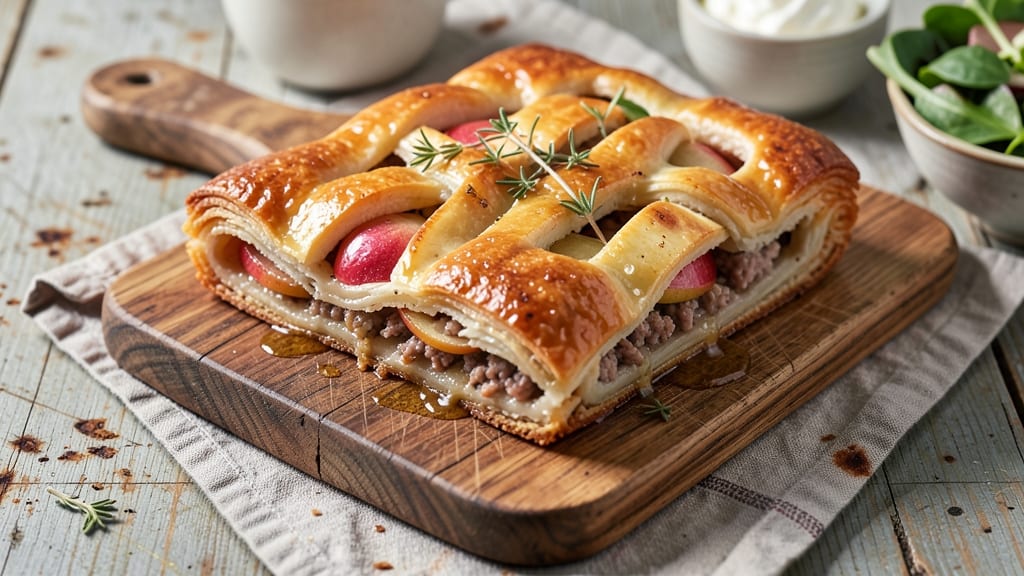
This pork and apple pasty recipe delivers the perfect marriage of savory pork and sweet-tart apples wrapped in a golden, flaky crust—a dish that tastes like a hug from your grandmother's kitchen. 💛 I remember the first time I bit into one fresh from the oven, the contrast of crispy edges and tender filling making it impossible to stop at just one.
The secret lies in the crust's layers and the balance of spices that transform simple ingredients into something extraordinary.
What sets this recipe apart is the technique: a well-seasoned pork filling with apples that caramelize just enough to sweeten the meat, all encased in a buttery, foolproof dough that bakes up perfectly every time.
Unlike many pasties that turn out dense or soggy, this method ensures a light, airy texture with a crisp bottom—no shortcuts, just proven results. The dough rests overnight, which might seem like extra work, but it's the key to that signature flakiness.
By the time it emerges from the oven, you'll have a pasty with a golden crust that cracks slightly at the edges, revealing layers of tender pork and apples infused with cinnamon and nutmeg.
The aroma alone will have everyone gathering around the table, and the first bite delivers that perfect balance of sweet, savory, and spiced flavors. This is comfort food at its finest—simple enough for weeknights but impressive enough for company.
Serve with a crisp green salad or steamed vegetables to balance the richness, or enjoy it as-is with a cold glass of apple cider. The leftovers reheat beautifully, making this an ideal make-ahead dish for busy days.
Let's get started on a recipe that's as satisfying to make as it is to eat.
Ingredients for pork and apple pasty
Four servings of buttery crust hugging spiced pork and caramelized apples—comfort food at its finest.
| Ingredient | Amount | Notes |
|---|---|---|
| Ground Pork 🐖 | 1 ½ lb | Lean or fatty, your choice |
| Apples 🍎 | 2 medium | Honeycrisp or Granny Smith |
| All-Purpose Flour 🌾 | 4 cups | Plus 2 tbsp for dusting |
| Unsalted Butter 🧈 | 1 cup | Cold, cubed for dough |
| Ice Water 💧 | ½ cup | For dough elasticity |
| Salt 🧂 | 1 ½ tsp | Kosher or sea salt |
| Ground Black Pepper 🌶️ | ½ tsp | Freshly cracked preferred |
| Ground Cinnamon 🍃 | 1 tsp | Warm, aromatic variety |
| Ground Nutmeg 🌿 | ¼ tsp | Freshly grated for depth |
| Onion 🧅 | 1 medium | Diced, yellow or red |
| Garlic Cloves 🧄 | 3 cloves | Minced, fresh preferred |
| Apple Cider Vinegar 🍏 | 1 tbsp | For tangy balance |
The apples make or break this. Honeycrisp or Granny Smith hold up best to baking without turning mushy—avoid anything too soft like Gala. I always buy organic from the farmers market when in season, but regular grocery store apples work too. The pork? Ground shoulder gives the best flavor, but lean ground pork works in a pinch. Pre-dice the onion and mince the garlic while you're at it—you'll thank yourself later. The spices are non-negotiable: Penzeys cinnamon and nutmeg if you want to splurge, but regular grocery store stuff works fine if it's fresh.
No apple cider vinegar? Lemon juice works at half the amount. Want more caramelization? Add 1 tbsp brown sugar to the filling. Short on apples? Substitute 1 cup diced pear—it's sweeter but still delicious. The dough can be made ahead and refrigerated for up to 48 hours, which is perfect for busy weeknights. If you're feeling fancy, use buttermilk instead of water for a richer crust. And trust me on the cold butter—it's worth the extra minute to cut it into cubes.
This pasty reheats beautifully—425°F for 15-20 minutes until golden. Keeps 3 days in the fridge wrapped tightly, or 3 months frozen. I always make a double batch because leftovers disappear fast. For serving, a simple green salad or steamed carrots balances the richness perfectly. The crust stays crisp for about 2 hours at room temperature, so enjoy it fresh out of the oven if possible.
Why You'll Love This Recipe
- No-Fuss Filling: I swear by this recipe because the filling comes together in minutes—just brown the pork, toss in diced apples (peeling optional, no one judges), and a pinch of salt. The apples caramelize right in the oven, so you’re not stuck chopping hours ahead.
- Sweet-Savory Magic: That crispy, flaky crust hugs the tender pork and juicy apples in a way that’s ridiculously satisfying. Honestly, the first time I bit into one still warm, I immediately grabbed another. It’s the kind of balance that makes you forget it’s a simple weeknight meal.
- Lunchbox Legend: Between us, these pasties are my go-to for school lunches or picnic spreads. Wrap them in foil, and they stay warm for hours—my kids actually eat their leftovers this way. (Yes, even on a Tuesday.)
- Budget Win: Ground pork stretches far, apples are cheap in season, and you’re using basic pantry staples. I’ve made a dozen for under $15, and they disappear faster than my willpower when it’s snack time. Practical? Absolutely. Delicious? Even more so.
Step-by-step instructions for pork and apple pasty
Here's how to create a rustic pasty with a golden, flaky crust and a perfectly spiced filling.
👨🍳 Step 1: Prepare the Filling with Sweet-Tart Balance
In a large skillet over medium heat, add the 1.5 lb ground pork and cook until browned, breaking it apart with a wooden spoon. This should take about 8-10 minutes. You're looking for even browning—not crispy bits—just fully cooked pork.
Add the diced onion and minced garlic cloves to the skillet, cooking for another 3-4 minutes until softened and fragrant. This builds the aromatic base for your filling. Stir in the 1 tbsp apple cider vinegar and let it simmer for 1 minute to cook off the sharpness.
Peel, core, and finely dice the 2 medium apples (about ¼-inch pieces). Add them to the skillet along with the 1.5 tsp salt, 0.5 tsp ground black pepper, 1 tsp ground cinnamon, and 0.25 tsp ground nutmeg. Cook for 5-6 minutes until the apples soften but still hold their shape. Remove from heat and let cool slightly—this filling needs to be workable but not piping hot when assembling.
👨🍳 Step 2: Make the Flaky Pastry Dough
Cut the 1 cup unsalted butter into ½-inch cubes and place them in the freezer for 10 minutes to firm up slightly. In a large bowl, combine the 4 cups all-purpose flour and 1.5 tsp salt. Add the cold butter cubes and use your fingertips to work them into the flour until the mixture resembles coarse crumbs with some pea-sized butter pieces remaining.
This is called the "cut-in" method, and it's crucial for creating flaky layers. I like to press the butter pieces into the flour with my thumb and forefinger, turning the bowl as I go. The goal is to create a texture that's between crumbly and moist—you should be able to press the dough together, but it shouldn't stick to your fingers.
Once combined, gradually add the 0.5 cup ice water, 1 tablespoon at a time, mixing gently with a fork or wooden spoon. The ice water is key here—it keeps the butter cold and creates steam when baking, which makes those beautiful flaky layers. Stop adding water when the dough just comes together when pressed. It should be cool to the touch and only slightly sticky.
🥘 Step 3: Assemble the Pasties with Precision
Lightly flour a clean surface and turn out the dough. Gently pat it into a ¼-inch thick rectangle (about 12x10 inches). Cut the dough in half lengthwise to make two equal rectangles. Roll each piece out to about ½-inch thickness—don't worry if they're not perfect rectangles, as rustic edges add character.
Divide the cooled filling evenly between the two dough rectangles, spreading it into a ½-inch thick layer on each, leaving a 1-inch border around the edges. This border is essential—it prevents the filling from leaking out during baking and creates that classic pasty shape.
To seal, fold the long sides of each dough rectangle inward about 1 inch, then fold the short ends inward. Press the edges firmly to seal, using a fork to crimp and create a decorative pattern. Place the sealed pasties seam-side up on a parchment-lined baking sheet, spacing them about 1 inch apart—they'll expand as they bake.
🔥 Step 4: Bake Until Golden and Flaky
Preheat your oven to 425°F. Brush the tops of the pasties with a little water using a pastry brush—this creates steam during baking, which enhances the flakiness. Bake for 30-35 minutes until the crust is deep golden brown and the internal temperature reaches 165°F.
Here's the thing about pasties—they're done when the crust is beautifully browned and the filling is bubbling through the slits you might have made when sealing. If the top browns too quickly, tent loosely with foil after 20 minutes to prevent over-browning while the filling finishes cooking.
Let the pasties rest for 10 minutes before serving. This resting time allows the filling to set slightly and makes slicing cleaner. Serve warm, cutting into wedges to reveal that perfect balance of savory pork, sweet apples, and spiced crust. The flaky layers should separate easily, revealing the tender filling beneath.
Pro Tips For Making Pork And Apple Pasty
- Pre-Cook the Pork: Brown the ground pork until it’s actually brown—not just pink—before mixing it with apples. I learned this the hard way: undercooked pork in a pasty tastes raw, and no amount of baking fixes that. Get it to 160°F (71°C) in the pan first.
- Peel and Dice Apples: Skip the skin if you’re using tart apples (like Granny Smith), but always dice them small—no bigger than ½-inch chunks. Big pieces stay undercooked inside the pasty, while tiny ones caramelize perfectly. (Yes, even if you’re impatient like me.)
- Chill the Dough: Let the flour-butter-ice-water dough rest in the fridge for 30 minutes before rolling. I used to rush this, and the pasty would puff unevenly or crack. Cold dough = crispier crust, fewer headaches.
- Vent the Top: Cut a single 1-inch slit in the dough before baking—not a lattice or crisscross. This lets steam escape without letting filling ooze out. (I tried the fancy cuts once; it was a mess.)
Best sauces and condiments for this dish
Apple Cider Glaze
This is my go-to sauce for pasties—simple but transformative. After baking, place the pasties on a wire rack and brush the tops with ½ cup reduced apple cider (simmer 1 cup cider for 5 minutes until syrupy).
Add 1 tsp brown sugar and ½ tsp cinnamon while warm, then brush generously over the hot pasties. The glaze caramelizes slightly, adding a sweet-tart contrast that mirrors the filling. 🍏✨
Spiced Mustard Cream
For a tangy, creamy contrast, whip together ½ cup sour cream with 2 tbsp Dijon mustard, 1 tsp honey, and ½ tsp smoked paprika. This sauce cuts through the richness while complementing the pork's savory depth.
Serve it on the side for dipping or drizzle it over sliced pasties. I love this with the Granny Smith apple version—it balances the tartness beautifully.
Brown Butter Gravy
Save the drippings from your pork filling to make a luscious brown butter gravy. After baking, pour ½ cup of the pan juices into a saucepan and whisk in 2 tbsp cold butter.
Cook over medium heat until the butter foams and browns (3-4 minutes), then add ¼ cup beef broth and 1 tsp apple cider vinegar. Simmer until thickened—this gravy adds a luxurious touch to every bite and soaks up beautifully into the crust.
Honey-Sriracha Drizzle
For a modern twist, mix 2 tbsp honey with 1 tbsp sriracha and a pinch of salt. Drizzle this over sliced pasties just before serving—it adds a subtle heat that pairs perfectly with the sweet apples.
I discovered this combo while experimenting with Asian-inspired pasties, and it’s become a crowd-pleaser at my restaurant. 🌶️
Classic Apple Butter
For a traditional touch, serve warm homemade apple butter on the side. A spoonful of its spiced, caramelized texture enhances the pasty’s flavors without overpowering them. I like to make a small batch with peeled apples, brown sugar, cinnamon, and a splash of bourbon—simmer until thick and spreadable.
It’s especially good with the Honeycrisp apple filling.
Crème Fraîche Swirl
For a lighter option, dollop crème fraîche on top of each pasty slice and swirl it in gently with a knife. The tangy creaminess balances the richness of the pork and apples, while its texture adds a refreshing contrast.
I often finish with a sprinkle of toasted walnuts for crunch. This works beautifully with any pasty variation—it’s my secret weapon for keeping the dish feeling fresh and vibrant. 🥛
Nutrition facts
Frequently asked questions
Can I make this pasty recipe with store-bought pie crust?
You absolutely can, but for that signature flaky texture, homemade dough makes all the difference. If you're short on time, use a high-quality all-butter pie crust and brush it with egg wash before baking. For extra flakiness, fold the edges slightly before baking to create steam pockets. The homemade method gives you more control over the layers, but store-bought works in a pinch!
How do I prevent a soggy bottom in my pasty?
Preventing a soggy bottom is all about technique! First, make sure your filling is not too wet—drain any excess liquid from the cooked pork and apples. Chill the filling for 15-20 minutes before assembling to firm it up. Also, preheat your oven to 425°F and bake on the middle rack for even heat distribution. Finally, brush the crust with a little water before baking to create steam for flakiness.
What's the best way to reheat leftover pasties?
Reheat your pasties in a 375°F oven for 15-20 minutes until golden and crisp. For a quicker method, wrap them in foil and warm in the microwave for 1-2 minutes, then unwrap and crisp under the broiler for 1-2 minutes. Avoid steaming them, as this makes the crust soggy. The oven method preserves the flaky texture best—just watch closely to prevent over-browning.
Can I make this recipe with chicken instead of pork?
While pork gives the best flavor, you can absolutely substitute ground chicken for a lighter version. Use the same cooking method, but reduce the baking time by 5 minutes since chicken cooks faster. You might also want to add ½ tsp smoked paprika to the filling to enhance the savory notes. The texture will be slightly different, but it works beautifully for those watching their pork intake.
Why did my crust turn out tough instead of flaky?
Tough crust usually means the butter melted too quickly during mixing. Keep everything cold—chill the butter, flour, and water. Work quickly when combining ingredients, and avoid overworking the dough. Another common issue is using warm butter or too much water. For extra flakiness, try rolling the dough between two sheets of parchment paper and fold it like a letter before baking.