
Main Courses
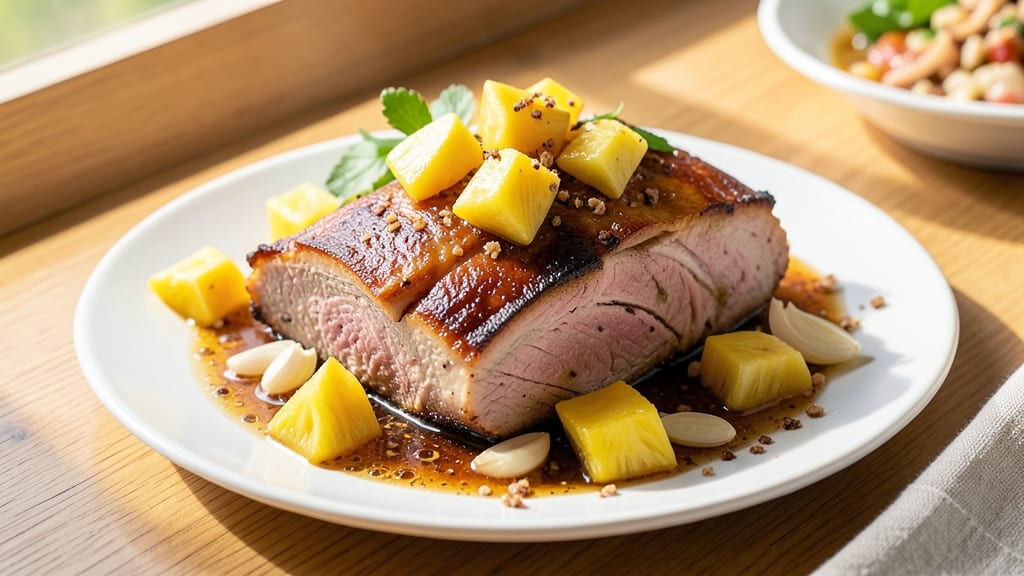
This panlasang Pinoy pork hamonado with pineapple recipe brings the bold, caramelized flavors of Filipino comfort food to your table. 💛 The secret lies in the perfect balance of sweet pineapple, savory soy sauce, and a touch of calamansi—creating a glaze that transforms tender pork into something unforgettable.
After years of perfecting this dish in my cramped Boston kitchen, I've finally cracked the code for that signature sticky-sweet crust that clings to every bite.
The magic happens in two simple steps: marinating the pork in a tangy-sweet mixture, then cooking it until the glaze caramelizes into a glossy, amber finish. No fancy equipment needed—just a skillet and patience.
The pineapple not only adds natural sweetness but also tenderizes the meat while cooking, ensuring perfect texture every time. This is the kind of dish that disappears faster than you can say "panlasang Pinoy."
By the time you're done, you'll have perfectly seared pork with a glossy, caramelized glaze that's sweet, tangy, and just slightly smoky. The aroma alone will have everyone gathering around the table. Serve it over steamed rice with a side of atchara or crisp green beans to complete the meal.
This recipe delivers restaurant-quality results with minimal effort—exactly what home cooks need. What makes this dish truly special is how it captures the heart of Filipino home cooking—simple ingredients, bold flavors, and a technique that transforms ordinary pork into something extraordinary.
The glaze isn't just sweet; it's complex, with layers of umami from soy sauce and brightness from calamansi. Trust me, once you try this version, you'll never go back to store-bought hamonado again. Let's get cooking!
Ingredients for pork hamonado with pineapple recipe panlasang pinoy
Sweet pineapple, tangy calamansi, and savory soy sauce—these ingredients transform simple pork into restaurant-worthy hamonado.
| Ingredient | Amount | Notes |
|---|---|---|
| Pork Shoulder 🥩 | 1 ½ lb | Cut into 1-inch cubes, boneless |
| Fresh Pineapple Chunks 🍍 | 1 cup | Fresh or canned in juice, drained |
| Soy Sauce 🥄 | ½ cup | Light or regular, no wheat gluten |
| Calamansi Juice 🍋 | ¼ cup | Substitute with lime juice if unavailable |
| Brown Sugar 🍚 | ½ cup | Packed, for caramelization |
| Garlic Cloves 🧄 | 6 cloves | Minced for marinade |
| Black Peppercorns 🌶️ | 1 tsp | Freshly ground for heat |
| Olive Oil 🫒 | 2 tbsp | For searing pork |
| White Vinegar 💧 | 1 tbsp | For tanginess |
| Fresh Ginger 🌿 | 1 tbsp | Grated, for depth |
| Green Onions 🧅 | 3 whole | Sliced, for garnish |
| Salt 🧂 | 1 tsp | Kosher or sea salt |
The pork shoulder is key—look for cuts with good marbling for tenderness. Filipino markets or Asian grocery stores often have pre-cut pork shoulder, but if you're at a regular supermarket, grab a whole shoulder and ask the butcher to cube it. The pineapple should be fresh and juicy—Dole or Del Monte brands work well if you're using canned. Calamansi is the magic ingredient here, but if you can't find it (it's common in Asian markets), lime juice is the next best thing—just use a bit more. For the brown sugar, Domino or C&H work perfectly, but any light brown sugar will do.
No calamansi? Lime juice plus a pinch of salt mimics the tangy brightness. Short on soy sauce? Coconut aminos works in a pinch, though it's pricier. The garlic and ginger can be swapped for garlic powder and ground ginger if needed, but fresh is ideal. For the glaze, if you're worried about the sugar burning, add a splash of water to the pan to help it caramelize evenly. The green onions are purely for garnish—skip them if you're not a fan, but they add a nice fresh finish.
Pork cubes can be marinated for up to 24 hours in the fridge for deeper flavor, but even 30 minutes makes a difference. The glaze thickens as it cooks, so if it's too runny, simmer uncovered for a few minutes. Leftovers keep for 4-5 days in the fridge—reheat gently with a splash of water to restore moisture. This dish freezes beautifully for up to 3 months, though the texture changes slightly after thawing.
Why You'll Love This Recipe
- One-Pan Magic: I swear by this—just toss the pork, pineapple, and sauce in one pan. No chopping boards, no extra pots, no stress. The pineapple caramelizes right alongside the meat, and honestly? That’s half the battle won before you even taste it.
- Sweet-Savory Balance: Between us, the calamansi brightens everything up while the brown sugar melts into the pork, creating this perfect sticky-sweet glaze. It’s not too sweet, not too salty—just right, like someone tuned it for your taste buds.
- Leftover Goldmine: This dish actually gets better the next day. I make a double batch on Sundays because the pork stays tender, the sauce thickens just enough, and reheating it? Pure comfort. (Yes, even on a Tuesday night.)
- Budget-Friendly Feast: Pork shoulder is cheap, and pineapple stretches across multiple meals. I’ve served this at family gatherings, potlucks, and lazy weeknights—no one ever asks what’s in it, they just keep coming back for seconds. My secret weapon.
Step-by-step instructions for pork hamonado with pineapple
Here's how to create that perfect sweet-savory glaze that makes every bite irresistible.
🍳 Step 1: Sear the Pork Shoulder for Maximum Flavor
Heat 2 tablespoons olive oil in a large skillet over medium-high heat until shimmering. Add the 1.5 lb pork shoulder cut into 1-inch cubes in a single layer, leaving space between pieces. Let them sear undisturbed for 3-4 minutes until golden brown on one side—this creates that beautiful crust we want.
Flip the pork and continue searing for another 3-4 minutes until all sides are nicely browned. If the pan gets too crowded, work in batches to avoid steaming instead of searing. Transfer the seared pork to a plate and set aside. You'll notice the pork releases easily when it's ready to flip—that's your cue.
👨🍳 Step 2: Build the Sweet-Savory Marinade
In the same skillet (no need to clean it—the browned bits add flavor), add the 6 cloves minced garlic and 1 tablespoon grated fresh ginger. Sauté for 30 seconds until fragrant—you should smell that aromatic punch of garlic and ginger wafting through your kitchen.
Pour in the 0.5 cup soy sauce, 0.25 cup calamansi juice (or lime juice), and 1 tablespoon white vinegar. Stir well to deglaze the pan, scraping up all those delicious browned bits from the bottom. This liquid will form the base of our glaze, so don't rush this step—let it simmer for 1-2 minutes until slightly reduced.
🥘 Step 3: Create the Caramelized Glaze
Add the 0.5 cup packed brown sugar and 1 teaspoon salt to the skillet, stirring constantly until the sugar dissolves completely. The mixture will bubble and thicken—this is where the magic happens. Return the seared pork to the skillet and stir to coat everything evenly in the sweet-savory mixture.
Cover the skillet and let it cook on medium-low heat for 20-25 minutes, stirring occasionally. You're looking for the pork to become tender and the liquid to reduce to a thick, glossy glaze that clings beautifully to the meat. The glaze should coat the back of a spoon when you lift it—this ensures that perfect caramelized finish.
🍍 Step 4: Add Pineapple for Tangy Sweetness
Once the pork is tender and the glaze is thick, add the 1 cup fresh pineapple chunks to the skillet. Stir everything together and let it cook uncovered for another 5-7 minutes on medium heat. The pineapple will soften slightly and release its juices, creating a beautiful balance of sweet and tangy flavors that complement the rich pork.
Taste the mixture and adjust seasoning if needed—you might want to add a little more soy sauce for saltiness or a splash of calamansi juice for extra tang. The pineapple should be tender but still hold its shape slightly, adding that delightful texture contrast to each bite.
🍽️ Step 5: Garnish and Serve with Fresh Green Onions
Transfer the pork hamonado with pineapple to a serving platter. Garnish with the 3 whole green onions, sliced thinly, for a pop of fresh color and mild onion flavor that cuts through the richness of the dish. The green onions should be evenly distributed throughout the platter for that restaurant-quality presentation.
Serve immediately while the glaze is still glossy and sticky. Each bite should deliver perfectly tender pork with that irresistible sweet-savory glaze clinging to it, balanced by the bright tang of pineapple. This dish pairs beautifully with steamed rice to soak up all that delicious sauce!
Pro Tips For Making Pork Hamonado With Pineapple Recipe Panlasang Pinoy
- SEAR THE PORK FIRST: I learned this the hard way—skipping the initial sear means your hamonado ends up mushy instead of caramelized. Heat your pan until it’s smoking hot, then sear the pork shoulder in batches for 3-4 minutes per side before adding anything else. That crust locks in flavor and keeps the meat tender.
- USE FROZEN PINEAPPLE: Sounds weird, but it works: frozen pineapple chunks caramelize faster and release their juices better than fresh. Toss them in the pan right after the pork, no thawing needed. They’ll soften perfectly while the sauce thickens, and you skip the mess of cutting fresh fruit.
- SIMMER LOW AND SLOW: After burning three batches, I finally figured out that high heat ruins the sauce. Once everything’s in the pan, turn the heat to medium-low and let it bubble gently for 20-25 minutes. This lets the soy, sugar, and calamansi meld without scorching—your sauce will be glossy, not bitter.
- ADD SUGAR LAST: Brown sugar burns faster than you think, especially with calamansi’s acidity. Wait until the pork’s almost done and the pineapple’s softened before stirring in the sugar. A quick 2-minute simmer is all it needs to dissolve and caramelize—no waiting for a full boil.
Common mistakes when making great pork hamonado with pineapple recipe panlasang pinoy
Overcrowding the Pan
This is my biggest pet peeve—packing too much pork into the skillet at once. When you overcrowd, the pork steams instead of searing, leaving you with pale, soggy cubes instead of golden, crusty ones. I learned this the hard way when my first batch turned out mushy.
Work in batches if needed, even if it means two trips to the skillet. Trust me, the extra 5 minutes of patience pays off with perfectly browned pork every time. 🔥
Rushing the Glaze
I see so many cooks rush the glaze formation, turning up the heat to speed things along. Big mistake! The glaze needs time to develop its signature caramelized depth. If you crank the heat too high, you'll end up with burnt sugar on the edges and a thin, watery sauce.
Keep it at medium-low heat and let that sugar melt gradually. The glaze should coat the back of a spoon when you lift it—this is your perfect signal.
Skipping the Deglaze
Those browned bits stuck to the bottom of your pan? Don't scrape them out! That's where all the flavor lives. When you deglaze with the soy sauce and vinegar, you're essentially creating a flavor bomb that will make your glaze taste restaurant-quality.
I once made this dish without deglazing, and honestly, it tasted flat and one-dimensional. Take the 30 seconds to scrape up those bits—your taste buds will thank you.
Using Low-Quality Pineapple
This is where people often cut corners, and it shows. Canned pineapple in heavy syrup? No thank you. The syrup makes the glaze too sweet and watery. Even worse, dried-out canned pineapple chunks fall apart and turn mushy.
Use fresh pineapple or high-quality canned pineapple in juice. The Dole brand in juice works perfectly if you can't find fresh. The texture contrast between tender pork and slightly firm pineapple is what makes this dish sing.
Not Marinating Long Enough
I know, I know—you're eager to eat. But if you marinate the pork for just 30 minutes, you're missing out on layers of flavor. The acid in the calamansi and vinegar needs time to work its magic, breaking down the meat fibers and infusing it with that tangy-sweet profile.
For best results, marinate overnight. If you're short on time, even 2 hours in the fridge makes a noticeable difference. Patience here truly pays off in flavor.
Overcooking the Pineapple
The pineapple should be tender but still hold its shape—it's not supposed to turn into a mushy sauce. If you let it cook too long, you'll end up with a glaze that's more like a sweet syrup.
Keep an eye on it and remove from heat as soon as it's just tender. The pineapple should still have a slight bite to it. This bit of resistance is what gives each bite that delightful texture contrast against the tender pork. 🍍
Nutrition facts
Frequently asked questions
Can I substitute regular pork chops for pork shoulder?
Pork chops work but won't be as tender as pork shoulder. For best results, use boneless pork loin cut into 1-inch cubes. The shoulder's fat content makes it more forgiving and creates a richer glaze. If using chops, reduce cook time by 5-7 minutes since they cook faster.
What's the best way to store leftovers?
Store in an airtight container in the fridge for up to 5 days. Reheat gently in a skillet with a splash of water to restore moisture. For freezing, portion into single servings and freeze for 3 months max. Thaw overnight in the fridge before reheating.
Can I make this without calamansi?
Yes! Use lime juice plus ½ teaspoon salt for the same tangy brightness. For extra depth, add 1 teaspoon fish sauce (common in Filipino cooking). The flavor won't be identical but still delicious—just slightly less complex.
How do I know when the glaze is ready?
The glaze is perfect when it coats the back of a spoon and has a glossy, amber color. It should be thick enough to cling to the pork but still slightly runny. If it's too thin, simmer uncovered for 2-3 minutes to reduce. Never let it burn!
What sides pair best with this dish?
Steamed jasmine rice is classic, but you can't go wrong with garlic green beans or atchara (pickled papaya). For a heartier meal, add a simple Filipino-style potato salad. The acidity from pickled veggies cuts through the richness beautifully.