
Main Courses
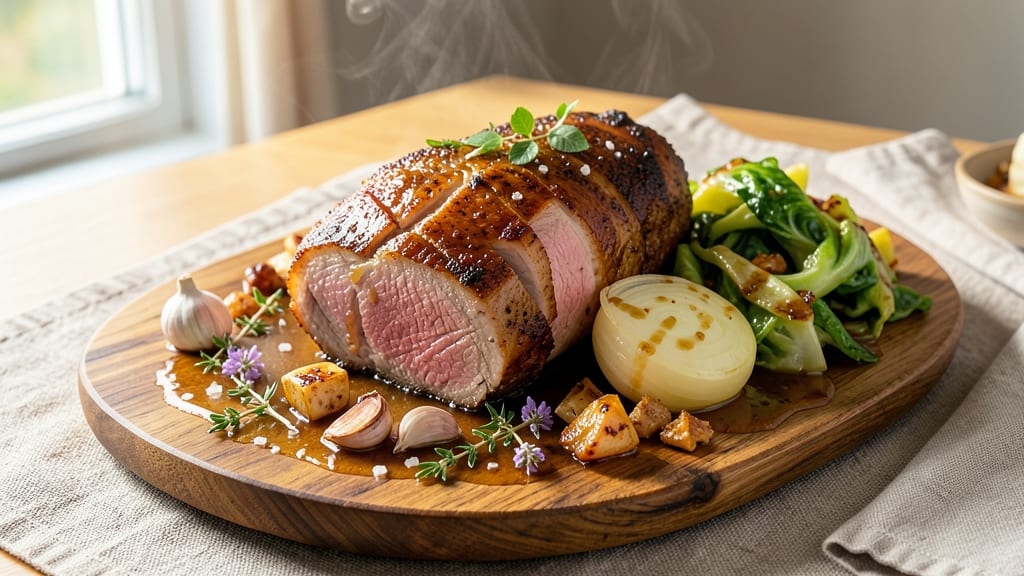
This apple cider pork roast with cabbage recipe transforms humble ingredients into a showstopping centerpiece that smells like autumn in every bite. 🍂 As someone who's spent years perfecting pork roasts in professional kitchens, I can tell you the secret lies in balancing sweet apple cider with savory spices—a technique that makes even tough cuts melt in your mouth. The cabbage, braised in the same aromatic liquid, becomes tender and infused with that same caramelized depth.
The magic happens during the slow braising process, where apple cider breaks down the meat while creating a rich, glossy sauce. We're talking fall-apart tenderness with crisp edges, all while keeping the flavors bright and balanced—not too sweet, not too tangy.
The cabbage absorbs those same flavors, becoming a perfect foil to the rich pork. This isn't just comfort food; it's restaurant-quality dining that your family will beg to repeat.
What makes this recipe truly special is how it comes together with minimal fuss but maximum flavor. You'll start with a simple spice rub on the pork, then let the apple cider work its magic during the slow cook.
The cabbage gets tossed in just enough time to soften without losing its structure. By the time you're plating, you'll have a dish that looks as impressive as it tastes—golden pork slices fanned over tender cabbage, all bathed in that glossy apple cider reduction.
Perfect for holiday gatherings or a special weeknight dinner, this roast serves 6-8 and comes together in about 3 hours (with mostly hands-off time). The leftovers? Even better the next day as sandwiches or with mashed potatoes.
Trust me when I say this is the kind of recipe that turns ordinary dinners into memorable meals.
Ingredients for apple cider pork roast with cabbage
Eight ingredients, three hours, fall-apart pork that smells like autumn magic.
| Ingredient | Amount | Notes |
|---|---|---|
| Pork Shoulder (Bone-In) 🥩 | 4 lb | Tough cut for braising, trim excess fat |
| Unsweetened Apple Cider 🍎 | 2 cups | 100% pure, no added sugar |
| Green Cabbage 🥬 | 1 whole | Heavier head, ~2 lbs total |
| Yellow Onion 🧅 | 1 whole | Medium size, sliced thick |
| Garlic Cloves 🧄 | 6 cloves | Fresh, peeled, smashed |
| Brown Sugar 🍯 | ¼ cup | Light or dark variety |
| Ground Black Pepper 🌶️ | 1 tbsp | Freshly cracked preferred |
| Dried Thyme 🌿 | 1 tbsp | Or 1 tbsp fresh thyme leaves |
| Ground Cinnamon 🍃 | 1 tsp | Warm, not spicy |
| Ground Cloves 🌶️ | ½ tsp | Freshly ground for warmth |
| Salt 🧂 | 1 ½ tsp | Kosher or sea salt |
| Olive Oil 🫒 | 2 tbsp | For searing pork |
| Fresh Rosemary 🌿 | ½ tbsp | Chopped, stems removed |
| Apple Cider Vinegar 🍋 | 1 tbsp | For depth of flavor |
The pork shoulder is the star—bone-in for extra flavor, 4 lbs for perfect portions. Costco or your butcher will have it pre-cut, but if you're buying whole, look for good marbling. The apple cider? Mott's or Woodchuck are my go-tos—unsweetened so you control the balance. Fresh rosemary and thyme make all the difference here, so don't grab them from the sad little containers at the store. Trader Joe's has fresh bundles that last all season if you buy extra. The cabbage should be heavy for its size—green or red, but green has a slightly milder bite that pairs better with the sweetness.
No apple cider? Substitute with 1 cup apple juice plus 1 cup beef broth—it won't be identical, but you'll still get that caramelized depth. Short on rosemary? Double the thyme. The brown sugar is key for balance—skip it if you're watching sugar, but trust me, it rounds out the acidity beautifully. For the cabbage, if you can't find a whole head, two 12-ounce bags of pre-shredded work in a pinch (just don't skip the core). The onions can be swapped for 2 celery stalks if you're avoiding onion flavor, though I'd argue they're essential for that sweet-savory base.
This roast gets better the next day—plan ahead. Store leftovers in the fridge for up to 5 days or freeze for 3 months. I always make extra because it reheats like a dream—wrap tightly in foil before freezing for easy reheating. The cabbage keeps separately for 5-6 days in the fridge, wrapped in damp paper towels. For serving, I like to slice the pork against the grain into 1/4-inch thick pieces, then fan them over the cabbage. The sauce reduces beautifully into a glossy finish—save some for sandwiches later in the week.
Why You'll Love This Recipe
- One-Pan Magic: I swear by this recipe on busy nights—just toss the pork, cabbage, and onions in one pot with the apple cider, and let it slow-cook while you do the dishes. The cabbage practically cooks itself, and the cider keeps everything sticky and fragrant without extra pans.
- Sweet-Savory Crunch: That crisp-tender cabbage with the caramelized pork? It’s the best of both worlds—the cider’s tang cuts through the richness, while the garlic and onion build layers of warmth. Honestly, the first bite makes me forget I’m not at a cozy autumn dinner.
- Leftovers That Shine: This roast tastes even better the next day—slice the pork thin for sandwiches, or shred it into a hearty salad. The cabbage softens just enough to become a silky bed for the pork, and the cider reduces into a glossy sauce that ties everything together.
- Budget-Friendly Feast: Pork shoulder is cheap, cabbage lasts forever, and a bottle of apple cider stretches across multiple meals. Between us, this is the kind of recipe that makes grocery day feel like a win—plus, it feeds four for under $15. (Yes, even on a Tuesday night.)
Step-by-step instructions for apple cider pork roast with cabbage
Here's how to create a rich, spiced pork shoulder with tender cabbage—slow-cooked to perfection.
🔥 Step 1: Sear the Pork Shoulder for Deep Flavor
Pat the 4 lb pork shoulder (bone-in) completely dry with paper towels—this is non-negotiable for crispy skin. Heat 2 tablespoons olive oil in a heavy Dutch oven over medium-high heat until shimmering. Place the pork fat-side down and sear for 8-10 minutes until the fat renders and the skin turns golden brown. Flip and sear the other side for another 6-8 minutes.
Here's the thing—don't rush this step. You want that fat to render out and create a flavorful crust. If the oil starts smoking too much, reduce the heat slightly. Once browned, remove the pork and set it aside on a plate. You'll notice the pan has beautiful browned bits—this is your flavor foundation.
👨🍳 Step 2: Build the Spiced Apple Cider Base
In the same Dutch oven, add 1 whole yellow onion sliced into thick rounds, 6 cloves garlic smashed to release their aroma, and 1 whole green cabbage cut into wedges (keep the core intact). Cook over medium heat for 5 minutes, stirring occasionally, until the onions soften slightly and the cabbage begins to wilt.
Now it's time for the spices. Add 1 tablespoon dried thyme, 1 teaspoon ground cinnamon, 0.5 teaspoon ground cloves, 1.5 teaspoons salt, and 1 tablespoon ground black pepper. Stir everything together for 30 seconds until the spices are toasted and fragrant. This is where the warm, aromatic flavors start to develop.
🥘 Step 3: Deglaze and Create the Apple Cider Sauce
Pour in 2 cups unsweetened apple cider and 1 tablespoon apple cider vinegar, scraping up all those browned bits from the bottom of the pan with a wooden spoon. Bring to a gentle simmer, then add the 0.25 cup brown sugar and 0.5 tablespoon chopped fresh rosemary. Let this mixture bubble away for 5 minutes until slightly reduced and fragrant.
Real talk: this is the moment that matters. The apple cider and vinegar create a tangy-sweet base that will infuse the pork as it cooks. If you taste it now, you'll notice the balance of sweet, tart, and spiced notes—this is your flavor roadmap for the finished dish.
🔥 Step 4: Slow-Braise Until Fork-Tender
Return the pork shoulder to the Dutch oven, fat-side up. Cover tightly with a lid and transfer to a 325°F oven. Braise for 3-4 hours, turning the pork every 45 minutes to ensure even cooking. You'll know it's ready when a fork slides in easily and the internal temperature reaches 195-203°F.
I know it seems like a long time, but patience pays off here. The low temperature breaks down the tough pork shoulder into melt-in-your-mouth tenderness. The cabbage will soften beautifully, absorbing all those delicious apple cider and spice flavors. If the liquid reduces too much before the pork is done, add ¼ cup water to maintain moisture.
🍽️ Step 5: Rest and Serve with Pan Sauce
Once the pork reaches the perfect temperature, remove it from the oven and transfer to a cutting board. Tent loosely with foil and let it rest for 15-20 minutes. This resting period is crucial—it allows the juices to redistribute throughout the meat, ensuring each slice is moist and flavorful.
While the pork rests, skim any excess fat from the braising liquid and return the Dutch oven to the stovetop. Simmer the sauce uncovered for 5-7 minutes until slightly thickened. Slice the pork against the grain into ½-inch thick pieces and serve with the cabbage wedges and rich apple cider sauce spooned over the top. The contrast of tender pork, crispy cabbage edges, and sweet-tart sauce is what makes this dish special.
Pro Tips For Making Apple Cider Pork Roast With Cabbage
- SEAR THE PORK FIRST: That bone-in shoulder needs a good brown crust before the slow cook. I used to skip it, thinking it’d just steam in the cider—but high heat for 5-7 minutes locks in flavor and keeps the meat from drying out later. Use a Dutch oven if you have one; it’s the only way to get that caramelized edge without making a mess.
- SHRED THE CABBAGE THIN: Whole cabbage wedges turn into sad, watery logs. Instead, cut the core off, slice into quarters, then shred each quarter into thin ribbons—like you’re making coleslaw. They’ll cook faster, soak up the cider better, and actually soften instead of sitting like a brick.
- DON’T OVERLOAD THE PAN: I learned this the hard way—dumping all the cider, onions, and garlic in at once just steams the pork. Start with half the cider, let it reduce by a third, then add the rest. The onions and garlic should sizzle, not swim, or you’ll end up with a watery sauce instead of a sticky glaze.
- USE A MEAT THERMOMETER: Guessing with a fork is how you end up with pork that’s either rubbery or falling apart. Aim for 203°F in the thickest part—yes, it’ll pull apart easily, but it won’t be greasy. If you don’t have one, cut into the center: if it’s opaque and flaky, it’s done. No gray left, no excuses.
Troubleshooting this dish
Pork Too Dry?
If your pork comes out dry, you likely didn't rest it long enough or overcooked it. Always rest for 15-20 minutes after removing from the oven—this lets juices redistribute.
For extra moisture, add ¼ cup apple cider to the braising liquid if it reduces too much before the pork is done. I've found using a meat thermometer is non-negotiable—pull the pork at 195-203°F, not when it "looks" done. 💡
Cabbage Still Crunchy?
Your cabbage wedges need more time in the oven. Since they cook alongside the pork, they often finish first. For perfect tenderness, add 15-20 minutes uncovered at the end of cooking to steam them gently.
If using pre-shredded cabbage, reduce cooking time by 30 minutes—it wilts faster than whole wedges. A splash of apple cider in the final minutes helps soften any stubborn spots. 🥬
Sauce Too Thin?
Simmer the braising liquid uncovered for 10-15 minutes after removing the pork to reduce it properly. If it's still too thin, return the Dutch oven to medium heat and reduce by half. For extra thickness, whisk in 1 teaspoon cornstarch mixed with 2 tablespoons water—this works like a charm.
Remember, the sauce should coat the back of a spoon but still be pourable. 🍲
Skin Not Crispy?
Crispy pork skin starts with a completely dry surface. Pat the pork with paper towels until it's bone-dry before searing. Use a heavy Dutch oven (I love my Lodge cast iron) and sear over medium-high heat until the fat renders and skin turns golden.
If it's not crispy enough, broil for 2-3 minutes at the end of cooking—just watch it like a hawk to avoid burning. 🔥
Flavor Too Sweet?
Balance excess sweetness by adding 1 extra tablespoon of apple cider vinegar to the braising liquid. The acidity cuts through the sugar beautifully. For a more savory profile, increase the salt and black pepper by ½ teaspoon each.
If the dish still tastes too sweet, serve with a tangy side like pickled onions or a simple green salad with lemon vinaigrette. 🍋
Leftovers Too Dry?
Reheat leftovers slowly in the oven at 300°F with a splash of apple cider or water to prevent drying. For sandwiches, slice the pork thinly and layer with sauce on toasted sourdough. If reheating in the microwave, cover with a damp paper towel and heat in 30-second intervals.
I always make extra because the flavors deepen overnight—it's perfect for sandwiches or tacos the next day. 💛
Nutrition facts
Frequently asked questions
Can I use pork tenderloin instead of pork shoulder?
Not ideal for this recipe! Pork tenderloin is lean and cooks quickly, so it won't develop the same melt-in-your-mouth texture. Stick with the pork shoulder—it's the perfect cut for slow braising. If you're set on a quicker cook, try this with pork loin but reduce cooking time to 1.5 hours and keep an eye on doneness.
What if I don't have a Dutch oven?
No problem! Use a heavy oven-safe pot with a tight-fitting lid. A 6-quart pot works well. If you're short on space, cook the pork and cabbage separately—braise the pork in its liquid, then add the cabbage to the pan for the last 30 minutes of cooking. The flavors will still meld beautifully.
How can I make this dish ahead of time?
This roast actually tastes better the next day! Cook the pork and cabbage as directed, then refrigerate overnight. Reheat in the oven at 300°F for 30-45 minutes with a splash of apple cider to revive the juices. The cabbage stays tender, and the pork becomes even more flavorful. Perfect for meal prep—just reheat and serve!
Can I substitute red cabbage for green?
Red cabbage works beautifully and adds a gorgeous color contrast. The flavor is slightly sweeter and more robust, so you might want to reduce the brown sugar to 0.20 cup to balance the sweetness. The cooking time remains the same—just watch for doneness after 2.5 hours.
What's the best way to serve the leftovers?
Slice the pork thinly and pile it onto toasted sourdough with extra apple cider sauce for sandwiches. The cabbage makes a great addition to salads or wraps. For a hearty meal, reheat with mashed potatoes or serve over buttered egg noodles. The flavors only get better the second day!