
Main Courses
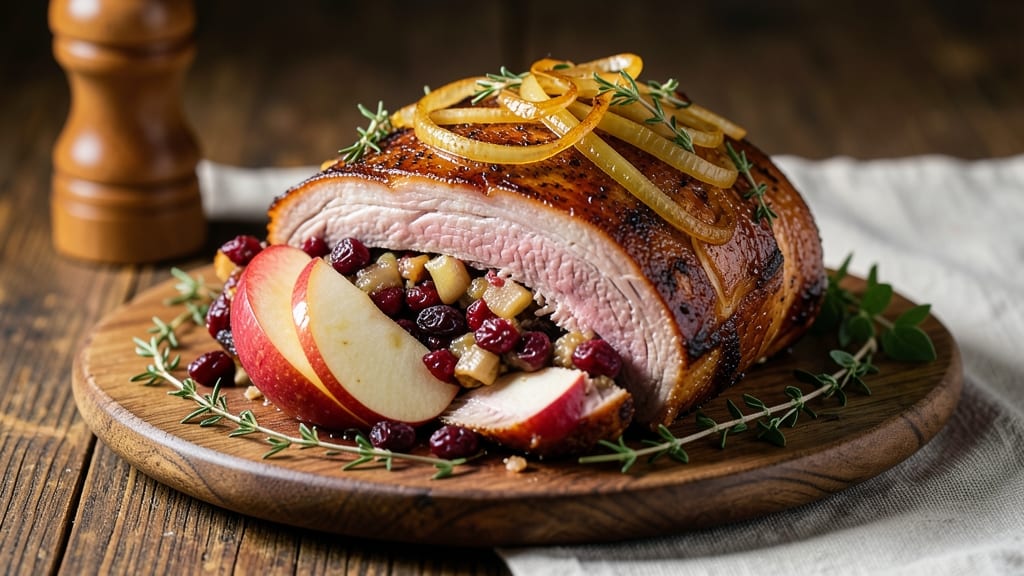
This apple cranberry stuffed pork roast recipe transforms a simple Sunday dinner into a showstopping centerpiece that smells like autumn in your kitchen. 🍏✨ The secret lies in balancing sweet-tart cranberries, caramelized apples, and savory herbs within the tender pork—creating a harmony that keeps guests asking for seconds.
As someone who's cooked for crowds at The Smoky Pig, I know how to make this dish foolproof for both beginners and seasoned cooks alike.
The magic starts with a dry-brine that ensures juicy meat every time, followed by a stuffing that caramelizes beautifully while the pork roasts. I use heritage pork shoulder for its rich flavor and marbling, but any bone-in pork roast will work.
The stuffing—packed with dried cranberries, apples, onions, and fresh thyme—develops deep, complex flavors as it cooks, while the pork crusts to golden perfection.
What you'll end up with is a restaurant-quality roast that's moist, flavorful, and impressive enough for holiday tables. The caramelized apples and cranberries create pockets of sweetness that contrast beautifully with the savory pork, while the aromatics infuse the meat with layers of depth.
This isn't just dinner—it's an experience that makes every bite memorable.
Serve with creamy mashed potatoes and roasted Brussels sprouts for a complete meal that feels special without requiring hours in the kitchen. The leftovers reheat beautifully too, making this the ultimate make-ahead centerpiece for gatherings. Let's get cooking—your guests won't believe you made it from scratch.
Ingredients for apple cranberry stuffed pork roast
Six pounds of pork, sweet-tart apples, and cranberries that caramelize into perfection.
| Ingredient | Amount | Notes |
|---|---|---|
| Heritage Pork Shoulder 🥓 | 4 lb | Bone-in preferred for juiciness |
| Honeycrisp Apples 🍎 | 2 medium | Peeled, cored, sliced |
| Dried Cranberries 🍇 | 1 cup | Sweetened, chopped |
| Yellow Onion 🧅 | 1 whole | Diced, medium size |
| Fresh Thyme 🌿 | ½ ounce | Stems removed, chopped |
| Fresh Rosemary 🌿 | ¼ ounce | Needles only, chopped |
| Garlic Cloves 🧄 | 4 cloves | Minced, fresh preferred |
| Kosher Salt 🧂 | 1 ½ tbsp | Diamond Crystal preferred |
| Black Peppercorns 🌶️ | 1 tsp | Freshly cracked |
| Brown Sugar 🍚 | ¼ cup | Packed, light variety |
| Extra-Virgin Olive Oil 🫒 | 2 tbsp | For crust development |
| Unsalted Butter 🧈 | ½ cup | Cold, cubed |
| Fresh Sage Leaves 🌿 | ¼ cup | Chopped, for garnish |
The pork shoulder is non-negotiable here. Heritage pork shoulder from Whole Foods or your local butcher has the best marbling, but any bone-in pork roast works. Look for a piece with visible fat cap—it keeps the meat juicy. If you're buying from Costco, their pre-cut pork shoulder is perfect for this recipe. For the apples, Honeycrisp is ideal, but Fuji or Gala hold up well too. Just make sure they're firm and free of bruises. The dried cranberries? Trader Joe's has the best sweetened variety—no need for fancy brands here.
No honeycrisp apples? Any crisp apple works—just avoid mealy varieties like Red Delicious. Fresh cranberries can substitute dried at a 1:1 ratio, but they'll release more liquid during cooking. Short on thyme? Dried thyme at one-third the amount gets you close, but fresh is worth hunting down at the market. The brown sugar adds caramel depth—light brown sugar is preferred, but dark works too. For the olive oil, California avocado oil has a higher smoke point if you're searing the pork. And if you're out of fresh sage, dried sage at half the amount works in a pinch.
This roast reheats beautifully—350°F for 20 minutes covered with foil. Keeps for 4 days in the fridge, freezes for 3 months wrapped tightly in butcher paper. I always make a double batch for holiday gatherings—leftovers make amazing sandwiches the next day. Store the stuffing separately if you prefer it less soggy, but trust me, the caramelized version is worth it.
Why You'll Love This Recipe
- Stuffing Made Simple: I swear by this—just slice the apples, chop the onion, and fold in the cranberries. No fancy techniques, no stress. The pork shoulder does all the work while you sip your coffee.
- Sweet-Savory Magic: That first bite? Crispy apples caramelizing into the pork, tart cranberries cutting through the richness, and thyme adding earthy warmth. It’s like autumn in your mouth, but better.
- Holiday or Weeknight: Between us, this roast feels fancy enough for Thanksgiving but unfussy enough for a Tuesday. Leftovers? Even more delicious cold in sandwiches—trust me, I’ve tested it.
- Budget-Friendly Feast: Heritage pork shoulder stretches for a crowd, and the apples/cranberries add luxury without breaking the bank. One roast feeds six, with leftovers that taste just as good reheated. Win.
Step-by-step instructions for apple cranberry stuffed pork roast
Here's how to create a showstopping roast with tender pork and a sweet-savory stuffing that balances perfectly.
👨🍳 Step 1: Prepare the Stuffing Components
Start by preheating your oven to 375°F. In a large mixing bowl, combine the 2 medium Honeycrisp Apples (previously peeled and sliced), 1 cup Dried Cranberries, 1 whole Yellow Onion (diced), 0.5 ounce Fresh Thyme (chopped), 0.25 ounce Fresh Rosemary (needles only), and 4 cloves Garlic Cloves (minced). This is your flavor foundation.
In a separate small bowl, whisk together 1.5 tbsp Kosher Salt, 1 tsp Black Peppercorns (freshly cracked), and 0.25 cup Brown Sugar. Sprinkle this seasoning blend over the fruit and onion mixture, then toss gently to distribute evenly. Let this sit at room temperature while you prepare the pork—this allows the flavors to meld slightly before roasting.
🔥 Step 2: Season and Stuff the Pork Shoulder
Pat the 4 lb Heritage Pork Shoulder completely dry with paper towels—this is crucial for crispy skin. Rub the surface generously with 2 tbsp Extra-Virgin Olive Oil, then season all sides with additional 1 tbsp Kosher Salt and ½ tsp Black Peppercorns. Let it sit uncovered on a wire rack for 30 minutes at room temperature.
Carefully open the pork shoulder and create a pocket by slicing horizontally about halfway through. Stuff the prepared apple-cranberry mixture into the pocket, pressing gently to compact it. Secure the opening with kitchen twine, tying it every 2 inches to keep the stuffing contained. Place the stuffed pork on a rack set in a roasting pan to allow air circulation on all sides.
🔥 Step 3: Sear for Crispy Skin and Begin Roasting
Heat your oven to 425°F for a high-heat start. Place the stuffed pork shoulder on the middle rack and roast for 30 minutes to render fat and develop color. After 20 minutes, remove the pork and spoon any accumulated drippings over the surface—this basting creates that coveted crispy crust.
Reduce the oven temperature to 325°F and continue roasting for 2.5 to 3 hours, until the internal temperature reaches 195-203°F (use a meat thermometer inserted in the thickest part). The pork should be fork-tender with a deep mahogany crust. If the top isn't brown enough, broil for 2-3 minutes at the end, watching closely to avoid burning.
🍳 Step 4: Create the Sage Butter Pan Sauce
While the pork rests, remove it from the pan and tent loosely with foil. Place the roasting pan on the stovetop over medium heat and add the 0.5 cup Unsalted Butter (cold and cubed). Let it melt, then scrape up all the browned bits from the bottom with a wooden spoon—these contain concentrated flavor.
Stir in the 0.25 cup Fresh Sage Leaves and cook for 1 minute until fragrant. If the sauce needs thinning, add 2-3 tablespoons of the pork's juices from the pan. Keep this sauce warm until serving.
⏰ Step 5: Rest and Serve with Sauce
Transfer the pork to a cutting board and let it rest for 20-30 minutes before slicing. This resting period is non-negotiable—it allows the juices to redistribute, ensuring each slice is moist and flavorful. The internal temperature will rise another 5-10°F during this time.
Slice the pork against the grain into ½-inch thick portions and serve with the sage butter sauce spooned generously over each slice. The sweet-tart stuffing will complement the savory pork perfectly, creating a harmonious balance that keeps everyone coming back for seconds.
Pro Tips For Making Apple Cranberry Stuffed Pork Roast
- Sear the Shoulder First: Hit that pork shoulder with a screaming-hot pan for 4-5 minutes per side before stuffing. I used to skip this, thinking the oven would handle it—wrong. That crust locks in flavor and keeps the juices from leaking out when you slice later.
- Core the Apples: Cut those Honeycrisp apples into wedges and remove the core entirely. Whole chunks turn mushy in the oven, while cored wedges stay crisp and release juice that tenderizes the pork. (Yes, it looks like extra work, but it’s worth it.)
- Soak the Cranberries: Toss dried cranberries in warm water for 10 minutes before stuffing—just enough to plump them up, then drain well. Skimping here means dry, chewy cranberries that’ll make your stuffing taste like raisins. Trust me, the texture difference is night and day.
- Roast Low and Slow: After searing, cook at 275°F (not 350°F) for 3-4 hours total, basting every 45 minutes. I learned this the hard way—rushing it dries out the pork and turns the apples to mush. Patience here guarantees fall-apart tenderness.
Regional styles of this dish
Southern BBQ Style
In the Southeast, we take stuffed pork roasts to the next level by adding a touch of smoky heat. Start by mixing 1 tbsp smoked paprika and ½ tsp cayenne pepper into the stuffing—this gives the cranberries and apples a subtle smoky kick that pairs perfectly with the pork.
I like to finish the roast with a 10-minute smoke session using applewood chips in a smoker set to 250°F before the final broil. This technique is inspired by my time on the BBQ circuit, where we'd often finish roasts with a quick smoke to deepen the flavors. 🔥
New England Twist
Up north, they love their stuffings packed with local ingredients. Swap the dried cranberries for ½ cup fresh cranberries (tossed with 1 tbsp maple syrup) and add ½ cup diced celery to the stuffing mix.
The maple syrup caramelizes beautifully with the apples, creating a deeper sweetness that balances the pork's richness. I've made this version at Thanksgiving gatherings in New England, and it's always a crowd-pleaser. The key is to reduce the brown sugar to ¼ cup since the maple syrup adds enough sweetness.
German-Inspired Braised Version
For a heartier take, I've adapted this recipe using a slow-cooker approach inspired by German braised pork.
After stuffing the pork, place it in a Dutch oven with 1 cup apple cider and 1 sprig fresh rosemary, then cover and braise at 300°F for 4 hours> instead of roasting.
The cider creates a beautiful sauce that soaks into the pork and stuffing, making every bite extra juicy. This method is perfect for cold weather gatherings and gives the dish a comforting, stew-like quality that's beloved in German cuisine.
Italian Herb Variation
For an Italian-inspired twist, replace the rosemary with 1 tbsp fresh oregano and 1 tbsp fresh basil, and add ½ cup sun-dried tomatoes (chopped) to the stuffing. The Mediterranean herbs brighten up the sweet-tart flavors, while the sun-dried tomatoes add a tangy depth.
I've served this version at Italian-themed dinners, and it's particularly delicious with a side of creamy polenta instead of potatoes. The key is to reduce the roasting time slightly to 2 hours> at 325°F since the herbs can dry out faster.
Spicy Carolina Heat
Channeling my time in Charleston, I love adding a Carolina Reaper kick to this roast. Mix ½ tsp Carolina Reaper sauce (or ¼ tsp cayenne) into the stuffing for a fiery surprise. The heat cuts through the sweetness beautifully, creating a perfect balance.
For extra drama, finish the roast with a 1-minute blast> under the broiler to intensify the caramelization. This version is best served with cooling sides like cucumber salad or cooling yogurt sauce to balance the heat. 🌶️
Nutrition facts
Frequently asked questions
Can I use bone-in pork chops instead of a pork shoulder?
Pork chops won't work for this recipe—they're too small to properly stuff and hold the filling. For a similar sweet-savory dish, try using bone-in pork loin roast (about 3-4 lbs) instead. The cooking time will be shorter (1.5-2 hours at 325°F), but the technique remains the same. Just reduce the stuffing quantity by half to avoid overfilling.
How do I prevent the stuffing from falling out while roasting?
Secure the stuffing with kitchen twine tied every 2 inches around the pork, and use butcher's twine for extra strength. For added insurance, place a small piece of parchment paper under the stuffing before tying—this creates a barrier that helps hold everything together. Avoid overstuffing, as the filling should only fill about 2/3 of the pork's cavity.
Can I make this ahead of time for a holiday meal?
This roast reheats beautifully. Cook the pork as directed, then let it cool completely before wrapping tightly in butcher paper and refrigerating for up to 4 days. For serving, reheat at 325°F for 1 hour covered with foil. For freezing, wrap the cooled roast in plastic wrap and butcher paper, then store for up to 3 months. Thaw overnight in the fridge before reheating.
What's the best way to serve the leftovers?
Leftover stuffed pork makes incredible sandwiches! Slice the pork thinly and layer it on toasted brioche buns with a smear of Dijon mustard and caramelized onions. For a heartier option, shred the pork and mix it with the stuffing, then reheat with a splash of apple cider to moisten. The stuffing also reheats well—just warm it in a skillet with a little butter for extra flavor.
Can I substitute fresh cranberries for dried in the stuffing?
Yes, but you'll need to adjust the liquid balance. Use ½ cup fresh cranberries (tossed with 1 tbsp lemon juice) and reduce the brown sugar to ¼ cup. Fresh cranberries release more moisture during cooking, so drain any excess liquid from the stuffing after mixing. The tartness will be more pronounced, so consider adding ½ tsp cinnamon to complement the apples.