
Sauces & Condiments
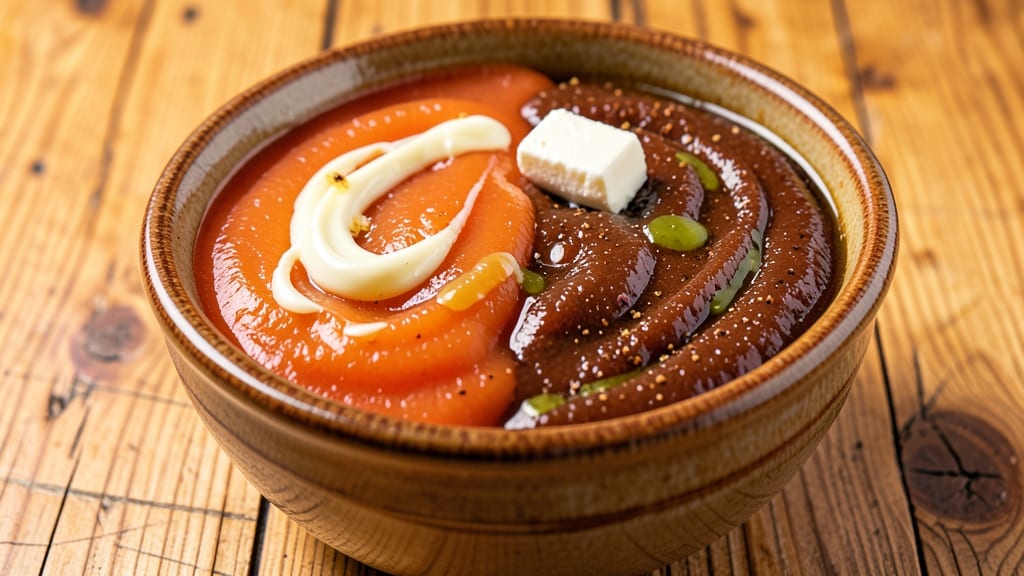
Apple sauce and apple butter transform seasonal fruit into versatile condiments that elevate everything from toast to roasted meats. This recipe delivers both textures—smooth, velvety apple sauce for immediate use and rich, spiced apple butter that develops deeper flavor over time. The key lies in proper cooking techniques that preserve natural sweetness while building complex warmth through cinnamon and nutmeg.
For the apple sauce, you'll simmer peeled apples with just enough sugar and lemon juice to balance their natural tartness, then blend to your preferred consistency—whether silky smooth or lightly textured.
Meanwhile, the apple butter slow-cooks until thick and spreadable, with spices caramelizing into the fruit for layers of cozy autumn flavor. Both methods use simple ingredients but require patience to achieve restaurant-quality results at home.
The finished products offer remarkable versatility—apple sauce brightens pork chops or stuffing, while apple butter transforms into a luxurious topping for pancakes, cheese boards, or even savory dishes like glazed carrots.
Proper storage (fridge for up to 2 weeks or freezer for months) ensures you'll always have homemade goodness on hand. This dual-recipe approach lets you enjoy both fresh and preserved apple flavors throughout the season.
What sets these apart is the balance of natural fruit character with just the right amount of sweetness and spice. The apple sauce maintains its vibrant color and apple-forward taste, while the butter develops a deep, molasses-like richness that makes it irresistible.
Whether you're canning for winter or using immediately, both recipes deliver professional-quality results with minimal equipment.
Ingredients for apple sauce apple butter
These ten ingredients transform simple apples into two luxurious condiments—smooth sauce and velvety butter—packed with autumnal warmth.
| Ingredient | Amount | Notes |
|---|---|---|
| Honeycrisp Apples 🍎 | 4 lb | Peeled, cored, cut into even chunks |
| Granulated Sugar 🍚 | 1 cup | Adjust based on apple tartness |
| Fresh Lemon Juice 🍋 | ¼ cup | Brightens apple flavor |
| Ground Cinnamon 🌿 | 1 ½ tsp | For warm spice depth |
| Ground Nutmeg 🌿 | ½ tsp | Freshly grated preferred |
| Unsalted Butter 🧈 | 2 tbsp | For apple sauce richness |
| Granny Smith Apples 🍎 | 3 lb | Peeled, cored, cut into chunks |
| Brown Sugar 🍚 | 1 ½ cups | Enhances caramelized flavor |
| Apple Cider Vinegar 🍶 | ½ cup | Balances sweetness |
| Vanilla Extract 💧 | 1 tsp | Adds subtle complexity |
Honeycrisp apples are the star for the sauce—their crisp sweetness holds up beautifully to simmering. Local orchards or Trader Joe's usually carry them in season, but any firm, aromatic variety works. Granny Smiths for the butter add tartness that caramelizes into perfect depth. Skip pre-cut apples—they oxidize fast. Store whole apples in the fridge for up to 2 weeks, or freeze chopped pieces for 6 months. The cinnamon and nutmeg should be fresh; Penzeys Spices carries high-quality whole spices you can grind yourself for maximum flavor.
No Honeycrisp? Fuji or Gala apples work in a pinch—they're sweeter, so reduce sugar by 2 tbsp. Fresh lemon juice can be swapped for bottled, but freshly squeezed brightens the sauce instantly. For the butter, brown sugar is non-negotiable—it adds molasses-like richness. No vanilla? Almond extract at half the amount gives a similar depth. The butter will thicken as it cools, so don't over-stir while cooking. If it separates, whisk in 1 tbsp of apple cider vinegar to re-emulsify. For a smoky twist, add 1/4 tsp of smoked paprika to the butter mixture.
Apple sauce keeps beautifully in the fridge for 2 weeks and freezes for 6 months—perfect for batch cooking. Store it in airtight containers with a thin layer of olive oil on top to preserve color. The butter thickens further as it sits, so reheat gently with 1 tsp of water if it becomes too stiff. Both condiments reheat beautifully—simmer on low for 5 minutes to restore texture. Portion the butter into small jars for easy use on toast or pancakes. For canning, process jars in a water bath for 15 minutes to ensure shelf stability.
Why You'll Love This Recipe
- No Peel Required: I’ll be real—peeling Honeycrisp apples is half the battle. This recipe lets you skip it entirely, chopping straight through skins for that perfect thick texture without the fuss. (Yes, even on a Tuesday night.)
- Sweet-Spiced Magic: That first spoonful? Chef’s kiss. The Honeycrisp’s natural sweetness caramelizes into a velvety spread, while the lemon juice cuts through the richness—just enough cinnamon and nutmeg to make it taste like autumn in a jar.
- Pantry Staple Upgrade: Turns out, this isn’t just for toast. Slather it on oatmeal, mix it into yogurt, or drizzle it over roasted pork—it’s the kind of versatile jam that makes every meal feel special without trying too hard.
- Makes a Month’s Worth: One batch lasts forever. Store it in the fridge for weeks, or freeze it for months—perfect for when you forget to buy applesauce or want to treat yourself to homemade. (My freezer’s full of it right now.)
Step-by-step instructions for apple sauce and apple butter
Here's how to create two distinct apple preparations in one process—smooth, spiced sauce and rich, caramelized butter.
Prepare the Apples for Cooking
Peel, core, and cut the 4 lb Honeycrisp Apples and 3 lb Granny Smith Apples into even ½-inch chunks. I use a sharp chef's knife for this—it gives you cleaner cuts and prevents bruising. Place the Honeycrisp apples in a large pot and set aside for the sauce. In a separate pot, combine the Granny Smith apples with the 1.5 cups Brown Sugar and 0.5 cup Apple Cider Vinegar—this tart-sweet balance is key for the apple butter.
The Granny Smith's acidity will help break down the apples faster during cooking, while the vinegar adds depth that balances the sweetness. Don't skip peeling—it keeps the textures clean and professional. If you're working ahead, cover both apple mixtures with water and refrigerate until ready to cook.
Cook the Apple Sauce to Silky Perfection
Add the 4 lb Honeycrisp Apples to their pot and bring to a boil over medium-high heat. Once boiling, reduce to medium-low heat and simmer uncovered for 20-25 minutes, stirring occasionally, until the apples are completely tender. You'll know they're ready when a knife slides in easily with no resistance.
After the apples soften, stir in the 1 cup Granulated Sugar, 0.25 cup Fresh Lemon Juice, 1.5 tsp Ground Cinnamon, 0.5 tsp Ground Nutmeg, and 2 tbsp Unsalted Butter. The lemon juice brightens the natural sweetness while the spices deepen the flavor profile. Simmer for another 5-7 minutes, stirring frequently, until the sauce thickens to your desired consistency—it should coat the back of a spoon but still be smooth, not gluey.
Caramelize the Apple Butter
In the separate pot with the Granny Smith apples, increase the heat to medium-high and cook uncovered for 30-40 minutes, stirring occasionally. You're looking for the apples to break down completely and the mixture to thicken into a rich, caramelized butter. The color should darken to a deep amber, and you'll notice a sticky, syrupy texture forming.
Once the apples have fully broken down and the mixture reaches this caramelized stage, stir in the 1 tsp Vanilla Extract. This adds a subtle complexity that rounds out the bold apple flavors. The apple butter should be thick enough to hold its shape when spooned, but still spreadable. If it's too thick, add 1-2 tablespoons of water to reach your preferred consistency.
Finish and Store Both Preparations
For the apple sauce, let it cool completely before transferring to clean jars. The sauce should be smooth with a slight sheen—this indicates proper thickening. For the apple butter, let it cool slightly before transferring to jars, as it will continue to thicken as it cools. I like to press a piece of parchment paper directly on the surface before sealing to prevent a skin from forming.
Both preparations can be stored in the refrigerator for up to 2 weeks or frozen for up to 6 months. The apple sauce is perfect for pairing with pork dishes or using as a topping for pancakes, while the apple butter shines on toast, in oatmeal, or as a glaze for meats. The key to success here is patience—letting the flavors develop fully during cooking ensures a depth of taste that can't be rushed.
Pro Tips For Making Apple Sauce Apple Butter
- PEEL AND CORE LIKE A PRO: Use a paring knife to slice off the peel in one long spiral—it’s faster than peeling and you’ll save more flesh. For Honeycrisp, leave the skin on if you’re impatient, but know it’ll add bitterness unless you simmer longer.
- SIMMER LOW AND SLOW: After the apples break down, drop the heat to a gentle bubble—any hotter and you’ll cook off the lemon’s brightness and caramelize the sugar too fast. I’ve burned three batches trying to rush this.
- ACID FIRST, SWEET LATER: Stir in the lemon juice before the sugar—it brightens the flavor and cuts through the apples’ natural tannins. Add the sugar last, then let it dissolve into the warm mixture for even sweetness.
- SKIP THE FOOD MILL: A fine-mesh sieve or immersion blender gives you control over texture—no grainy bits from a food mill. If you’re lazy, pulse in a blender, but you’ll lose some of that silky apple butter consistency.
Regional styles of this dish
New England Style
In New England, apple butter often includes chopped walnuts or pecans for texture, creating a rustic, nutty depth. I like to toast ½ cup walnuts in a dry pan over medium heat for 3-4 minutes until fragrant, then stir them into the finished butter.
The result is a perfect balance of crunch and smoothness—ideal for stuffing or cheese boards. 🌰
Southern Caramelized
Southern apple butter takes inspiration from classic peach preserves, using molasses instead of vinegar for a deeper, almost chocolatey note. Replace the apple cider vinegar with ¼ cup molasses and add ½ tsp ground cloves for warmth.
Simmer the Granny Smiths with 1 cup brown sugar until the mixture reaches a deep mahogany color, then finish with 1 tsp vanilla. This version pairs beautifully with fried chicken or cornbread.
Midwest Spiced
The Midwest leans into bold cinnamon and allspice, creating a warming, almost chai-like flavor. Double the cinnamon to 3 tsp and add ½ tsp ground allspice to the butter mixture. For extra richness, stir in 2 tbsp apple cider at the end.
This version is perfect for apple pie fillings or glazing ham. The spices caramelize beautifully during the long simmer, creating layers of warmth. 🍂
Pacific Northwest Tart
In the Pacific Northwest, where apples are tart and crisp, the focus is on bright acidity and herbal notes. Use 1 cup Granny Smith apples (instead of Honeycrisp) and add 1 tbsp fresh thyme leaves while simmering.
For the butter, swap vanilla for 1 tsp almond extract and reduce sugar to 1 cup. The result is a lighter, more refreshing spread that cuts through rich dishes like roasted pork or cheese plates.
European-Style Chutney
Inspired by British apple chutneys, this version blends apples with onions and raisins for a sweet-savory contrast. Sauté 1 diced onion in 1 tbsp butter until soft, then add to the simmering apples along with ½ cup raisins.
Finish with 1 tsp mustard seeds and ½ tsp black pepper. This chutney-style butter is bold and complex, perfect for sandwiches, sausages, or as a condiment with cheese.
Modern Fusion Twist
For a contemporary take, infuse the apple butter with smoked elements using liquid smoke or smoked salt. Add ½ tsp smoked paprika and ¼ tsp liquid smoke (like Columbus Craft Liquid Smoke) to the Granny Smith mixture.
For a spicy kick, stir in ½ tsp cayenne pepper at the end. This fusion version works surprisingly well with BBQ ribs or grilled vegetables, adding a savory-sweet contrast. 🔥
Nutrition facts
Frequently asked questions
Can I make apple butter without a slow cooker?
Use a heavy-bottomed pot on the stovetop. Simmer the Granny Smith apples with sugar and vinegar over low heat for 45-60 minutes, stirring frequently to prevent sticking. The key is patience—it takes longer than a slow cooker but achieves the same deep caramelization.
Why does my apple sauce turn out too watery?
This usually happens if you didn't cook the apples long enough or used too many soft varieties. For thicker sauce, simmer uncovered for 5-10 extra minutes or mash the cooked apples before blending. If it's still too thin, return to heat and reduce further. A splash of apple cider vinegar (1 tbsp) can also help stabilize the texture.
How do I prevent apple butter from getting grainy?
Graininess often comes from undercooked apples or stirring too vigorously. Cook until apples are completely mushy (no chunks), then blend briefly if needed. Avoid adding liquid at the end—if too thick, stir in 1 tsp water while warm. For extra smoothness, strain through a fine-mesh sieve before storing.
Can I substitute maple syrup for sugar in these recipes?
Yes, but adjust the amount carefully. Replace 1 cup sugar with ¾ cup maple syrup (it's sweeter). Reduce other liquids by 2 tbsp since maple syrup adds moisture. The flavor will be more complex with subtle earthy notes. For apple butter, maple syrup enhances the caramelization beautifully.
What's the best way to use up leftover apple sauce?
Transform it into apple butter! Simmer 2 cups apple sauce with ½ cup brown sugar and 1 tsp cinnamon for 30 minutes until thick. Or blend with 1 tbsp peanut butter for a quick apple butter alternative. Freeze extras in ice cube trays for perfect portions in smoothies or baked goods.