
Main Courses
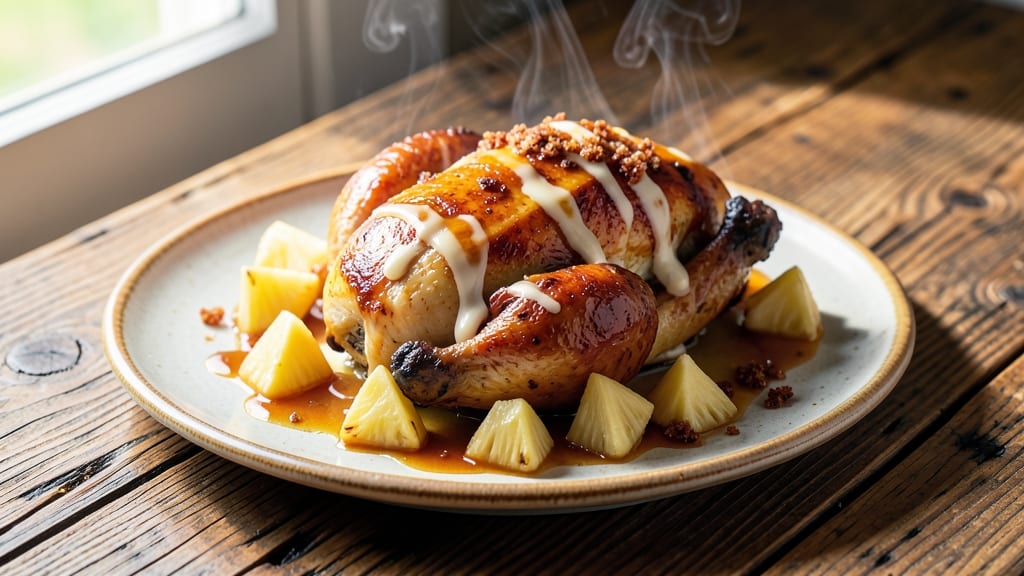
This baked pineapple whole chicken recipe transforms an ordinary roast into a showstopper with caramelized sweetness that'll have your kitchen smelling like a tropical paradise. The secret lies in marinating the chicken in pineapple juice and spices overnight, ensuring tender, juicy meat with a sticky-sweet glaze that's impossible to resist.
I perfected this technique after years of experimenting with fruit-based marinades—my grandmother swore by pineapple for its natural tenderizing power and subtle acidity that cuts through rich chicken flavors.
What makes this recipe truly special is how effortlessly it delivers restaurant-quality results with minimal hands-on time. You'll start by marinating the chicken overnight, then roast it at 375°F until golden and crispy, basting occasionally with the reduced pineapple mixture.
The pineapple's natural sugars caramelize beautifully, creating a glossy, sticky exterior that contrasts perfectly with the tender, juicy meat inside. This method ensures every bite is moist and flavorful, with none of the dryness that often plagues whole roasted chickens.
The final result is a whole chicken that looks as impressive as it tastes—golden brown with caramelized edges and a fragrant aroma that fills your home.
The pineapple glaze adds a subtle sweetness that balances beautifully with savory herbs and spices, creating a harmonious flavor profile that's both comforting and exciting. Serve it with roasted potatoes or a fresh citrus salad to complement the tropical notes, and watch as everyone at the table asks for seconds.
This recipe is perfect for special occasions or when you want to elevate a simple weeknight dinner without spending hours in the kitchen.
The marinating process does most of the work while you sleep, and the roasting time is straightforward, making it ideal for home cooks who want to impress without stress. Once you try this, you'll never go back to plain roasted chicken again—it's that good.
Ingredients for baked pineapple whole chicken
These tropical-inspired ingredients transform ordinary chicken into a caramelized masterpiece with juicy perfection.
| Ingredient | Amount | Notes |
|---|---|---|
| Whole Chicken (4-5 lbs) 🍗 | 4 ½ lb | Fresh, skin-on preferred |
| Fresh Pineapple Juice 🍍 | 1 ½ cups | No sugar added, freshly squeezed |
| Fresh Pineapple Chunks 🍍 | 1 cup | For glaze reduction |
| Brown Sugar 🍚 | ½ cup | Packed, light or dark |
| Soy Sauce 🍶 | ¼ cup | Low sodium preferred |
| Honey 🍯 | ¼ cup | Wildflower preferred |
| Garlic Cloves 🧄 | 6 cloves | Minced, fresh preferred |
| Fresh Ginger 🌿 | 1 tbsp | Grated, young ginger preferred |
| Olive Oil 🫒 | ¼ cup | Extra-virgin for richness |
| Fresh Thyme Leaves 🌿 | ¼ cup | Stems removed |
| Fresh Rosemary 🌿 | 1 tbsp | Chopped, fresh preferred |
| Salt 🧂 | 1 ½ tsp | Diamond Crystal preferred |
| Ground Black Pepper 🌶️ | 1 tsp | Freshly ground |
| Ground Cinnamon 🌶️ | ½ tsp | Optional, for warmth |
The 4-5 lb whole chicken is non-negotiable—smaller birds dry out, and larger ones take too long to roast evenly. Look for fresh, skin-on chickens at Whole Foods or your local butcher shop; they'll have better marbling and flavor. If you can't find fresh pineapple juice, Dole or Del Monte brands work well, but avoid anything with added sugar. The pineapple chunks should be fresh too—canned won't caramelize the same way. For the brown sugar, Domino or Wholesome! brands are reliable and affordable. The honey? Wildflower or clover varieties add subtle floral notes that complement the pineapple beautifully.
No fresh pineapple juice? Mango nectar or orange juice works in a pinch, but the flavor won't be quite the same. Swapping soy sauce for coconut aminos keeps it gluten-free, though the taste will differ slightly. If you're avoiding honey, maple syrup is a 1:1 substitute—just reduce the liquid slightly since it's thicker. The ginger should be young and fibrous; older ginger is drier and less flavorful. For the herbs, dried thyme and rosemary work at half the amount, but fresh is always better. The cinnamon is optional but adds a warm depth that pairs perfectly with the tropical flavors. Pro tip: if you can't find fresh pineapple chunks, blend frozen ones—just drain off the excess liquid first.
Marinate the chicken overnight for maximum tenderness, then roast at 375°F until golden and crispy. The leftovers reheat beautifully—just cover with foil and warm in the oven for 10-15 minutes. Store the glaze separately in the fridge for up to 1 week; it's perfect for drizzling over rice or toast. The chicken itself keeps for 3-4 days in the fridge or 3 months frozen. For a quick shortcut, use pre-minced garlic and ginger from the jar—it saves time without sacrificing much flavor.
Why You'll Love This Recipe
- Fewer Dirty Dishes: I swear by this recipe on busy nights—just toss the chicken and pineapple chunks on a tray, pour in the juice and soy glaze, and let the oven do the work. No chopping boards, no sticky pots, just one sheet pan to scrape.
- Sweet-Savory Magic: That caramelized brown sugar and soy sauce combo? It’s like a flavor bomb—sticky, smoky, and bright all at once, with the fresh pineapple cutting through the richness. My kids actually finish their veggies when this is on the table.
- Weeknight to Weekend: Make it for Tuesday dinner or Sunday brunch—same effort, different vibes. The leftovers shred like a dream for tacos or fried rice, and honestly? The smell alone makes my house feel like a resort.
- Budget-Friendly Feast: A whole chicken stretches for four meals, and pineapple’s cheap when you buy it in season. I’ve fed six people for under $20, and they always ask for seconds. (Yes, even my picky uncle.)
Step-by-step instructions for baked pineapple whole chicken
Here's how to transform a simple whole chicken into a showstopping centerpiece with caramelized sweetness and irresistible juiciness.
Prepare the Chicken for Maximum Flavor and Moisture
Remove the whole chicken from its packaging and pat it completely dry with paper towels—this is non-negotiable for crispy skin. I like to work in a well-ventilated area because the pineapple aromas will fill your kitchen. Using your fingers, gently loosen the skin over the breast and thighs to create pockets. This allows the marinade to penetrate deeply and guarantees juicy meat throughout.
In a small bowl, whisk together the 1.5 cups fresh pineapple juice, 0.25 cup soy sauce, 0.25 cup honey, 0.5 cup brown sugar, 6 minced garlic cloves, 1 tablespoon grated fresh ginger, 1.5 teaspoons salt, 1 teaspoon ground black pepper, and 0.5 teaspoon ground cinnamon (if using). Pour half of this marinade into the pockets you created, then rub the remaining marinade all over the chicken, including under the skin. Let it marinate uncovered in the refrigerator for at least 4 hours—overnight is even better if you can plan ahead. This step ensures every bite is infused with tropical sweetness and aromatic depth.
Create the Pineapple Glaze and Prep the Pan
Preheat your oven to 375°F while you prepare the glaze. In a small saucepan, combine the 1 cup fresh pineapple chunks, 0.25 cup olive oil, 0.25 cup fresh thyme leaves, and 1 tablespoon chopped fresh rosemary. Simmer over medium-low heat for 10-12 minutes until the pineapple breaks down and the mixture reduces to a thick, syrupy consistency—this should coat the back of a spoon. Strain out the solids if you prefer a smoother glaze, but I like to leave some texture for visual appeal.
Place the marinated chicken on a rack set inside a roasting pan. The rack elevates the chicken, allowing hot air to circulate underneath for even cooking and crispy skin. Pour the reduced pineapple glaze into the bottom of the pan—this will create steam during cooking, keeping the chicken moist while adding that signature caramelized sweetness.
Bake to Juicy Perfection with Caramelized Crust
Roast the chicken for 1 hour 15 minutes until the internal temperature reaches 165°F when measured in the thickest part of the thigh (not touching bone). Here's the thing—don't open the oven door during cooking. Every time you peek, you lose heat and extend the cooking time. Instead, trust your thermometer and the visual cues: the skin should be deep golden brown with crispy edges, and the juices should run clear when you pierce the thigh with a knife.
About 30 minutes before the chicken is done, brush it generously with any remaining pineapple glaze from the pan. This creates a beautiful caramelized crust that's both visually stunning and packed with flavor. The glaze will bubble and darken as it cooks—this is exactly what you want. If the pan drippings reduce too much, add 1-2 tablespoons of water to prevent burning.
Rest and Serve for Maximum Juiciness
Once the chicken reaches 165°F, remove it from the oven and transfer it to a cutting board. Tent loosely with aluminum foil and let it rest for 15-20 minutes before carving. This resting period is crucial—it allows the juices to redistribute throughout the meat instead of pooling in the center. I know it's tempting to cut into it immediately, but trust me on this step. The difference in tenderness and moisture is dramatic.
To serve, carve the chicken into serving pieces, discarding the skin if desired (though I love the crispy bits). Spoon any remaining pan juices and glaze over the top for extra flavor. The chicken should be juicy, tender, and bursting with that perfect balance of sweet, savory, and aromatic notes from the pineapple and herbs. Pair it with steamed rice or roasted vegetables to complete the meal—this dish is rich enough to stand on its own but works beautifully as part of a spread.
Pro Tips For Making Baked Pineapple Whole Chicken
- Preheat Like It’s 1987: Your oven should hit 375°F and sit for at least 15 minutes before the chicken goes in—no exceptions. I learned this the hard way when my first batch of pineapple-glazed chicken emerged undercooked because the oven was still cold. That’s 45 minutes of wasted time and a sad, limp bird.
- Blend Pineapple Juice: Skip the bottled stuff and use a blender for fresh pineapple juice—it makes a real difference. The natural enzymes in blended juice caramelize faster and cling better to the chicken, giving you that glossy, sticky glaze instead of a watery mess. Plus, you’ll know exactly how much sugar is in it.
- Don’t Crowd the Pan: If your roasting pan is small, bake the chicken breast-side up on a rack instead of letting it sit in its own juices. I used to ignore this, and the skin would steam instead of crisp. A rack lets heat circulate, so the skin gets golden while the pineapple glaze doesn’t turn into soup.
- Baste Early, Baste Often: Start basting the chicken with the pineapple mixture after 20 minutes, then every 15 minutes after that—yes, even if you’re impatient like me. The first time I skipped this, the glaze pooled at the bottom of the pan instead of sticking to the chicken. Now I set a timer so I don’t forget.
Pro cooking tips for great baked pineapple whole chicken
Marinade Magic
Let the marinade work its magic overnight for maximum tenderness. I've found that marinating for at least 4 hours makes a noticeable difference, but overnight (up to 12 hours) is ideal.
The pineapple juice's natural enzymes break down the chicken fibers, while the soy sauce and honey create a perfect balance of sweet and umami. Pro tip: Use a ziplock bag in the fridge for easy storage—just place the chicken and marinade inside, seal, and let it do its work. 🌟
Glaze Reduction
Don't rush the glaze reduction—this is where the flavor concentrates. Simmer the pineapple chunks on medium-low heat until they break down completely (about 10-12 minutes). The glaze should coat the back of a spoon and have a syrupy consistency.
I like to leave some pineapple texture for visual appeal, but you can strain it if you prefer a smoother finish. This step is non-negotiable for that signature caramelized crust. 🔥
Temperature Control
Keep that oven temperature steady at 375°F—any hotter and you risk drying out the chicken, any cooler and it won't develop that beautiful caramelized crust. I use an oven thermometer to verify my oven's accuracy (many run hot or cold).
The internal temperature should reach 165°F in the thickest part of the thigh. Resist the urge to open the oven door—every time you peek, you lose heat and extend cooking time. Trust your thermometer! ⏰
Caramelized Crust
For that perfect caramelized crust, brush the chicken with glaze about 30 minutes before it's done. The glaze will bubble and darken as it cooks, creating a beautiful contrast with the juicy meat underneath.
If the pan drippings reduce too much, add 1-2 tablespoons of water to prevent burning. This final step elevates the dish from good to restaurant-quality. 💫
Resting Period
Never skip the 15-20 minute resting period after removing the chicken from the oven. This allows the juices to redistribute throughout the meat, preventing dryness. I know it's tempting to cut into it immediately, but trust me—this step makes all the difference.
Tent the chicken loosely with foil while it rests to keep it warm without steaming. 💡
Equipment Essentials
You don't need fancy equipment—just a few basics. A meat thermometer is non-negotiable for perfect doneness. I love the Thermoworks Smoke model for its accuracy. A roasting rack elevates the chicken for even cooking, and a large roasting pan ensures the glaze doesn't burn.
For the glaze reduction, a small saucepan with a lid helps control the simmer. Keep it simple—no need to overcomplicate things! 🍗
Nutrition facts
Frequently asked questions
Can I use canned pineapple instead of fresh for this recipe?
Fresh pineapple juice and chunks give the best flavor and texture, but you can use canned pineapple in a pinch. Drain the canned pineapple well and pat it dry before using. For the juice, look for 100% pineapple juice with no added sugar. The flavor won't be identical, but it'll still create a delicious caramelized glaze. Just expect slightly less natural sweetness and a more watery texture in the glaze.
How do I adjust the recipe for a smaller chicken?
For a 3-4 lb chicken, reduce the marinade by about 25% and the glaze ingredients by 20%. The cooking time will also be shorter—aim for 50-60 minutes at 375°F, checking the internal temperature at 165°F. Smaller chickens cook faster, so keep a close eye on them. The key is to maintain the same ratio of marinade to chicken weight for maximum flavor.
Can I make this recipe without soy sauce?
Replace the 0.25 cup soy sauce with 0.25 cup coconut aminos for a gluten-free option, or use 0.25 cup fish sauce for a deeper umami flavor. You can also omit it entirely and increase the honey to 0.35 cup to maintain sweetness. The soy sauce adds that savory depth, but these alternatives work beautifully for different dietary needs.
What's the best way to reheat leftovers?
To maintain juiciness, place leftover chicken pieces in an oven-safe dish, cover with foil, and warm in a 350°F oven for 10-15 minutes. For the glaze, reheat it separately in a small saucepan over low heat until warmed through—about 3-5 minutes. Microwaving works in a pinch, but the texture suffers. Always reheat just until warmed through to prevent drying out the chicken.
Why did my chicken turn out dry?
Dry chicken usually happens from overcooking or skipping the resting period. Always use a meat thermometer to check for 165°F in the thickest part of the thigh. Also, don't open the oven door frequently—each peek lets out heat and extends cooking time. The resting period is crucial too: let the chicken rest for 15-20 minutes before carving. If you're still having issues, try reducing the oven temperature to 350°F for a slightly longer cook time.