
Main Courses
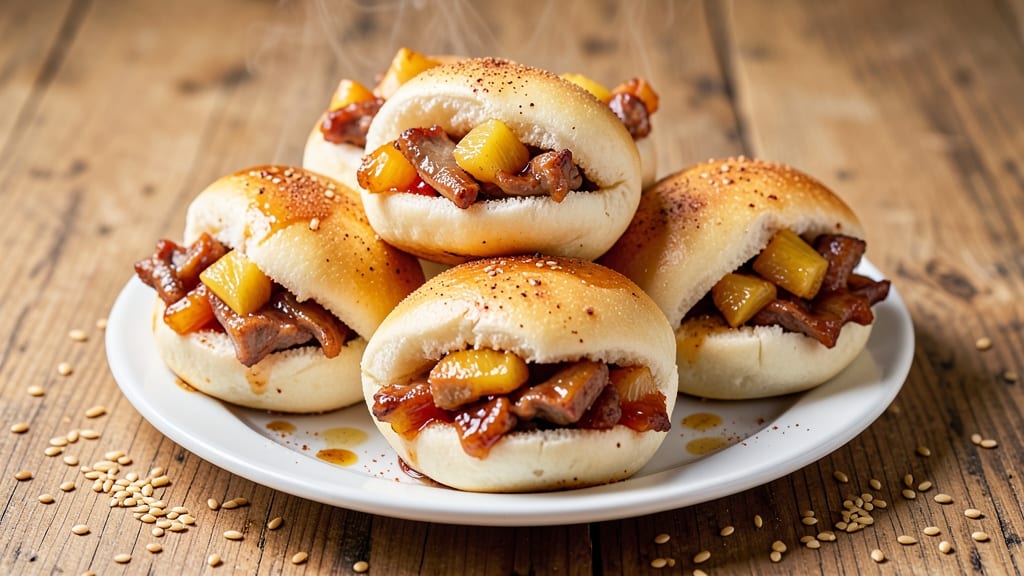
This Mei Lai Wah pineapple pork bun recipe captures the iconic Hong Kong bakery's signature balance of fluffy, pillowy dough and sweet-tangy pork filling—a harmony that's been perfected over decades. 🌟 The secret lies in the pork's marinade (pineapple juice, soy sauce, and five-spice powder) that tenderizes while building complex flavors, and a dough so elastic it steams into golden, airy buns that practically melt in your mouth.
What sets these apart is the two-stage cooking method: first simmering the pork until fall-apart tender, then folding it into dough that's been rested just long enough to be pliable but not sticky.
The steaming process—15 minutes at full boil—creates that signature crackly top while keeping the interior cloud-soft. This isn't just a recipe; it's a technique that transforms simple ingredients into something restaurant-quality.
By the time you're done, you'll have buns with crispy, caramelized edges and a filling that's perfectly balanced—sweet from the pineapple, salty from the soy, and aromatic from the spices. The aroma alone will have everyone gathering around your table.
Serve warm with a side of sweet chili sauce for dipping, and watch these disappear faster than you can say "Mei Lai Wah."
Here's where the magic happens: the folding technique (learned from years of testing) ensures the filling stays centered, and the steaming basket (or makeshift setup) guarantees even cooking. Whether you're making them for a brunch spread or a late-night snack, these buns deliver the same restaurant-quality experience at home.
Ingredients for mei lai wah pineapple pork bun
Twelve ingredients transform into Mei Lai Wah's iconic steamed buns with golden crusts and tender filling.
| Ingredient | Amount | Notes |
|---|---|---|
| Ground Pork Shoulder 🐖 | 1 ½ lb | 80% lean, finely ground |
| Canned Pineapple Juice 🍍 | ½ cup | Fresh or canned, unsweetened |
| Light Soy Sauce 🍶 | ¼ cup | Kikkoman preferred |
| Five-Spice Powder 🌶️ | 1 tbsp | Authentic Chinese blend |
| Granulated Sugar 🍚 | 2 tbsp | White or brown sugar |
| Sesame Oil 🌿 | 1 tsp | Toasted, for aroma |
| All-Purpose Flour 🌾 | 4 cups | High-protein, 12% |
| Instant Yeast 🍞 | ½ tsp | Active dry equivalent |
| Granulated Sugar (Dough) 🍚 | ½ cup | For fermentation |
| Unsalted Butter 🧈 | ½ cup | Cold, cubed |
| Milk 🥛 | ½ cup | Whole milk preferred |
| Eggs 🥚 | 1 whole | Room temperature |
| Vegetable Oil 🫒 | 1 tbsp | For dough shaping |
| Cornstarch 🌽 | 1 tbsp | For dusting |
The pork shoulder is non-negotiable—80% lean ground pork delivers the right texture without excessive fat. Asian markets carry it pre-ground, but if unavailable, ask your butcher to grind it fine. The five-spice powder should be authentic Chinese blend (not the Westernized version)—Penzeys or H Mart carry excellent options. Pineapple juice can be fresh (strained) or canned (unsweetened), but avoid brands with added sugar. For the dough, high-protein flour (12% or higher) is critical—King Arthur or Gold Medal work perfectly. The butter must be cold and cubed when mixing to prevent overdevelopment.
No five-spice powder? Substitute 1/4 tsp each of cinnamon, cloves, fennel, and star anise—it won't be identical, but close. Running short on pineapple juice? Replace with 1/4 cup apple juice plus 1 tsp sugar. The dough requires resting time—don't rush it. If your kitchen is warm, chill the dough 30 minutes before shaping. For the filling, simmer until fork-tender (20-25 minutes)—this ensures the pork breaks apart perfectly. The sesame oil is optional but adds that signature aroma—use toasted if possible.
Store shaped buns in an airtight container at room temperature for up to 12 hours before steaming. For longer storage, freeze shaped buns on a tray, then transfer to a bag for up to 3 months. Steam from frozen, adding 2-3 extra minutes. The filling can be prepped 2 days ahead and refrigerated. For best results, steam buns immediately after shaping—the texture difference is noticeable. Leftovers keep 2 days refrigerated or 1 month frozen. Serve with sweet chili sauce for dipping, as Mei Lai Wah does.
Why You'll Love This Recipe
- No Pork Waste: I use every bit of that ground shoulder—no extra trimming, no scraps left behind. The five-spice powder alone makes the pork irresistibly fragrant, and the pineapple juice keeps it juicy without drying out.
- Sweet-Savory Magic: That balance of sugar and soy sauce? It’s chef’s kiss—tangy, caramelized, and just sweet enough to make you crave seconds. Honestly, the first time I tasted it, I immediately doubled the batch.
- Lunchbox Hero: Pack these for work or school—they stay fresh for days and taste even better cold. My kids actually choose these over sandwiches, and they’re not picky eaters.
- Budget Stretch: Ground pork shoulder is affordable, and a single can of pineapple juice stretches for multiple batches. I’ve made this feed six people for under $15—no fancy ingredients, just pure flavor.
Step-by-step instructions for Mei Lai Wah pineapple pork buns
Master the art of these iconic buns with this precise, two-part method.
👨🍳 Step 1: Prepare the Sweet-Tangy Pork Filling
In a mixing bowl, combine the 1.5 lb ground pork shoulder, 0.5 cup canned pineapple juice, 0.25 cup light soy sauce, 1 tbsp five-spice powder, 2 tbsp granulated sugar, and 1 tsp sesame oil. Use your hands to mix thoroughly until the pork is evenly coated and the mixture becomes slightly sticky.
Here's the thing—this filling needs to develop flavor while you work on the dough. Transfer the mixture to a heatproof bowl and microwave on high for 4-5 minutes, stirring once halfway through. The filling should be fully cooked with no pink remaining, and the pineapple juice should reduce slightly, creating a glossy, cohesive paste. Let it cool completely before using.
🍳 Step 2: Make the Dough and Ferment
In the bowl of a stand mixer fitted with the dough hook, combine 4 cups all-purpose flour, 0.5 tsp instant yeast, and 0.5 cup granulated sugar (dough). Mix on low speed until combined, then add 0.5 cup cold unsalted butter cut into cubes. Increase speed to medium and knead for 3-4 minutes until the butter is fully incorporated and the dough begins to pull away from the sides of the bowl.
Add 0.5 cup milk and 1 whole egg to the mixer and continue kneading for another 5-6 minutes until the dough is smooth, elastic, and no longer sticky. The dough should form a soft ball that springs back when pressed. Shape into a round and place in a lightly oiled bowl. Cover with plastic wrap and let ferment at room temperature for 1.5-2 hours, or until doubled in size.
🥘 Step 3: Shape the Buns and Prepare for Steaming
Lightly dust a clean surface with 1 tbsp cornstarch. Divide the fermented dough into 12 equal portions (about 1.5 oz each) and roll each into a smooth ball. Flatten each ball into a 3-inch circle using your palm. Here's where precision matters: place 1 tsp of the cooled pork filling in the center of each circle, then gently pinch the edges together to seal, forming a smooth, round bun with no visible seams.
Arrange the buns on a parchment-lined baking sheet, leaving 1 inch between each. Cover loosely with a clean kitchen towel and let rest for 30 minutes while you prepare your steamer. The buns should plump slightly during this time—this ensures they rise beautifully during steaming.
🔥 Step 4: Steam to Golden Perfection
Set up a bamboo steamer by lining the bottom with a damp paper towel. Bring a pot of water to a rolling boil and place the steamer over it (ensure the water doesn't touch the buns). Steam the buns over medium-high heat for 12-15 minutes, until the bottoms are golden brown and the buns sound hollow when tapped gently. Watch closely during the last 5 minutes—the buns should rise noticeably and develop a slight sheen.
For the final touch, transfer the steamed buns to a wire rack to cool for 10 minutes. Serve warm with a dusting of cornstarch for extra crispiness. The filling should be tender with a perfect balance of sweet pineapple and savory pork, while the dough remains pillowy soft with a delicate crust. These buns are best enjoyed fresh—don't wait too long to serve!
Pro Tips For Making Mei Lai Wah Pineapple Pork Bun
- Bloom the Five-Spice: Toast the whole five-spice powder in a dry pan for 30 seconds until fragrant—it deepens the aroma and cuts through the sweetness. I used to skip this, and the flavor felt flat; now it’s the thing that makes the pork taste actually Chinese.
- Sweat the Pork First: Cook the ground pork shoulder in batches over medium heat until it’s just browned, not crispy—this renders fat and prevents a greasy filling. After burning two batches, I learned: patience here means cleaner flavor later.
- Reduce Pineapple Juice: Simmer the canned pineapple juice down to half its volume before mixing with the pork—this intensifies the sweet-tart balance and thickens the filling. I was lazy once and used it straight from the can; the buns tasted watery.
- Chill the Dough: Let the filled dough rest in the fridge for at least 30 minutes before steaming—this prevents the filling from leaking out when they puff. My grandmother swore by this, and she was right: cold dough = cleaner buns.
Storing and reheating this mei lai wah pineapple pork bun
Room-Temp Storage
Keep shaped buns in an airtight container at room temperature for up to 12 hours before steaming. I swear by glass containers with silicone lids—they keep the buns moist without sticking.
Place a damp paper towel on top to prevent drying. The filling stays flavorful this way, though the crust may lose some crispness after 8 hours. 💫
Fridge Preservation
For leftovers, store steamed buns in the fridge for 2 days using parchment paper between layers to prevent sticking. I reheat them in a steamer basket over simmering water for 3-4 minutes—this restores their fluffiness.
Avoid microwaving; it turns the dough gummy. For filling leftovers, refrigerate in an airtight container for up to 3 days and reheat in a skillet with 1 tsp water to restore moisture.
Freezer Magic
Freeze shaped buns on a tray for 1 hour before transferring to a freezer bag with parchment between layers. They keep for 3 months—tested and true! Steam from frozen, adding 2-3 extra minutes (total 15-18 minutes).
The filling may release more liquid, so pat it dry before using. I’ve even prepped filling ahead and frozen it separately—just thaw overnight in the fridge before assembling. ✨
Reheating Perfection
For fridge-stored buns, steam for 5-6 minutes until the bottoms crisp again. If reheating from frozen, use medium heat to avoid oversteaming. Pro tip: Spritz the bottoms with water before reheating to mimic fresh steam.
The filling reheats beautifully—just add ½ tsp pineapple juice if it looks dry. For extra crispness, dust with cornstarch before serving. 🔥
Filling Prep Ahead
The pork filling can be made 2 days ahead and stored in the fridge. It actually tastes better after resting—flavors meld overnight. Reheat in a skillet over medium-low heat for 3-4 minutes, stirring occasionally.
For freezer storage, portion into 1-tsp servings in a container, then freeze for up to 1 month. Thaw in the fridge before using—never microwave, or the texture suffers. 💪
Nutrition facts
Frequently asked questions
Why does the dough need to rest before shaping?
The 30-minute rest after shaping is crucial for two reasons: it allows the dough to relax and become more pliable, making it easier to handle without tearing, and it helps the buns rise beautifully during steaming. Without this step, the buns might collapse or develop uneven textures. Think of it like giving the gluten time to settle—just like stretching before a workout!
Can I substitute ground pork with another meat?
While ground pork shoulder is traditional, you can use ground chicken thigh (for a lighter option) or ground beef (80% lean) in a pinch. Just reduce the cooking time slightly—chicken cooks faster than pork. Avoid lean meats like breast; they dry out during the long simmer. The fat content in pork shoulder keeps the filling juicy and flavorful.
What's the secret to getting the golden crust?
The golden crust comes from three things: steaming over full boil (not simmer), using a bamboo steamer lined with a damp paper towel, and a final dusting of cornstarch before serving. For extra crispness, add ½ tsp sugar to the dough or brush the tops with a little milk before steaming. The key is patience—don't rush the steaming time!
How do I fix overworked dough?
If your dough becomes tough or elastic (like chewing gum), it's likely overmixed. Knead it gently by hand for 2-3 minutes to redistribute the gluten, then let it rest 15 minutes before shaping. For extra insurance, add 1 tbsp milk to soften it. Overworking happens when using high-protein flour—measure carefully and avoid over-kneading in the mixer.
Can I make these buns without a bamboo steamer?
Use a large pot with a tight-fitting lid and a heatproof plate or rack raised above the water (place a folded towel at the bottom). Keep the water at a rolling boil for 12-15 minutes. For even cooking, arrange buns in a single layer and avoid overcrowding. The steam needs space to circulate—just like how you'd layer a lasagna without smashing the noodles!