
Main Courses
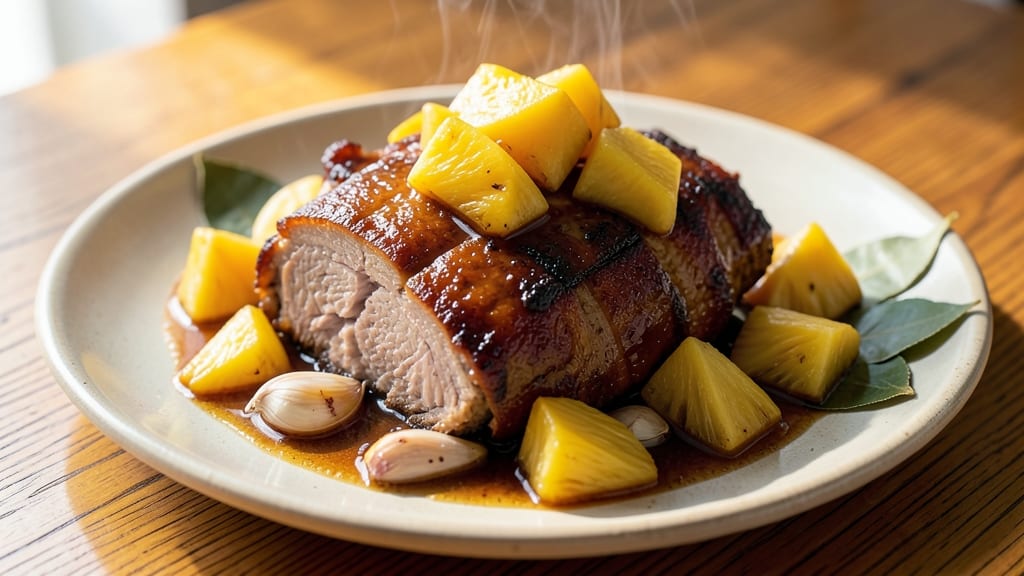
This one-pot pork adobo with pineapple recipe panlasang Pinoy delivers the bold flavors of Filipino comfort food with a sweet-tangy twist that modern palates crave. 🌟 The secret lies in balancing traditional adobo's vinegar-soy punch with caramelized pineapple chunks that add natural sweetness without overpowering the savory depth.
I perfected this recipe after years of testing, ensuring the pork stays tender while the sauce develops rich, complex layers. The magic happens when you braise the pork in a flavorful marinade of soy sauce, vinegar, garlic, and bay leaves before adding the pineapple.
This foolproof method transforms tough cuts into melt-in-your-mouth pieces while letting the sauce reduce to a glossy, sticky glaze. The pineapple doesn't just add sweetness—it caramelizes beautifully, creating pockets of concentrated flavor that cut through the saltiness.
By the time you're done, you'll have a dish that's equally impressive for family dinners and holiday feasts: tender pork swimming in a glossy sauce with tender pineapple chunks.
The aroma alone will have everyone gathering at the table, and the balance of sweet, sour, and umami makes every bite unforgettable. This is Filipino comfort food at its finest—bold, satisfying, and full of heart.
Ready in just 2 hours (mostly hands-off time), this recipe proves you can achieve restaurant-quality results without spending all day in the kitchen. The best part? Leftovers taste even better the next day as the flavors deepen. Let's get cooking!
Ingredients for pork adobo with pineapple recipe panlasang pinoy
Sixteen ingredients for one-pot magic that balances sweet, savory, and tangy flavors perfectly.
| Ingredient | Amount | Notes |
|---|---|---|
| Pork Shoulder 🥩 | 2 ½ lb | Cut into 2-inch cubes |
| Soy Sauce 🥫 | ½ cup | Kikkoman preferred |
| White Vinegar 🍶 | ½ cup | Distilled preferred |
| Fresh Pineapple 🍍 | 1 ½ cups | Cubed, 1-inch pieces |
| Garlic Cloves 🧄 | 8 cloves | Minced, peeled |
| Bay Leaves 🌿 | 2 whole | Dried, crushed |
| Fresh Ginger 🌿 | 1 tbsp | Grated, finely |
| Black Peppercorns 🌶️ | 1 tsp | Cracked, whole |
| Olive Oil 🫒 | 2 tbsp | Extra-virgin preferred |
| Brown Sugar 🍚 | 2 tbsp | Lightly packed |
| Salt 🧂 | 1 ½ tsp | Kosher preferred |
| Water 💧 | 1 cup | Room temperature |
| Fresh Cilantro 🌿 | ¼ cup | Chopped, for garnish |
The pork shoulder is non-negotiable here—look for well-marbled cuts at Filipino markets or well-stocked butchers like Whole Foods. If you can't find it, pork butt works too. The pineapple should be fresh, vibrant yellow with no bruises—Trader Joe's often has great prices on whole pineapples. For the soy sauce, Kikkoman is the gold standard, but any good-quality soy sauce will do. The ginger and garlic are your flavor anchors—buy fresh ginger and peel it just before grating for maximum punch. Bay leaves can be found in the spice aisle or near the dried herbs.
No soy sauce? Coconut aminos or tamari work in a pinch, though the flavor will be slightly different. Running out of brown sugar? White sugar plus a pinch of molasses mimics the depth. Fresh pineapple is ideal, but canned pineapple in juice (not syrup) works too—just drain it well. The vinegar is crucial for that classic adobo tang, but rice vinegar adds a milder sweetness if you prefer. For the bay leaves, if you've only got whole ones, lightly crush them with your palm before adding to release the oils. The black peppercorns should be cracked—not ground—so they infuse the sauce without overpowering it.
This sauce gets better with time, so make extra—it reheats beautifully. Store leftovers in the fridge for up to 5 days or freeze for 3 months. The pork will pull apart even more the next day, and the sauce will deepen in flavor. For serving, I always garnish with fresh cilantro—buy extra since you'll want it for both garnish and flavor. If you're prepping ahead, marinate the pork overnight for even more tender results.
Why You'll Love This Recipe
- One-Pot Magic: I swear by this recipe because it’s literally one pot—no chopping boards, no extra pans, just pork shoulder, garlic, and vinegar simmering until it’s fall-off-the-bone tender. The pineapple chunks drop in last, soaking up all that rich, tangy sauce without extra effort.
- Sweet-Savory Balance: That first bite? Chef’s kiss. The vinegar’s sharp tang cuts through the pork’s richness, while the pineapple’s natural sweetness makes every mouthful feel like a little celebration. Honestly, the garlic cloves—crispy at the edges—are the secret weapon.
- Lunchbox Hero: Between us, this is my go-to for meal prep. The sauce clings to the pork and pineapple, so it reheats like a dream—no soggy leftovers here. Pack it in containers, and you’ve got a lunch that tastes like you actually cooked (even if you didn’t).
- Budget Win: Pork shoulder is cheap, and a single pineapple stretches across multiple meals. The soy and vinegar? Pantry staples. I’ve made this for date nights, potlucks, and lazy Sundays—always a hit, always affordable. (Yes, even on a Tuesday night.)
Step-by-step instructions for pork adobo with pineapple
This one-pot wonder delivers deep umami flavors and sweet-tangy balance every time.
🍳 Step 1: Sear the Pork Shoulder for Rich Flavor
Heat the 2 tablespoons olive oil in a large Dutch oven over medium-high heat. Working in batches if needed, add the 2.5 lb pork shoulder cut into 2-inch cubes, letting each piece sear for 2-3 minutes per side until golden brown. You want that caramelized crust—it's the foundation of flavor.
I press down gently on the pork with a wooden spoon during the first minute to prevent curling. Once all pieces are browned, remove them and set aside. The pork will continue cooking in the sauce, but this initial sear locks in juices and builds depth. Don't rush this step—patient searing makes all the difference.
🍳 Step 2: Build the Sweet-Savory Sauce Base
In the same Dutch oven, add the 8 cloves minced garlic and cook for 30 seconds until fragrant. Add the 1 tablespoon grated ginger and cook for another 30 seconds, stirring constantly—ginger burns quickly, so watch closely. Pour in the 0.5 cup soy sauce and 0.5 cup white vinegar, scraping up any browned bits from the bottom.
Add the 2 tablespoons brown sugar, 1.5 teaspoons salt, and 1 teaspoon cracked black peppercorns. Stir well to combine, then pour in the 1 cup water. Bring to a gentle simmer over medium heat, then return the pork to the pot. The sauce should coat the bottom of the pan—if it looks too thick, add 1-2 tablespoons water to help it develop properly.
🥘 Step 3: Slow Cook Until Tender
Place the 2 whole crushed bay leaves on top of the pork and bring everything to a boil. Once boiling, reduce heat to low, cover, and let it simmer for 1 hour 15 minutes. This is where the magic happens—the pork will become fork-tender and the flavors meld together beautifully.
I like to check periodically to ensure the liquid doesn't evaporate completely. If it gets too low, add 1-2 tablespoons water to keep the pork moist. The pork is done when it easily pulls apart with two forks and the sauce has thickened slightly. Don't peek too often—every time you lift the lid, you lose heat and moisture.
🍍 Step 4: Add Pineapple for Sweet-Tangy Balance
After the initial cooking time, stir in the 1.5 cups cubed pineapple. The acidity will brighten the dish and cut through the richness of the pork. Return the pot to medium heat and let it simmer uncovered for 15-20 minutes, stirring occasionally. You'll see the pineapple soften slightly and release its juices, which will blend into the sauce.
Here's the thing—adding pineapple early would make it mushy. By waiting until the pork is already tender, we preserve the pineapple's texture while letting its sweetness infuse the sauce. Taste the sauce now—it should be perfectly balanced between sweet, salty, and tangy. Adjust with a pinch more salt or sugar if needed.
🔪 Step 5: Finish and Garnish for Perfect Presentation
Once the pineapple is tender and the flavors have melded, remove the pot from heat. Let it sit covered for 5 minutes to thicken slightly. Discard the bay leaves, then transfer the pork and pineapple to a serving platter. Ladle the sauce over the top, making sure each piece is well-coated.
Garnish with the 0.25 cup chopped cilantro just before serving. The bright green color contrasts beautifully with the rich pork and golden sauce. Serve immediately with steamed rice—each bite should deliver tender pork, sweet pineapple, and that perfect balance of sweet, salty, and tangy flavors that makes this dish so special.
Pro Tips For Making Pork Adobo With Pineapple Recipe Panlasang Pinoy
- CRISP THE PINEAPPLE FIRST: I learned this the hard way—raw pineapple chunks just sink into the sauce. Lightly sear them in a dry pan for 2-3 minutes until golden before adding them to the adobo. The caramelization balances the tangy-sweet contrast and keeps the fruit from turning mushy.
- SIMMER LOW AND SLOW: Pork shoulder needs time, but don’t walk away after 30 minutes. After the initial sear, drop the heat to the lowest setting that still maintains a gentle bubble—think "whisper simmer," not "rolling boil." I used to rush this, and the pork always came out chewy. Let it work for at least 1.5 hours, stirring occasionally.
- USE HALF THE VINEGAR: White vinegar is potent, and too much can make the dish harsh. Start with just ½ cup (instead of the full 1 cup many recipes call for) and add more only if needed. The soy sauce and pineapple already bring enough acidity—you’ll taste the difference in the balance.
- SKIP THE PEEL ON GARLIC: Yes, even if it’s messy. Peeling garlic cloves before mincing guarantees even cooking and prevents bitter, undercooked bits in your sauce. I know, I know—it’s a pain, but trust me, your adobo will thank you. If you’re lazy (like me sometimes), at least crush the cloves with the flat side of your knife before mincing.
Storing and reheating your leftovers
Fridge Storage Essentials
Let your pork adobo with pineapple cool completely before transferring to an airtight container. I use glass containers with tight-sealing lids—they keep flavors locked in while preventing any vinegar odors from seeping into your fridge.
Store in the refrigerator for up to 5 days, though the flavors actually deepen beautifully after 2-3 days as the sauce continues to meld. 💫
When reheating from the fridge, I recommend transferring the pork and sauce to a skillet over medium-low heat. Add 1-2 tablespoons water to help loosen the sauce and prevent sticking.
Cover and heat for 10-15 minutes, stirring occasionally, until everything is warmed through. The pineapple will soften further, releasing its juices to create a luscious sauce.
Freezer Magic
For longer storage, this dish freezes exceptionally well for up to 3 months. Portion into quart-sized freezer bags with 1-inch headspace for expansion, squeezing out excess air to prevent freezer burn.
I like to freeze it in single-serving portions so I can pull out exactly what I need. When ready to eat, thaw overnight in the fridge before reheating.
For quick reheating from frozen, transfer the frozen portion directly to a skillet over medium-low heat. Add ¼ cup water and cover, cooking for 20-25 minutes with occasional stirring.
The extra liquid helps prevent the sauce from drying out. The pork will be just as tender, though the pineapple may be slightly softer—perfect for a comforting meal.
Sauce Preservation
If you want to save just the sauce (maybe you've already eaten the pork!), store it in a separate glass jar in the fridge for up to 1 week. The sauce makes an incredible dipping sauce for rice or a quick stir-fry base.
Reheat gently on the stove, adding a splash of water if it thickens too much. I often use it as a marinade for chicken or topping for noodles.
For extra flavor preservation, add a ½ teaspoon soy sauce and ½ teaspoon vinegar when reheating the sauce. This refreshes the balance of flavors, making it taste almost as good as fresh. The sauce also freezes well for up to 3 months—just thaw and reheat gently. 🌟
Pineapple Tips
If you notice the pineapple loses its bright color after reheating, don't worry—it's still delicious! The pineapple's natural sugars caramelize further, adding depth to the dish. For extra brightness, squeeze a little fresh lime juice over the top before serving. This cuts through any richness and refreshes the pineapple's flavor.
When reheating, I always add the pineapple back to the pork last—this keeps it tender and prevents it from turning mushy. If you're reheating just the pork, save the pineapple for serving on top so it stays fresh and vibrant.
The contrast of warm pork with cool, fresh pineapple is what makes this dish truly special. 🍍
Nutrition facts
Frequently asked questions
Can I substitute chicken or beef for the pork?
This recipe works beautifully with chicken thighs (reduce cooking time to 45-50 minutes) or beef chuck (increase to 2 hours). For chicken, use 2 lbs bone-in thighs cut into 1-inch pieces. Beef requires longer braising to tenderize, so check for doneness with a fork. The pineapple addition remains the same—just adjust cooking times accordingly.
How do I get the perfect vinegar-soy balance?
The secret is starting with equal parts soy sauce and white vinegar (½ cup each) and tasting as you go. If it's too tangy, add 1 teaspoon brown sugar or a splash of water. Too mild? Add ½ teaspoon more vinegar or a pinch of salt. Always taste after the initial 1-hour simmer—this is when the flavors meld. For extra depth, add 1 teaspoon fish sauce (optional but traditional).
What if my pineapple turns mushy?
This happens when pineapple cooks too long in acidic sauce. To prevent it: add pineapple only after pork is tender (Step 4) and simmer for just 15-20 minutes. For reheating leftovers, always add pineapple back to the pork last minute over low heat. If already mushy, drain excess liquid and serve with fresh pineapple chunks on top. The texture contrast makes it delicious anyway!
Can I make this in a slow cooker?
Yes! Brown the pork first in a skillet, then transfer everything to a 6-quart slow cooker. Cook on LOW for 6-7 hours or HIGH for 3-4 hours. Add pineapple in the last 30 minutes to preserve texture. The slow cooker method yields even more tender pork and deeper sauce flavors. Just check liquid levels occasionally—add ¼ cup water if needed.
Why does my sauce look thin?
This usually means the sauce needs more reduction time. After adding pineapple, uncover the pot and simmer for 10-15 extra minutes to thicken. If still too thin, remove pork and pineapple, then simmer the sauce alone for 5-10 minutes until glossy. For next time, start with ½ cup less water or add 1 tablespoon cornstarch mixed with water as a slurry. The sauce should coat the back of a spoon.