
Main Courses
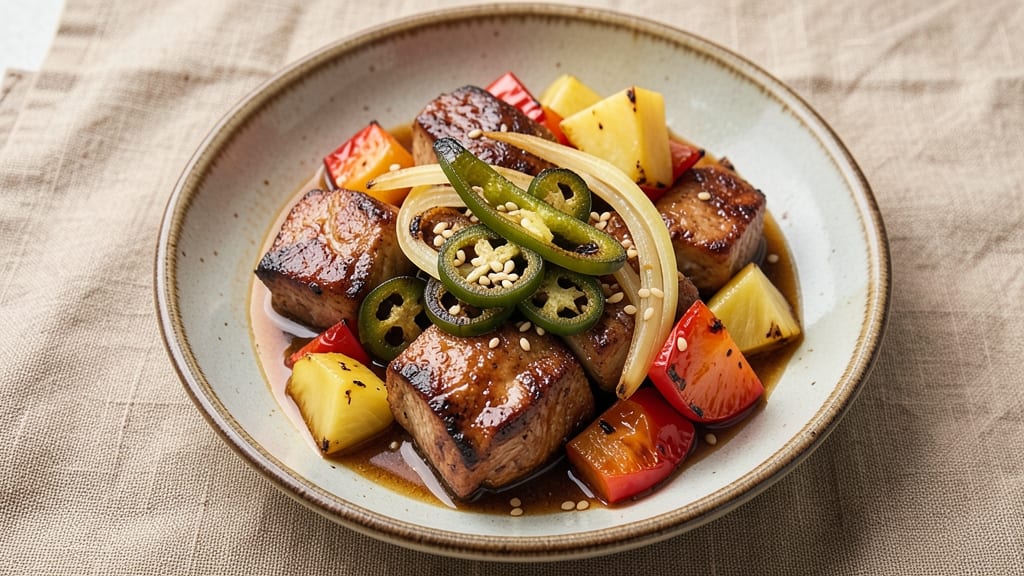
This pork pineapple peppers recipe delivers a perfect balance of sweet, spicy, and savory flavors in under 20 minutes.
Growing up in Georgia, I learned how pork transforms simple ingredients into unforgettable meals, and this stir-fry captures that magic—crispy pork, juicy pineapple, and vibrant peppers all coming together in one pan.
The secret lies in high-heat searing to caramelize the pork while keeping it tender, then tossing everything in a quick sauce that cuts through the richness. I use bell peppers for mild sweetness and jalapeños for just enough heat, but you can adjust the spice level to your preference.
The pineapple adds natural sweetness that makes every bite addictive.
By the time you're done, you'll have a restaurant-quality stir-fry with perfectly seared pork, tender-crisp vegetables, and a glossy sauce that ties everything together. The aroma alone will have everyone asking what's for dinner—it's that good.
Serve it over steamed rice or with crusty bread to soak up every last drop of that flavorful sauce.
This dish works as a weeknight meal or a crowd-pleaser for gatherings, and it's easy to double the recipe if you're feeding more than four. The technique is straightforward, but the results are anything but basic—it's the kind of meal that makes you feel like you've earned your dinner.
Let's get cooking!
Ingredients for pork pineapple peppers
Simple ingredients that pack a punch—crispy pork, juicy pineapple, and vibrant peppers all searing in one pan.
| Ingredient | Amount | Notes |
|---|---|---|
| Boneless Pork Loin 🥩 | 1 ½ lb | Cut into 1-inch cubes |
| Fresh Pineapple Chunks 🍍 | 2 cups | Fresh or canned, drained |
| Red Bell Peppers 🌶️ | 2 whole | Sliced into strips |
| Jalapeño Peppers 🌶️ | 2 whole | Seeded, sliced thin |
| Yellow Onion 🧅 | 1 whole | Sliced into half-moons |
| Garlic Cloves 🧄 | 4 cloves | Minced finely |
| Soy Sauce 🍶 | ½ cup | Low-sodium preferred |
| Honey 🍯 | ¼ cup | Wildflower or clover |
| Rice Vinegar 🍶 | ¼ cup | White or seasoned |
| Sesame Oil 🫒 | 1 tbsp | Toasted for aroma |
| Vegetable Oil 🫒 | 2 tbsp | High smoke point |
| Ground Black Pepper 🌶️ | ½ tsp | Freshly cracked |
| Ginger Root 🌿 | 1 tbsp | Freshly grated |
| Salt 🧂 | 1 tsp | Kosher or sea salt |
| Cooked White Rice 🍚 | 2 cups | Steamed or microwaved |
The pork loin is your star here—look for well-marbled cuts at the butcher counter or pre-cut sections at Whole Foods or Kroger. Cutting it into even 1-inch cubes ensures perfect searing without overcooking. Pineapple? Fresh is best—canned works in a pinch but lacks that bright sweetness. For the peppers, red bell peppers add sweetness while jalapeños bring the heat (remove seeds if you prefer milder spice). I always grab extra jalapeños—half go in the stir-fry, half get sliced for garnish.
No pineapple? Mango chunks or peaches work in a squeeze, though they’ll change the flavor profile slightly. Subbing bell peppers for zucchini or snap peas keeps the dish veggie-forward. The sauce is where the magic happens—low-sodium soy sauce keeps it from being too salty, while the honey and rice vinegar balance the flavors perfectly. No sesame oil? Toasted peanut oil adds a similar nutty depth. For extra umami, a splash of fish sauce (if not vegetarian) or hoisin sauce takes it to the next level.
Pork cubes keep best in the fridge for 2 days before cooking, while pineapple stays fresh for 5 days if stored in an airtight container. The stir-fry reheats beautifully—just toss with a splash of water and microwave for 1-2 minutes. For meal prep, store components separately: cook the pork and veggies ahead, then toss with sauce when ready to eat. The rice can be made fresh or reheated with a splash of water—never skip this step, as it soaks up all the delicious sauce.
Why You'll Love This Recipe
- Sweet Heat Balance: The jalapeños add a bright, tangy kick while the pineapple’s natural sweetness keeps things from getting too spicy. I’ll be real—my kids actually ask for extra peppers now, and that’s saying something.
- One-Pan Magic: Boneless pork loin stays juicy, bell peppers soften just right, and everything caramelizes in one sheet pan. Honestly, I’ve made this on nights when I couldn’t even be bothered to wash extra bowls—it’s that unfussy.
- Leftover Reinvention: Turns into the best stir-fry the next day or gets tossed into wraps for lunch. Between us, I’ve even pureed the leftovers into a quick sauce for tacos—it’s my secret weapon for lazy days.
- Budget-Friendly Feast: Pork loin stretches far when sliced thin, and pineapple and peppers bulk it up without breaking the bank. Not the prettiest, but the taste makes up for it every time—plus, it feeds four for under $15.
Step-by-step instructions for sweet-spicy pork pineapple stir-fry
Here's how to create a perfectly balanced stir-fry with tender pork and vibrant sweet-spicy flavors.
Prepare the Pork and Vegetables
Cut the 1.5 lb boneless pork loin into 1-inch cubes - uniform size ensures even cooking. In a bowl, toss the pork with 1 tbsp sesame oil, 1 tbsp grated ginger root, 1 tsp salt, and 0.5 tsp ground black pepper. Let it marinate for 10 minutes while you prep the vegetables.
Slice the 2 whole red bell peppers into 1-inch strips and the 2 whole jalapeño peppers into thin slices, removing seeds first. Cut the 1 whole yellow onion into half-moons and mince the 4 cloves garlic. The fresh pineapple chunks should be 2 cups - if using canned, drain well and pat dry. Here's the thing - fresh pineapple adds better texture, but canned works in a pinch if you're short on time.
Cook the Pork to Perfect Tenderness
Heat 2 tbsp vegetable oil in a large skillet or wok over medium-high heat until shimmering. Add the pork in a single layer and let it sear undisturbed for 2-3 minutes until golden brown on the bottom. This initial sear locks in juices - don't skip it. Stir occasionally and cook for 5-6 minutes total until the pork reaches 160°F internally and is no longer pink in the center.
Remove the pork from the skillet and set aside. If you notice any excess fat, wipe it out with a paper towel - we want the flavors to shine, not be overwhelmed. The pork should be tender but still hold its shape - if it falls apart, you've overcooked it.
Stir-Fry the Vegetables and Build the Sauce
In the same skillet, add the red bell pepper strips, jalapeño slices, and onion half-moons. Stir-fry for 3-4 minutes until the vegetables begin to soften but still retain their vibrant color. Add the 4 cloves minced garlic and cook for 30 seconds until fragrant - garlic burns quickly, so watch closely.
Pour in the 0.5 cup soy sauce, 0.25 cup honey, and 0.25 cup rice vinegar. Stir well to combine and let the sauce simmer for 1-2 minutes until it begins to thicken slightly. The mixture should coat the back of a spoon - if it's too thick, add 1-2 tablespoons of water to loosen it.
Combine Everything and Finish Cooking
Return the cooked pork to the skillet and add the 2 cups fresh pineapple chunks. Toss everything together and cook for 2-3 minutes until the pineapple begins to caramelize slightly at the edges. The sauce should coat all the ingredients evenly - if it's too thin, let it reduce for another minute or two.
Taste and adjust seasoning if needed. I usually add a pinch more salt or a splash of rice vinegar at this stage to balance the sweet-spicy flavors. The dish should have a perfect harmony of sweetness from the pineapple and honey, heat from the jalapeños, and umami from the soy sauce.
Serve Over Steamed Rice
Transfer the stir-fry to a serving platter and spoon over the 2 cups cooked white rice. The rice should be hot and slightly sticky - if it's dry, sprinkle with a little water and cover for a minute to steam. Garnish with extra sliced jalapeños if you like more heat, or a drizzle of sesame oil for added aroma.
Serve immediately while everything is hot. The pork should be tender with a slight char, the vegetables crisp-tender, and the pineapple juicy. Each bite should deliver a perfect balance of sweet, spicy, and savory flavors that complement the mild rice. This dish comes together quickly but delivers restaurant-quality results every time.
Pro Tips For Making Pork Pineapple Peppers
- SEAR PORK IN BATCHES: Pork loin holds its shape, but overcrowding the pan steams it instead of searing. Cut the loin into 1-inch strips first, then cook in two batches over medium-high heat—this gives you a proper crust without boiling the meat in its own juices. (Yes, it’s extra work upfront, but the flavor difference is worth it.)
- SWEAT ONIONS LOW AND SLOW: I used to rush the onions and end up with bitter, watery mush. For this dish, cook them on low heat for 8–10 minutes until they’re translucent and just starting to caramelize—no color, just soft. That’s when they’ll actually blend into the sauce without tasting raw.
- DEGLLAZE WITH PINEAPPLE JUICE: The browned bits on your pan are flavor gold, but water kills them. After searing the pork, splash in ¼ cup pineapple juice (from the chunks) and scrape—it dissolves the fond while adding natural sweetness. Skip the vinegar or wine; this recipe doesn’t need it.
- TOSS PEPPERS IN COLD WATER: Bell peppers and jalapeños cling to oil like glue, making them greasy and hard to distribute. Toss them in a bowl with 1 tablespoon cold water and a pinch of salt before adding to the pan—they’ll crisp faster and stick to the pork evenly. (Trust me, your dish will look cleaner, too.)
Essential equipment for perfect results
Skillet Essentials
For this stir-fry, I swear by a 12-inch cast iron skillet or carbon steel wok—both retain heat beautifully and create those perfect caramelized edges on the pork. My go-to is a Lodge cast iron skillet because it’s heavy enough to handle high heat without warping.
If you don’t have cast iron, a stainless steel wok (like Made In woks) works just as well. Just make sure it’s well-seasoned if using cast iron, or preheated for 2 minutes to prevent sticking. 🔥
Knife Skills Matter
Uniform cuts mean even cooking, so invest in a sharp 8-inch chef’s knife (I use Wüsthof) for chopping the pork and veggies. A mandoline (like Julienne Edge) speeds up slicing bell peppers and onions into even strips, but a steady hand works too.
For the pork, cut into 1-inch cubes—no smaller, or they’ll overcook before the center hits 160°F. A meat thermometer (like ThermoWorks Smoke) ensures perfect doneness without guesswork.
Sauce Thickening Tools
To balance the sauce, keep a small whisk (like OXO Good Grips) and a wooden spoon (for stirring) handy. If the sauce gets too thick, a measuring spoon set helps add water in 1-tbsp increments.
For extra gloss, I finish with a drizzle of toasted sesame oil—just 1 tsp—using a small squeeze bottle for precision. A fine-mesh strainer (like Ozeri) comes in handy if your pineapple has tough fibers.
Garnish and Serve
Fresh jalapeño slices and sesame seeds elevate the dish, so grab a small cutting board (like Kuhn Rikon) for quick garnishes. For serving, I use a large ceramic platter (like Le Creuset) to keep everything hot.
A tongs set (like Mercer Culinary) helps transfer the stir-fry to plates without breaking up the rice. Pro tip: Keep a small bowl of extra rice vinegar** nearby to adjust acidity at the table.
Nutrition facts
Frequently asked questions
Can I use pork shoulder instead of pork loin?
Yes! Pork shoulder works beautifully—just cut it into 1-inch cubes and cook it longer (8-10 minutes) until tender. The fat renders out, adding richness to the stir-fry. For extra flavor, trim excess fat before cooking to avoid greasy sauce.
How do I adjust the spice level?
Remove all jalapeño seeds for mild heat, or keep seeds for medium spice. For extra kick, add 1 sliced serrano pepper or a dash of red pepper flakes. Balance with more honey or rice vinegar if needed—sweetness tames the heat naturally.
Can I make this dish ahead of time?
Cook the pork and veggies separately, then store in airtight containers for 2 days. Reheat in a skillet with 1 tbsp water over medium heat for 3-4 minutes. Warm the sauce separately and toss everything together before serving—this keeps textures perfect.
What if I don't have rice vinegar?
Substitute with apple cider vinegar or white vinegar (use half the amount). For depth, add ½ tsp fish sauce (if not vegetarian) or a pinch of MSG. The dish will still taste great, though the tang will be slightly different.
Why did my pork turn out dry?
Overcooking is the most common cause—pork should reach 160°F internally, not 170°F+. Use a meat thermometer and cook in batches if needed. For extra juiciness, marinate the pork for 30 minutes instead of 10 minutes before cooking.