
Sauces & Condiments
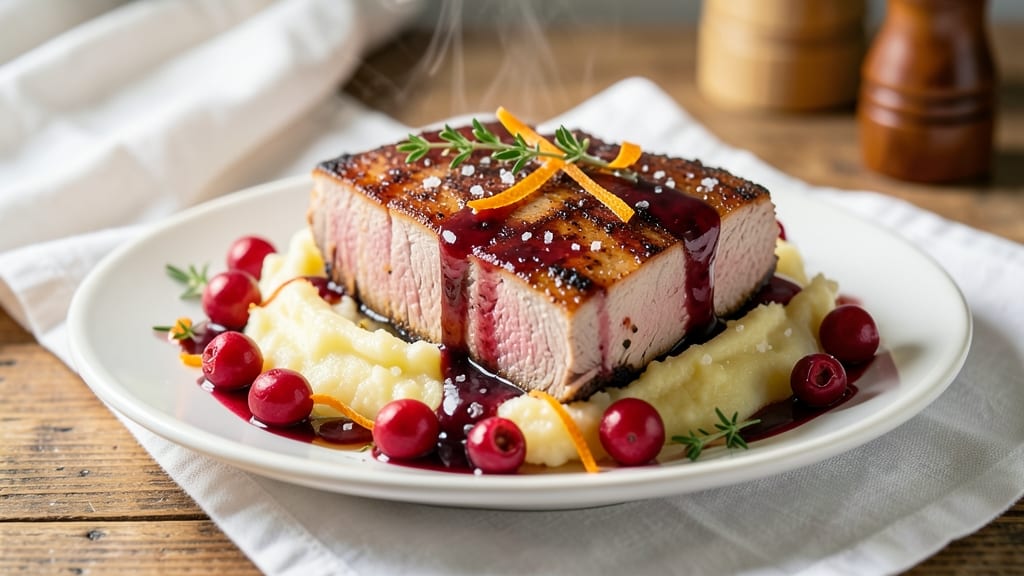
This Cranberry Dijon pork loin with apple cider glaze delivers restaurant-quality results with a perfect balance of sweet, tart, and savory flavors. I developed this recipe after years of perfecting pork dishes at my restaurant, where the glaze caramelizes to a glossy finish that makes every bite unforgettable.
The combination of Dijon mustard and fresh cranberries creates a depth of flavor that elevates simple pork loin into something truly special.
The secret lies in the slow reduction of apple cider glaze, which transforms into a rich, sticky sauce that clings beautifully to the tender pork. While the meat roasts in the oven, the glaze simmers on the stovetop, intensifying its flavors and developing that perfect caramelized texture.
This method ensures your pork stays juicy and flavorful throughout, with a crisp exterior that's impossible to resist.
What you'll end up with is a dish that's elegant enough for holiday gatherings but simple enough for a weeknight dinner. The cranberries add bursts of tartness, the Dijon brings depth, and the apple cider glaze ties everything together in a sweet-tangy perfection.
Each slice is moist, flavorful, and perfectly glazed, making this one of my most requested recipes.
Serve with roasted Brussels sprouts or mashed sweet potatoes to complete the meal. The glaze pairs beautifully with these sides, creating a harmonious balance of flavors that will have everyone asking for seconds. This recipe is a game-changer for pork lovers who want restaurant-quality results at home.
Ingredients for cranberry dijon pork loin with apple cider glaze
Restaurant-quality pork with a glaze that caramelizes to sticky-sweet perfection—just these ingredients.
| Ingredient | Amount | Notes |
|---|---|---|
| Pork Loin 🐖 | 2 lb | Center-cut, bone-in preferred |
| Fresh Cranberries 🍇 | 1 cup | Whole, not dried or sauced |
| Dijon Mustard 🧂 | 2 tbsp | High-quality, whole-grain preferred |
| Apple Cider 🍎 | 1 cup | Unfiltered, preferably organic |
| Brown Sugar 🍚 | ¼ cup | Light or dark, packed |
| Balsamic Vinegar 🍷 | 1 tbsp | Aged, not white vinegar |
| Fresh Rosemary 🌿 | 1 tbsp | Chopped, leaves only |
| Fresh Thyme 🌿 | 1 tbsp | Leaves only, stems removed |
| Garlic Cloves 🧄 | 4 cloves | Minced, not powdered |
| Olive Oil 🫒 | 2 tbsp | Extra-virgin for richness |
| Salt 🧂 | 1 ½ tsp | Diamond Crystal kosher |
| Black Pepper 🌶️ | ½ tsp | Freshly cracked |
| Honey 🍯 | 1 tbsp | Wildflower preferred |
The pork loin is the star, so center-cut and bone-in—it stays juicier and holds up beautifully to the glaze. I always grab mine from Whole Foods or my local butcher shop because the quality is unmatched. Look for a piece with good marbling—it’ll make the meat more tender. If you can’t find bone-in, don’t stress; boneless works fine, just keep an eye on the cooking time. Fresh cranberries are a must—they add that bright, tart pop that balances the sweetness. If you’re using frozen, thaw them first and drain well to avoid a watery glaze.
No Dijon mustard? Spicy brown mustard works in a pinch, but the depth of flavor is worth seeking out. Substituting apple cider? Cranberry juice works too, though it’ll be less complex. For the herbs, dried thyme and rosemary at half the amount can stand in, but fresh is ideal. If you’re missing honey, maple syrup adds a similar richness. The glaze is forgiving, so don’t stress over exact measurements—just taste as you go. Trader Joe’s has great affordable options for most of these ingredients, and their organic cranberries are a hidden gem.
This glaze tastes even better the next day—make extra and store it in a jar for up to 2 weeks in the fridge. The pork keeps well for 3-4 days in the fridge, wrapped tightly in foil. For longer storage, freeze the glaze separately and reheat it gently before drizzling over thawed pork. Portion the glaze into ice cube trays if you want to use it sparingly—just pop out a cube or two when needed. The herbs in the glaze will wilt over time, so if you’re prepping ahead, add them fresh just before serving.
Why You'll Love This Recipe
- One-Pan Magic: I swear by this recipe when I’m too tired to scrub pots—just sear the pork, toss in the cranberries and glaze, and let the oven do the work. The sticky-sweet reduction pools right on the pan, so you’re left with a sheet that’s basically self-cleaning.
- Taste Like Autumn: That tangy Dijon cuts through the richness of the pork, while the apple cider glaze turns everything into a caramelized, bright, almost dessert-like finish. Honestly, the first time I made it, my husband asked if I’d snuck in a balsamic reduction—nope, just cranberries and patience.
- Weeknight to Holiday: Serve it sliced over mashed potatoes for a cozy Tuesday dinner, or double the batch and platter it for Thanksgiving leftovers. The glaze thickens beautifully when reheated, so it’s my go-to for potlucks where I want to bring something that’ll disappear fast.
- Leftovers That Don’t Suck: Between us, pork loin leftovers often taste like regret—but this glaze changes everything. Slice the cooled pork, toss it with the reduced glaze, and reheat it in the microwave for 30 seconds. It’s basically a gourmet sandwich filling or a quick fried rice upgrade. (Yes, even on a Tuesday.)
Step-by-step instructions for cranberry Dijon pork loin with apple cider glaze
Here's how to create a restaurant-quality roast with a caramelized glaze that balances sweet, tangy, and savory notes.
👨🍳 Step 1: Prepare the Pork Loin and Herb Rub
Pat the 2 lb pork loin completely dry with paper towels—this is crucial for achieving that perfect crispy exterior. Place it on a cutting board and use a sharp boning knife to make shallow slashes in a diamond pattern across the surface, about ¼-inch deep and ½-inch apart. This allows the glaze to penetrate deeply during roasting.
In a small bowl, combine the 2 tbsp Dijon mustard, 1 tbsp chopped fresh rosemary, 1 tbsp chopped fresh thyme, 4 cloves minced garlic, 1.5 tsp salt, and 0.5 tsp black pepper. Rub this mixture all over the slashed pork loin, pressing it into the cuts. The mustard will help tenderize while adding depth of flavor. Let the pork sit at room temperature for 30 minutes before roasting—this ensures even cooking.
🔥 Step 2: Sear the Pork for Maximum Flavor
Preheat your oven to 400°F. Heat 2 tbsp olive oil in a large oven-safe skillet over medium-high heat until shimmering. Place the pork loin in the skillet, fat-side down, and sear for 4-5 minutes until the surface develops a deep golden crust. Flip the pork and sear the other side for another 3-4 minutes. The goal is to create a flavorful barrier that locks in juices during roasting.
Real talk: Don't rush this step. You'll know it's ready when the pork releases easily from the pan and the crust is rich and caramelized. If it sticks, let it cook a bit longer before attempting to flip—patience pays off here.
🍳 Step 3: Roast the Pork to Perfect Medium-Rare
Transfer the skillet with the pork to the preheated oven and roast for 20-25 minutes for medium-rare (internal temperature 140°F). Use a meat thermometer to check the temperature—this is the only reliable way to ensure perfect doneness. The pork will continue cooking slightly after removal from the oven.
While the pork roasts, prepare the glaze by combining 1 cup apple cider, 0.25 cup brown sugar, 1 tbsp balsamic vinegar, and 1 tbsp honey in a small saucepan. Bring to a simmer over medium heat and cook for 5-6 minutes until slightly reduced and syrupy. Strain out any sediment if desired, but don't worry about perfection here—the natural flavors will shine through.
🥘 Step 4: Glaze and Finish the Pork
Remove the pork from the oven and let it rest for 5 minutes on a cutting board. Meanwhile, add the 1 cup fresh cranberries to the reduced glaze in the saucepan and simmer for another 3-4 minutes until the cranberries burst and the mixture thickens slightly. The cranberries should soften but still retain their shape—this balance creates the perfect sweet-tangy contrast.
Brush half of the cranberry glaze over the pork, reserving the rest for serving. Return the pork to the oven for 2-3 minutes to let the glaze caramelize slightly. This final step creates that signature glossy finish that makes this dish look (and taste) like it came from a high-end restaurant.
⏰ Step 5: Rest and Slice for Maximum Juiciness
Transfer the pork to a cutting board and let it rest for at least 10 minutes before slicing. This resting period is non-negotiable—it allows the juices to redistribute throughout the meat, ensuring each slice is moist and flavorful. Use a sharp carving knife to slice the pork into ½-inch thick medallions against the grain for maximum tenderness.
Serve the pork immediately with the remaining cranberry glaze spooned over the top. The glaze should coat each slice beautifully, offering bursts of sweet cranberry, tangy apple cider, and rich brown sugar notes with every bite. Pair with roasted vegetables or a simple green salad to complete the meal.
Pro Tips For Making Cranberry Dijon Pork Loin With Apple Cider Glaze
- SEAR THE LOIN FIRST: I used to skip this step, thinking the glaze would handle all the flavor, but a quick 3-4 minute sear in a screaming-hot pan—before anything else—locks in juices and builds a crust that holds up to the sticky glaze. Use about 2 tablespoons of oil (enough to coat the bottom) and don’t crowd the pan, or you’ll steam the meat instead of browning it.
- SIMMER CRANBERRIES LOW: After burning three batches of cranberries in a rush, I finally learned: simmer them on low heat for 10-12 minutes, not high. High heat turns them into a sad, mushy pulp—you want them to soften and burst naturally, releasing their bright, tart juice. Stir occasionally, but don’t stress about sticking; a wooden spoon works fine.
- THICKEN THE GLaze RIGHT: The glaze will look watery at first, and that’s okay—just let it reduce. After adding the apple cider and brown sugar, bring it to a gentle boil and let it bubble away for 5-7 minutes. If it’s still too thin, mash a few of those simmered cranberries into it; their natural pectin will thicken it up fast. No cornstarch needed.
- SALT THE PORK TWICE: I was skeptical until I tried it: salt the pork loin generously right after searing, then again when you baste it with the glaze. The first salt seasons the crust, the second penetrates while it rests. Use about 1 teaspoon of kosher salt per pound—yes, even if the recipe says otherwise. Trust me, the glaze will thank you.
Flavor customization for this dish
Sweet Heat Boost
For those who love a little kick, add ½ teaspoon cayenne pepper or 1 teaspoon chili flakes to the glaze while simmering. The heat cuts through the sweetness beautifully, creating a perfect balance.
I've found that 1-2 dashes of hot sauce (like Cholula) at the end also works wonders—just a tiny amount goes a long way. 🌶️
Citrus Zing
Brighten the glaze with 1 tablespoon freshly squeezed orange juice or lemon juice along with the apple cider. The citrus acidity enhances the cranberries' tartness and adds a refreshing contrast to the rich pork.
I often add zest from 1 orange while simmering for an extra aromatic punch. Trust me, it elevates the dish to another level.
Herb Variations
Swap out rosemary and thyme for other fresh herbs to change the flavor profile completely. Fresh sage adds earthiness that pairs beautifully with the glaze, while fresh tarragon brings a subtle anise note. For a Southern twist, try fresh cilantro—it might seem unusual, but it works surprisingly well with the cranberry and apple flavors. Just
Spiced Glaze
Infuse warmth into the glaze by adding ½ teaspoon ground cinnamon or ¼ teaspoon ground cloves while simmering. These spices complement the apple cider beautifully and add depth that pairs perfectly with the pork. I've also experimented with a pinch of smoked paprika for a subtle smoky note that's absolutely delicious. The spices should be toasted lightly in the pan for about 30 seconds before adding the other glaze ingredients.
Umami Depth
For a richer, more complex flavor, stir in 1 tablespoon soy sauce or 1 teaspoon fish sauce into the glaze during the final simmer. The umami from these ingredients enhances the savory notes in the Dijon and pork, creating a deeper, more satisfying taste.
I've also had great results with 1 teaspoon miso paste—just whisk it in at the very end to avoid bitterness. 💫
Dairy Twist
Add a creamy element by stirring in 2 tablespoons of crème fraîche or Greek yogurt into the finished glaze. The tanginess of the dairy cuts through the sweetness while adding a luxurious texture.
For an extra touch, top each slice with a dollop of whipped mascarpone before serving. This variation is particularly impressive for dinner guests and feels like a gourmet upgrade.
Nutrition facts
Frequently asked questions
Can I use dried cranberries instead of fresh?
Fresh cranberries are ideal for their burst of tartness, but you can substitute ½ cup dried cranberries if needed. Soak them in ¼ cup warm water for 10 minutes before adding to the glaze, then drain well. The texture will be slightly different, but the flavor remains delicious. Just reduce the simmering time to 2 minutes to avoid over-softening.
How do I adjust this recipe for a larger crowd?
Double the ingredients for 4 servings, but use a larger oven-safe skillet or roasting pan for even cooking. For 8+ servings, increase to 4 lbs pork loin and scale the glaze by 50%. Cook the pork at 375°F for 30-35 minutes to ensure even doneness. Use two meat thermometers to check internal temperature in the thickest parts.
What if my pork loin is boneless?
Boneless pork loin works perfectly—just reduce the roasting time by 5-7 minutes since it cooks faster. Pat it dry thoroughly, as moisture prevents proper searing. For extra flavor, add 1 extra tbsp Dijon mustard to the rub to compensate for the lack of bone-in moisture. The glaze will still adhere beautifully to the surface.
Can I make the glaze ahead of time?
Prepare the glaze 1-2 days ahead and store it in an airtight container in the fridge. Reheat gently in a saucepan over low heat until warmed through, stirring occasionally. For the pork, season it with the herb rub up to 12 hours ahead and refrigerate uncovered on a wire rack to dry the surface. Bring to room temperature before cooking.
Why did my glaze turn out too thin?
This usually happens if the glaze didn't reduce enough or if too much liquid was added (like from cranberries). For future batches, simmer the base mixture 8-10 minutes until slightly syrupy before adding cranberries. If it's too thin now, return it to the stove and cook uncovered for 3-5 minutes to thicken. A proper glaze should coat the back of a spoon but still drizzle easily.